





 Portuguese
  English
  Spanish
 4 min of reading
  0 comments


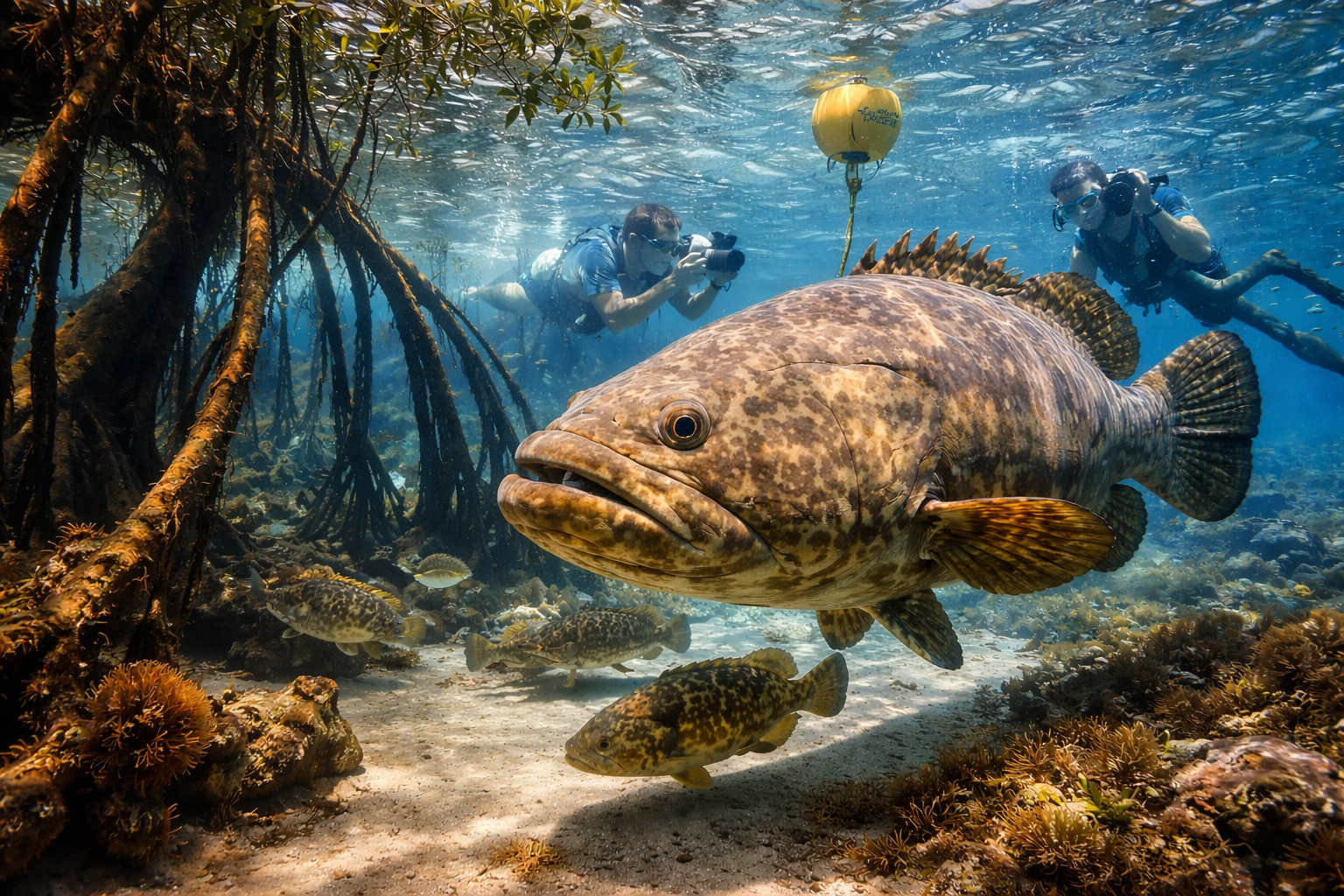
More Than 300 Young Grouper Identified Since 2014 Strengthen The Role Of The Cappixaba Coast In The Preservation Of One Of The Largest Reef Species Of The Atlantic
A significant scientific discovery of great environmental relevance was recently recorded along the coast of Espírito Santo, attracting the attention of researchers and marine conservation experts.
The municipality of Conceição da Barra, located in northern Espírito Santo, has been recognized as the largest nursery in Brazil for the grouper (Epinephelus itajara), a species considered critically endangered.
This recognition resulted from research conducted by the Grouper Project of Brazil, developed by the Federal University of Espírito Santo (Ufes), at the Northern Espírito Santo University Center (Ceunes).
-
In Mexico, a 3,000-year-old Maya site with the dimensions of an entire city may have been built as a colossal map of the cosmos, created to represent the order of the universe and reveal how this people organized space, time, and rituals.

-
Japan wants to build a solar ring of 10,900 kilometers on the Moon to continuously send energy to Earth.

-
Weighing almost 1 ton, with temperatures of up to 3,000°C, the ability to launch 10,000 fragments within a radius of 1 km, capable of penetrating concrete and melting steel, Turkey’s terrifying bomb emerges as one of the most destructive non-nuclear weapons ever presented.

-
After a submarine disappeared beneath the “Doomsday Glacier,” scientists announce a new monstrous machine capable of operating at 3,000 meters depth to return to the heart of the ice and investigate a threat that could raise sea levels worldwide.


According to the researchers involved in the study, the region presents ideal natural conditions for the development of the still young animals, an essential factor for the preservation of the species in the country.
Moreover, the advancement of research reinforces the importance of protecting strategic coastal areas to maintain the balance of Brazilian marine ecosystems.
Scientific Investigation Identifies Ideal Natural Conditions
The identification of the site as the national nursery occurred after years of monitoring and scientific surveys conducted by researchers from the Federal University of Espírito Santo.
According to studies released by the Grouper Project of Brazil, the coast of Conceição da Barra encompasses fundamental environmental characteristics for the growth of the grouper.
The presence of mangroves and estuarine areas creates a protected environment with abundant food and shelter for the young individuals.
These factors transform the region into an ideal natural space for the initial development of the species.
Since 2014, more than 300 young grouper have already been identified in the monitored area, confirming the ecological relevance of the cappixaba coast for the species’ survival.
For the researchers, this data reinforces the strategic role of the region in the conservation of Brazilian marine biodiversity.
Municipality Reinforces Cultural And Environmental Recognition Of The Species
The initiatives to value the grouper gained public attention on March 5, 2026.
On that occasion, the Oceanic Culture Room for Grouper was inaugurated at the Open University of Brazil in Conceição da Barra.
The space was created with the aim of enhancing scientific dissemination and strengthening initiatives for environmental education related to marine conservation.
On the same day, the City Council of Conceição da Barra held a legislative session dedicated to the theme.
During the meeting, the councilors approved a law that officially recognizes the grouper as the symbol fish and natural heritage of the municipality.
This measure represents an important step in consolidating the city’s commitment to the preservation of marine fauna.
Grouper Can Reach Impressive Dimensions
The grouper (Epinephelus itajara) is among the largest reef species in the Atlantic Ocean.
According to information from the Grouper Project of Brazil and researchers from the Federal University of Espírito Santo, the animal can reach up to 2.5 meters in length.
Additionally, adult individuals can weigh around 400 kilograms.
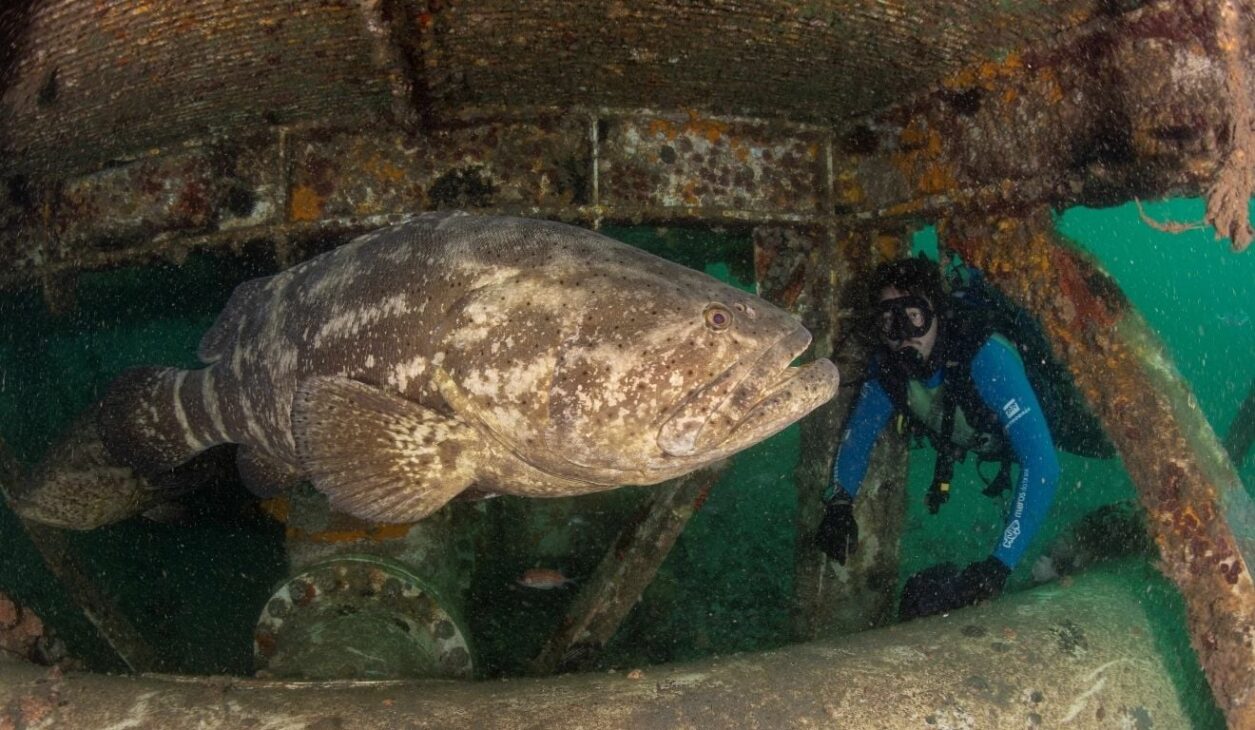
Due to the strong population decline registered over the past decades, fishing of the species has been prohibited in Brazil.
This restriction was adopted as a protective measure to prevent the disappearing of the grouper from the marine ecosystems of the country.
National Project Monitors A Large Extent Of The Brazilian Coast
Created in 2008, the Grouper Project of Brazil has become one of the main marine conservation initiatives in the country.
Currently, the program operates in nine Brazilian states and 37 municipalities along the coastline.
The scientific teams monitor approximately 1,500 kilometers of the Brazilian coast.
The studies conducted by the researchers investigate fundamental aspects of the biology of the species.
Among them are analyses of genetics, feeding, and movement patterns of the animals.
In addition to scientific research, the project also develops environmental education actions with coastal communities and fishermen.
According to Maurício Hostim, a professor at the Federal University of Espírito Santo and project coordinator, the grouper holds a value that goes beyond marine biology.
For him, the species represents a symbol of Brazilian biodiversity and a commitment to the preservation of the oceans.
In Light Of These Discoveries And Conservation Initiatives, What Should Be The Next Step To Ensure The Definitive Protection Of The Grouper In The Waters Of Brazil?








-

Uma pessoa reagiu a isso.