





 Portuguese
  English
  Spanish
  4 min of reading
  1 comment


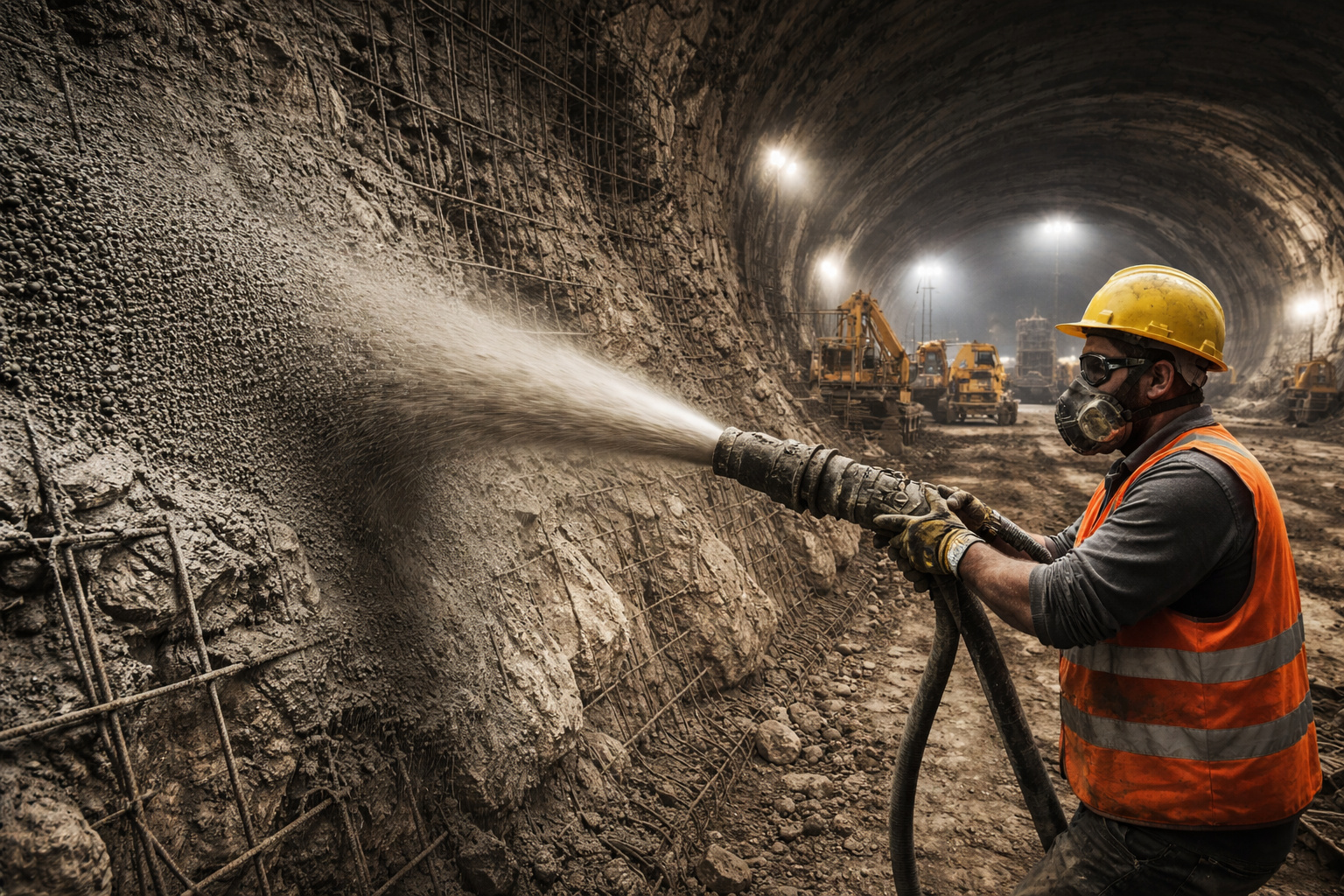


Shotcrete Eliminates Forms, Accelerates Tunnels, and Stabilizes Slopes, Being the Standard Solution in Underground Works and Heavy Infrastructure.
For a long time, building tunnels, containing slopes, or stabilizing embankments required complex temporary structures, wooden or steel forms, and long execution timelines. Shotcrete, known internationally as shotcrete, has completely changed this dynamic by allowing the material to be sprayed directly onto the surface, instantly adhering to rock or soil.
This technique has consolidated precisely where engineering faces its greatest challenges: unstable terrain, deep excavations, and underground works.
What Is Shotcrete and How Does It Work
Unlike conventional concrete, shotcrete is applied through hoses under high pressure, using compressed air.
-
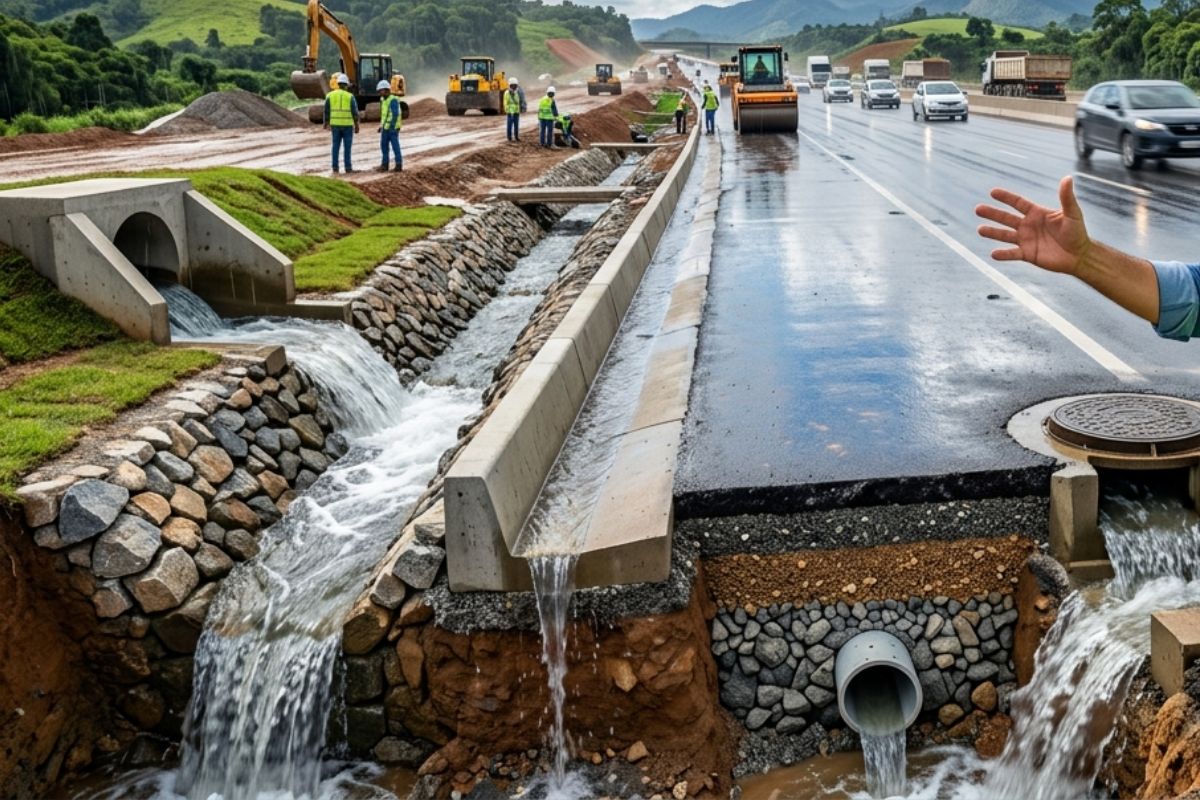
Engineer explains drainage during the rainy season: the difference between surface water and deep water, ditches, gutters, and water outlets on the road, as well as drains and drainage mattresses, to prevent erosion, aquaplaning, and flooding at the construction site today.
-
With 55 floors, 177 meters in height, a 15-meter walkway between the twin towers, ventilated facade, and 6,300 m² of leisure space, Ápice Towers already has one tower completed and another nearly at the top.

-
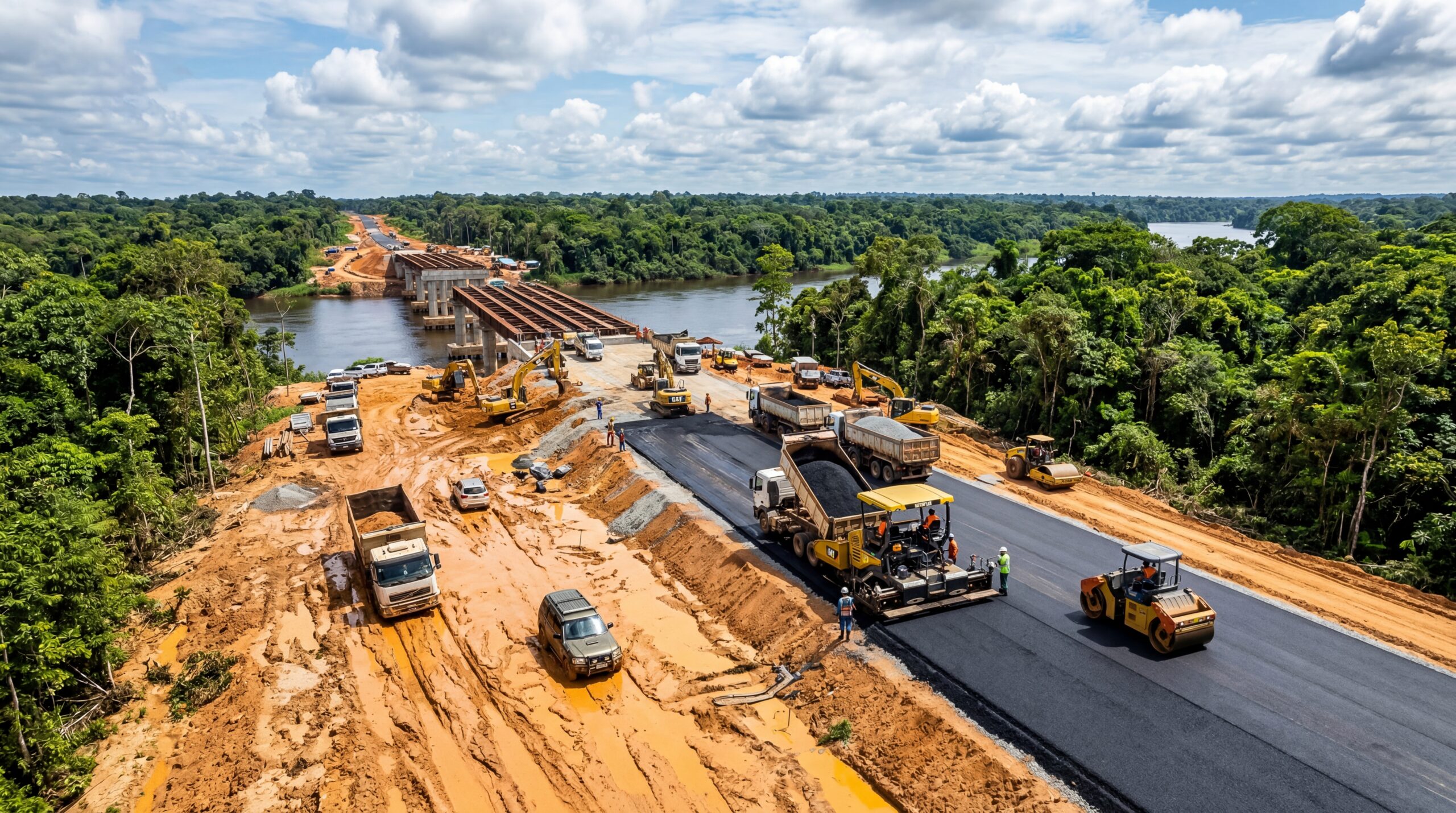
After nearly 50 years of neglect, BR-319 receives R$ 678 million to pave 340 km, gain a 320-meter bridge, and try to lift Amazonas out of the mud, the quagmire, and road isolation.
-
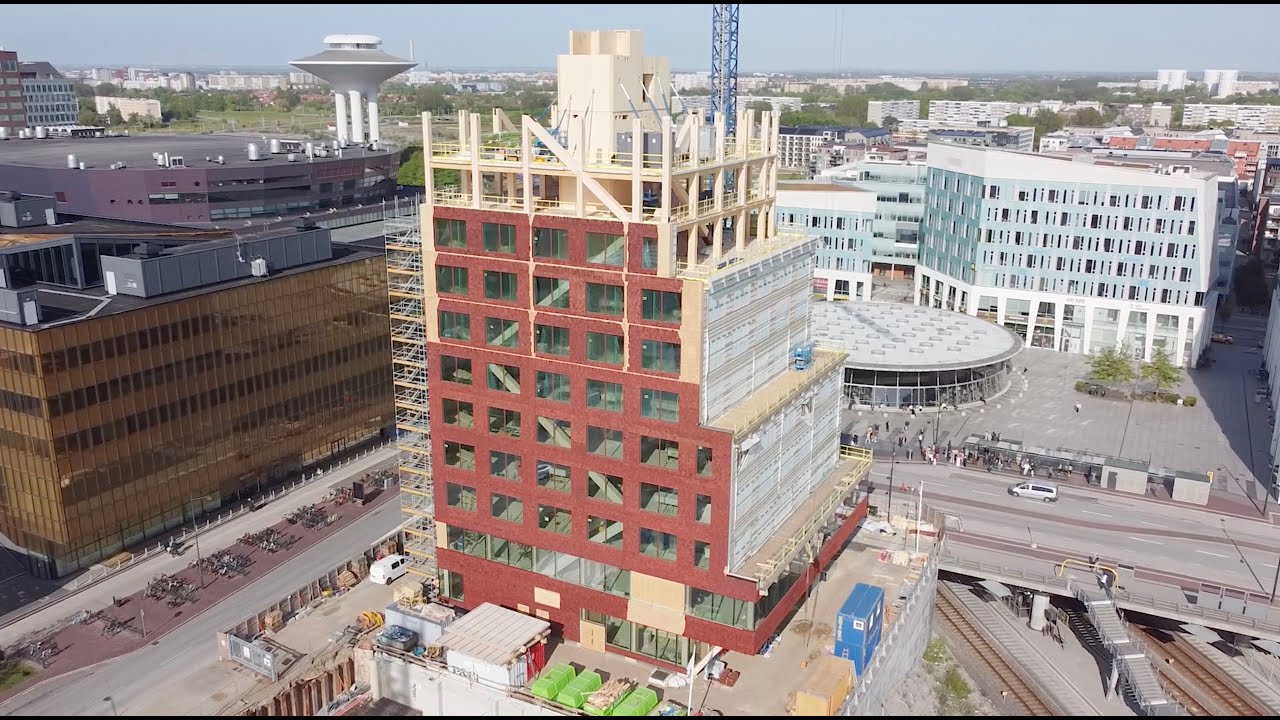
In Sweden, a 51-meter tower was built almost entirely of wood, without a concrete structural core and with solar panels integrated into the facade, using CLT and laminated beams to challenge the dominance of steel and concrete in modern buildings.

The mixture reaches the surface with enough velocity to ensure immediate bond, even on vertical walls or tunnel ceilings.
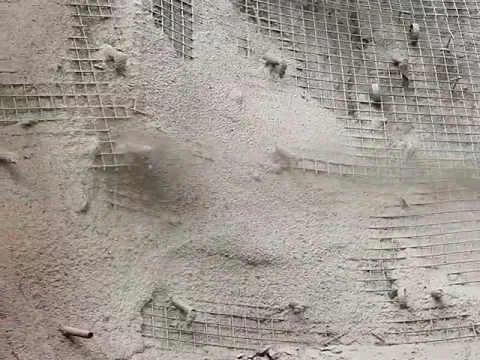

There are two main methods: dry and wet. In both cases, the central feature is the ability to form a durable structural layer without the need for forms, which reduces steps and simplifies the construction site.
Tunnel Construction Without Traditional Forms
In underground works, shotcrete has become practically indispensable. As excavation progresses, the material is applied directly onto the exposed rock, creating a layer of immediate support. This reduces the risk of displacements, material falls, and instability during execution.
This method allows the work to progress continuously, without waiting for the assembly and disassembly of forms, something crucial in road, rail, and subway tunnels.
Slope and Embankment Stabilization
Another strategic application of shotcrete is in the containment of slopes. In areas prone to landslides, the material is applied to the embankment, often in conjunction with metal mesh and anchors, creating a cohesive surface that distributes forces and prevents erosion.
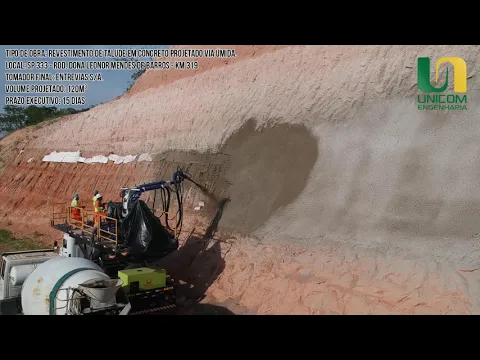
This type of solution is widely used in highways, railways, and urban areas where the rugged terrain poses a constant risk to infrastructure.
Speed That Redefines Project Timelines
One of the biggest differentiators of shotcrete is its execution speed. The elimination of forms, continuous application, and quick initial set allow large areas to be treated in a short time. In infrastructure projects, this agility translates into reduced indirect costs, less time for closures, and safer project advancements.
In critical environments, such as active tunnels or urban slopes, this speed can be decisive.
Strength and Structural Performance
Despite its “rustic” appearance during application, shotcrete achieves mechanical strengths comparable to cast-in-place concrete.
With the use of additives, metallic or synthetic fibers, the material gains even more ability to absorb stresses, control cracking, and withstand impacts.
Therefore, it acts not only as a surface layer but also as a structural element in many projects.
Established Application in Large Infrastructure Projects
Shotcrete has ceased to be an emergency solution to become standard in large-scale works. Alpine tunnels, subway systems, mining works, and roadway reinforcements routinely use the technique, following technical guidelines established by organizations such as the American Concrete Institute (ACI).
This consolidation has brought norms, quality controls, and specific testing methods, increasing the reliability of the system.
Less Environmental Interference and More Safety
Compared to traditional methods, shotcrete generates less interference in the surrounding environment of the work. The reduction of forms and temporary structures decreases material movement and operational risks. Moreover, the immediate application after excavation significantly increases worker safety.
In urban works, this means less visual impact and lower necessity for large support areas.
Despite its advantages, shotcrete requires skilled labor and strict control of dosage, pressure, and application distance. Errors in this process can lead to material waste or performance loss. It is also essential to assess the type of soil or rock before applying to determine suitable thickness and reinforcement.
However, when executed properly, the system delivers high performance with excellent cost-effectiveness.
A Solution Made for Where Engineering Is Most Demanded
Shotcrete has established itself as one of the most important tools in modern engineering because it solves problems where conventional methods fail.
By allowing the construction of tunnels, stabilization of slopes, and advancement of works in unstable terrain without forms, it accelerates timelines and enhances structural safety.
More than an alternative technique, it is a key piece of contemporary infrastructure, especially in projects that challenge soil, topography, and the limits of traditional construction.






Maior problema seria a perda de materiais ou recuperações com alguns custos adicionais mas em inclinações positivas poucas as perdas e quanto a tetos depende de inserções nas formas e armaduras pré instaladas e com deterioração no ambiente inóspito e pouco estudado?