





 Portuguese
  English
  Spanish
  5 min of reading
  2 comments


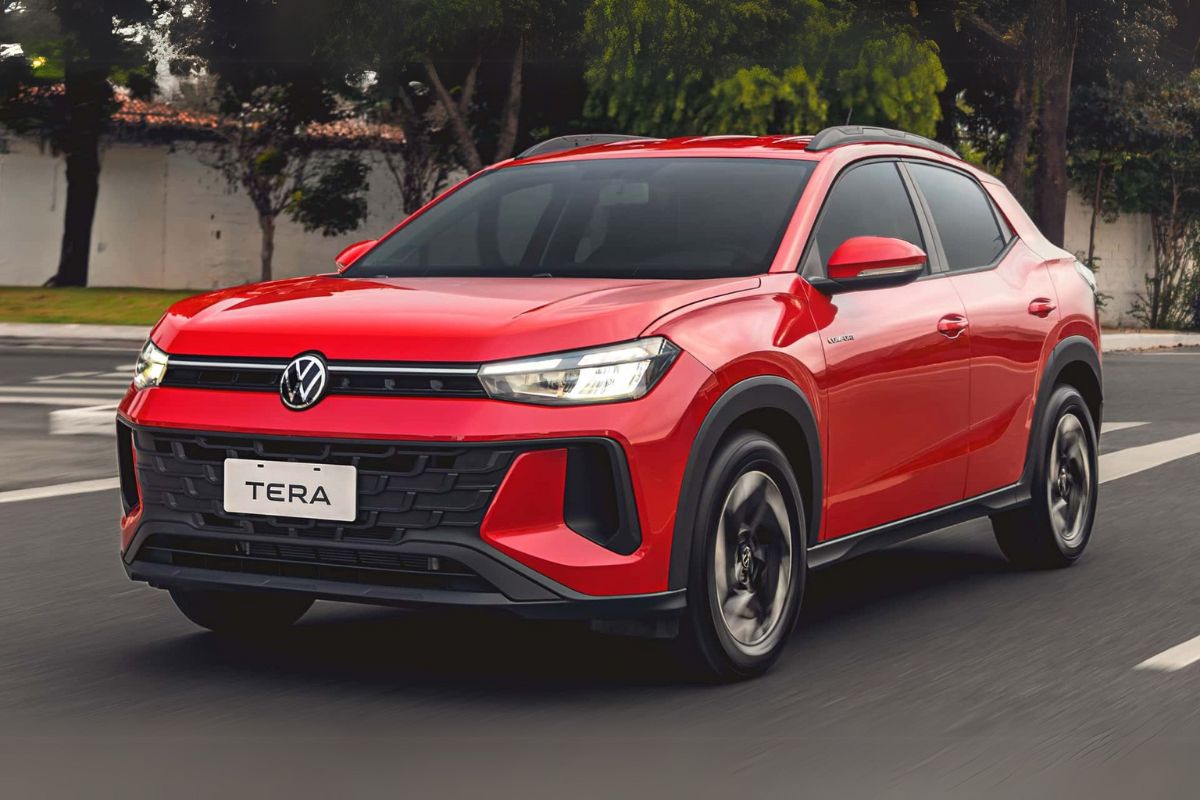

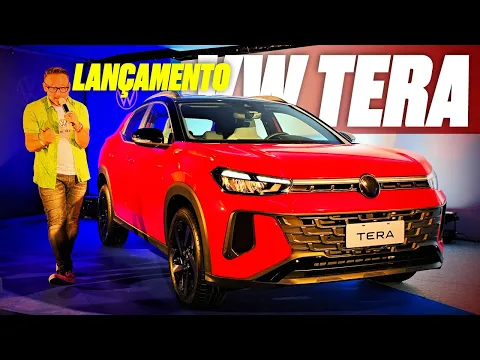
Volkswagen Launches A New Compact SUV That Combines Efficiency, Connectivity, And Safety To Compete With The Leaders In The National Segment
Volkswagen has decided to fully enter the competition for consumers looking for a compact, modern, and affordable SUV. The new Tera, officially launched in Brazil in May 2025, is the brand’s major bet to capture an audience that values safety, connectivity, and a striking appearance, without compromising on cost-effectiveness. Manufactured at the Taubaté (SP) plant, the model is built on the MQB-A0 platform, the same as that of the Polo and Nivus, and is already born with an important mission: to compete with heavyweights such as Hyundai Creta, Chevrolet Tracker, Fiat Pulse, and the recently launched Renault Kardian.
With prices ranging from R$ 99,990 to R$ 145,130, the Tera comes in five versions and two engine options. The design follows Volkswagen’s modern and robust line, featuring full LED headlights, well-defined daytime running lights, and a rear with horizontal taillights and a striking light signature. The overall package is impressive, especially considering it is an entry-level SUV.

Efficiency And Safety From Basic Versions
Even the most affordable version, equipped with a 1.0 MPI aspirated engine and a five-speed manual transmission, already comes standard with six airbags, an autonomous emergency braking system, stability and traction control, a hill-start assist, and LED headlights. This means that the basic package already delivers features that often only appear in more expensive versions of competitors. Volkswagen makes it clear that they want to offer more for less — and that can weigh heavily in the consumer’s choice.
-
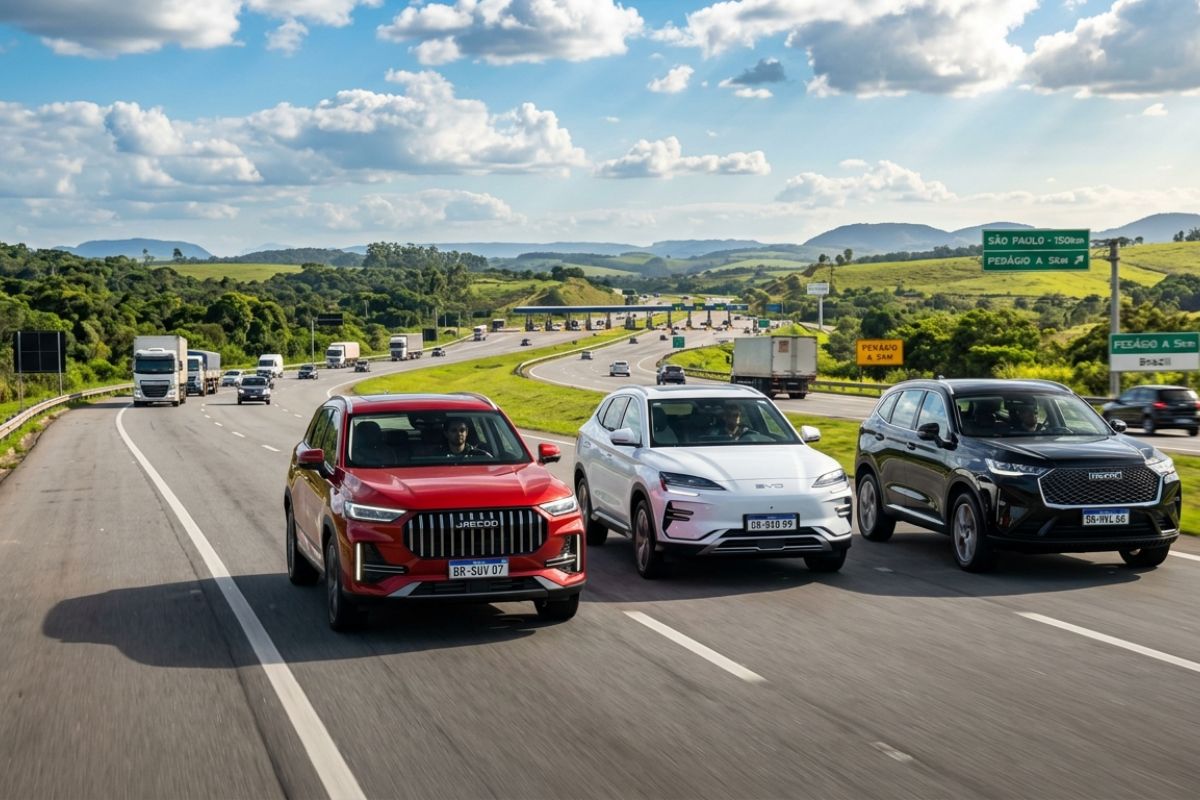
600 km with three Chinese plug-in SUVs, same mode and air conditioning on: Jaecoo 7, BYD Song Plus, and Haval H6 hit the road, and the pump reveals who was truly the most economical.
-
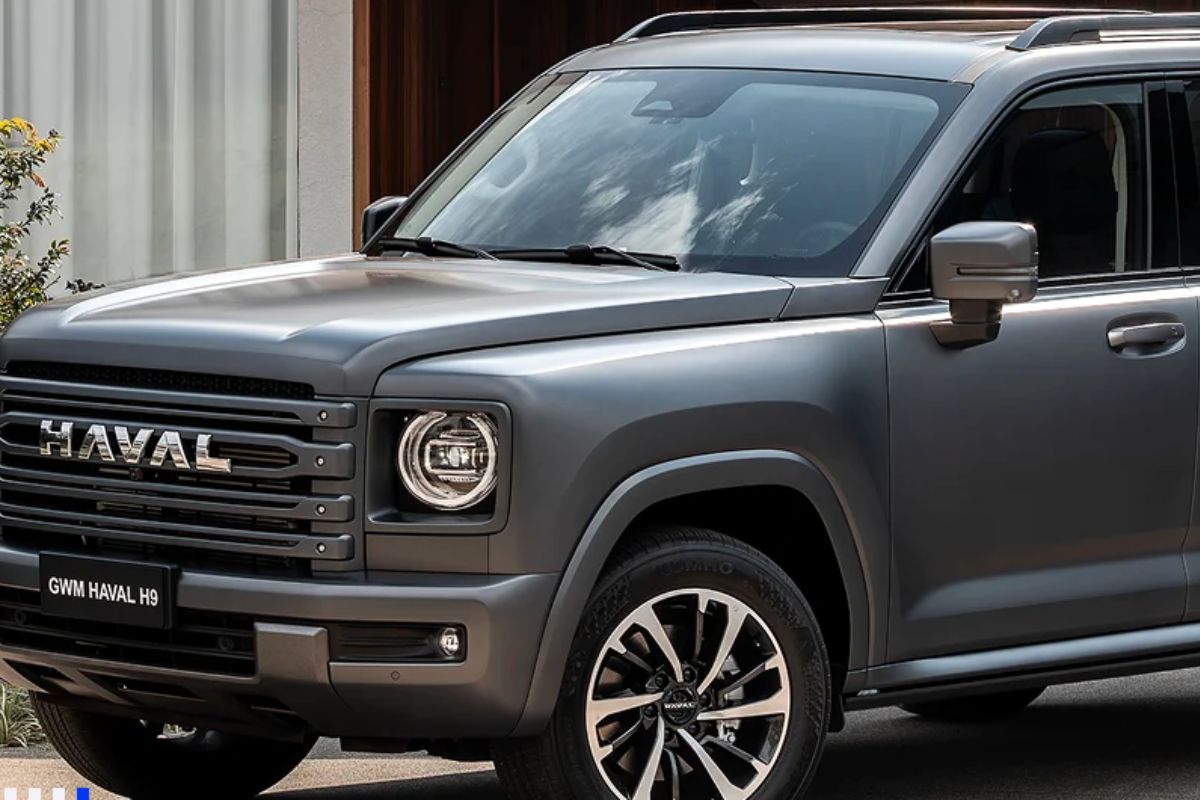
With a price almost R$ 100 thousand lower, the Haval H9 surpasses the SW4 for the first time in March, but Toyota still leads in the accumulated total for 2026; the Chinese SUV bets on technology and premium finishing to compete at the top.
-
6 used cars that cost less than a new Honda CG 160 Titan and still provide trunk space, four seats, and comfort that many new motorcycles cannot offer.
-
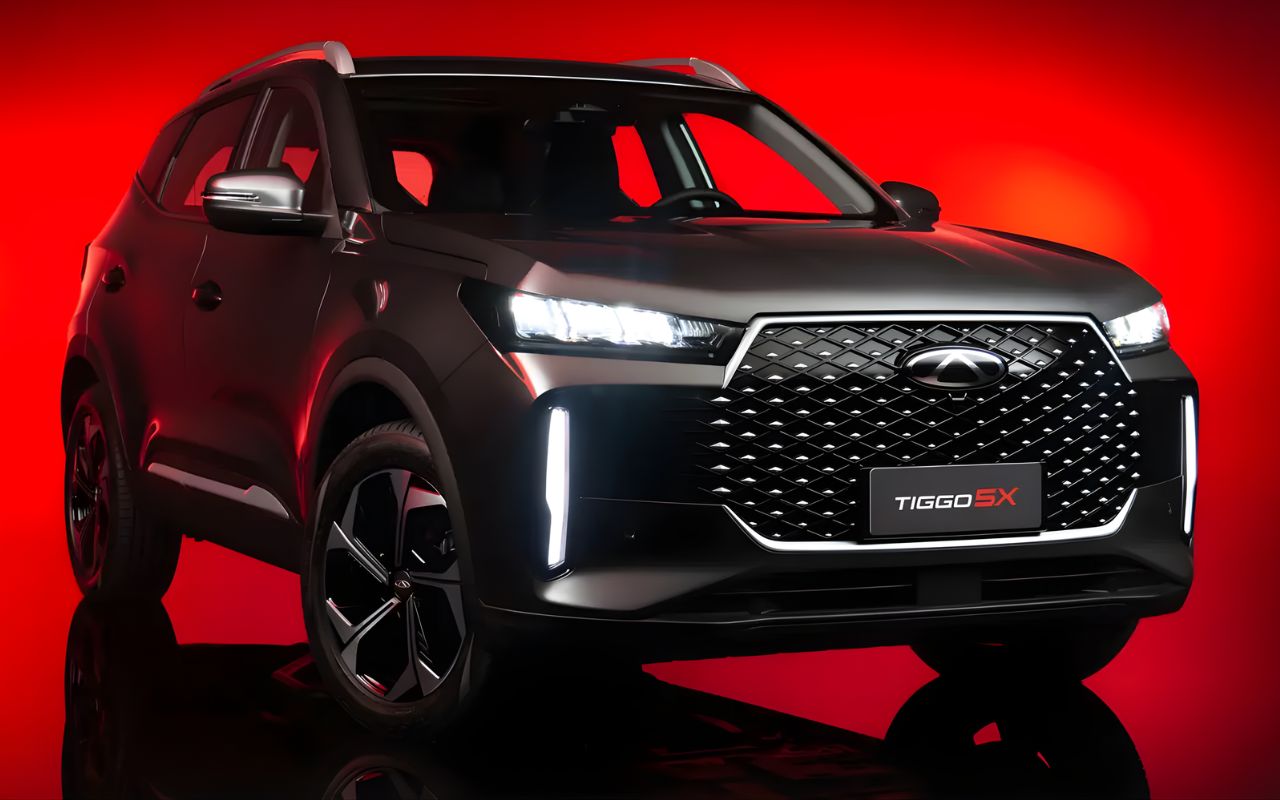
Caoa Chery Tiggo 5X skyrockets in sales in Brazil: a 2,318% increase and waiting lists of up to 4 months to acquire the model.
For those seeking more performance, the versions equipped with the 1.0 TSI turbo engine, producing up to 116 hp, are the most recommended. This engine is already well-known in the VW lineup and offers good torque at low revs, ensuring agile acceleration both in urban traffic and on the highway. The transmission can be manual or a six-speed automatic, depending on the version. Fuel consumption, according to official data, is one of its highlights: it can reach 13.6 km/l in the city and up to 15.1 km/l on the highway with gasoline.
| Technical Specifications | Volkswagen Tera 1.0 MPI | Volkswagen Tera 1.0 TSI Turbo |
|---|---|---|
| Engine | 1.0 liters, 3 cylinders, aspirated | 1.0 liters, 3 cylinders, turbocharged |
| Power (Ethanol/Gasoline) | 84 hp / 77 hp | 116 hp / 109 hp |
| Torque (Ethanol/Gasoline) | 10.3 kgfm / 9.6 kgfm | 16.8 kgfm / 16.8 kgfm |
| Transmission | 5-speed manual | 5-speed manual or 6-speed automatic |
| Acceleration 0-100 km/h | Approximately 14.6 seconds | Up to 10.1 seconds (manual) / 11.7 (automatic) |
| Top Speed | 162 km/h | 185 km/h |
| Urban Consumption (Gasoline) | 13.2 km/l | 12.1 km/l (AT) / 13.4 km/l (MT) |
| Highway Consumption (Gasoline) | 14.7 km/l | 14.5 km/l (AT) / 15.1 km/l (MT) |
| Steering | Electric | Electric |
| Front Suspension | McPherson | McPherson |
| Rear Suspension | Twist beam | Twist beam |
| Brakes | Disc front / drum rear | Disc front / drum rear |
| Trunk | 350 liters | 350 liters |
| Fuel Tank | 50 liters | 50 liters |
| Curb Weight | 1,140 kg | 1,180 kg (MT) / 1,220 kg (AT) |
Modern Interior And Competitive Space
Inside, the Tera maintains Volkswagen’s quality standards in its finishes and the layout of the controls. The dashboard is clean, with good ergonomics, and the VW Play multimedia center with a 10.1-inch screen steals the show. It is compatible with Android Auto and Apple CarPlay and allows access to various services and apps. In the more expensive versions, the instrument panel is 100% digital with a 10.25-inch screen, and the air conditioning becomes digital and automatic.
Regarding internal space, the model does not disappoint. With a 2.56-meter wheelbase and 4.15 meters in length, it comfortably accommodates up to four adults and one child, with good leg and headroom. The trunk has a capacity of 350 liters, which is average for the segment.
Comparing With Direct Rivals
In practice, the Tera arrives to try to dethrone models like Chevrolet Tracker, Hyundai Creta, and Fiat Pulse, which currently lead the segment. Each of these competitors has its strengths: the Tracker, for example, also bets on the 1.0 turbo engine with excellent fuel economy and features onboard Wi-Fi and OnStar system as differentiators; the Creta, in turn, offers more internal space and more powerful engines, including a 2.0 aspirated and even a sporty N Line version. The Pulse stands out for its good cost-effectiveness and for having one of the most competitive starting prices in the market.
The Tera tries to balance between these profiles, offering an intermediary proposal. It is better equipped than the Pulse in the basic versions, cheaper than the Creta in the intermediate versions, and has a more modern technological package than the entry-level Tracker. In the top-of-the-line versions, such as the High TSI AT and the special edition “Outfit The Town,” the Volkswagen SUV stands out for offering a wireless charger, keyless entry, premium upholstery, 17-inch alloy wheels, and an optional driving assistance package (ADAS), which includes blind-spot warning, lane-keeping assist, and automatic braking with pedestrian detection.

Market Strategy And Exports
Volkswagen has an ambitious plan for the Tera. In addition to supplying the Brazilian market, the SUV will be exported to over 25 countries in Latin America and Africa. This global strategy was crucial for the brand to invest heavily in modernizing the Taubaté plant, making it more efficient and flexible to meet different engine demands and regulations.
According to the president of Volkswagen South America, Alexander Seitz, the Tera is a 100% Brazilian project, designed for our audience, but with global quality. “It is the first SUV developed entirely by our team in the region, focusing on connectivity, efficiency, and safety,” said the executive during the launch.
Prices And Positioning
The suggested prices for the versions available at launch are:
- Tera 1.0 MPI MT – R$ 99,990 (special launch offer; then rises to R$ 103,990)
- Tera 1.0 TSI MT – R$ 116,990
- Tera Comfortline 1.0 TSI AT – R$ 126,990
- Tera Highline 1.0 TSI AT – R$ 139,990
- Tera Highline “Outfit The Town” – R$ 142,990
These prices place the Tera in an intermediary range, targeting both those wanting to move from a hatch to an SUV and those looking for a more urban second car that is still technological and safe.







100 mil num manual, do **** compra
O freio de mão dos carros “modernos” da VW, são iguais aos do fusca do meu pai da decada de 70/80, não daria para aperfeiçoar? a exemplo dos carros chineses que não utilizam mais alavancas de freio de mão?