





 Portuguese
  English
  Spanish
  7 min of reading
  0 comments


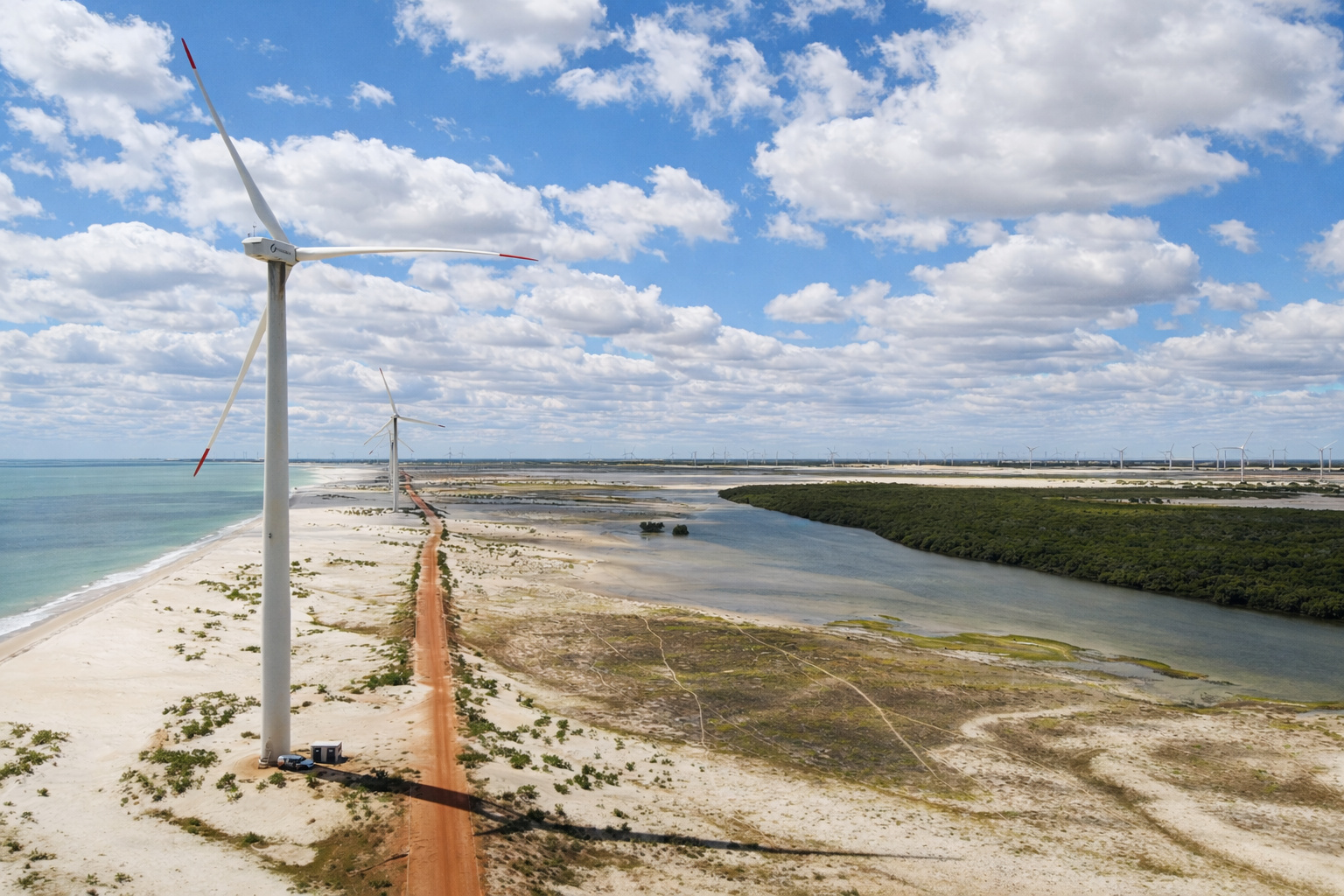
Residents and family farmers from the potiguar interior point out sound and environmental impacts caused by the proximity of the towers, highlighting the challenges with clean energy that arise with the accelerated expansion of the renewable sector.
The state of Rio Grande do Norte, a national leader in wind energy generation, now faces a scenario of increasing social tension. Various rural communities report challenges with clean energy related to the installation of large wind farms.
Recent reports from residents of municipalities such as Lajes and João Câmara indicate that the excessive proximity of energy towers to homes and grazing areas causes constant disturbances. Such as low-frequency noise and intermittent shadows that affect human health and animal behavior.
Although the energy transition is a global priority for combating climate change, the arrival of giant turbines in the potiguar hinterland has profoundly altered the traditional way of life of rural families.
-
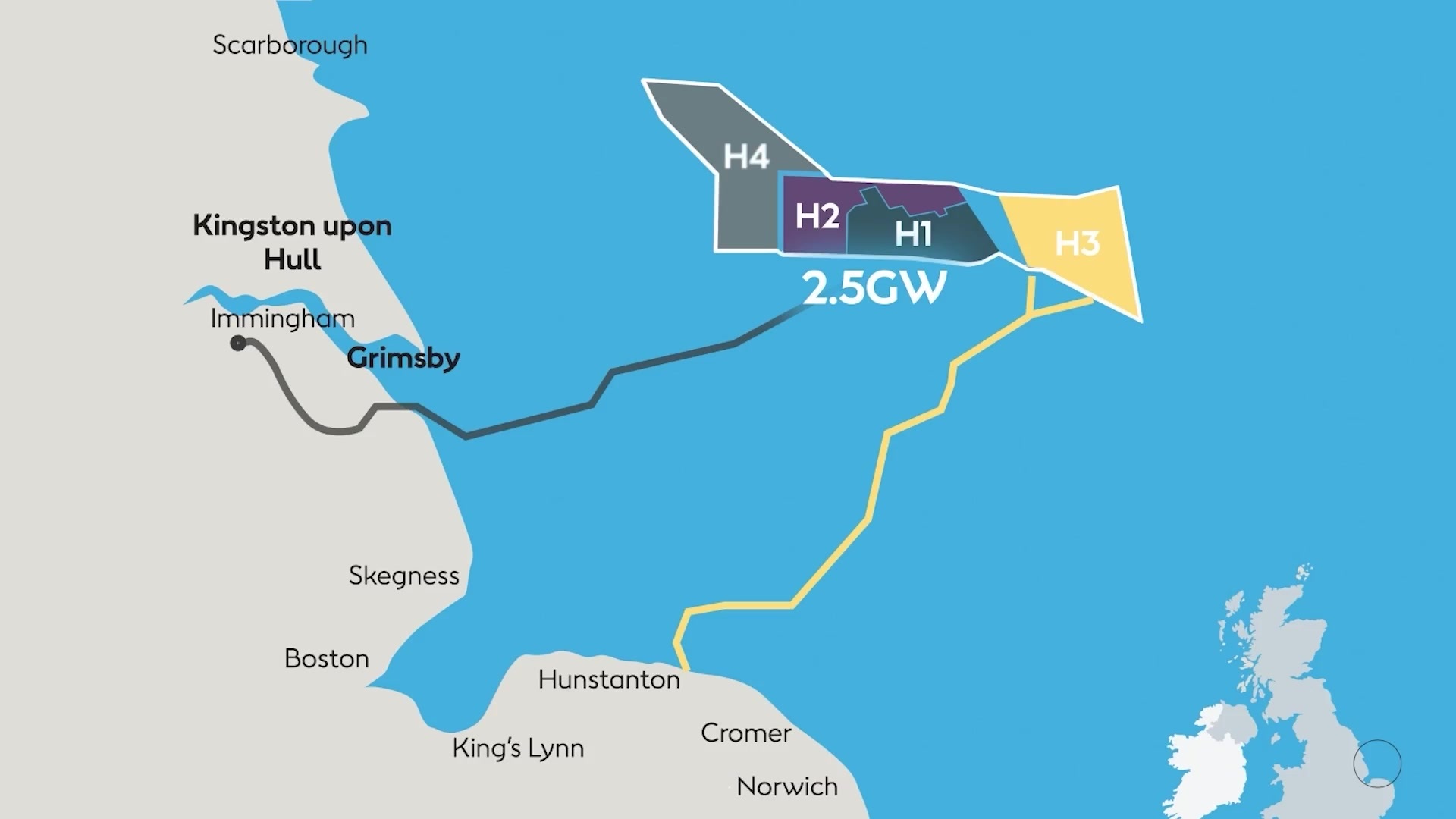
231 turbines of 260 meters at 160 km from the coast, monopiles weighing as much as nine blue whales embedded in the North Sea, and a crane ship taller than the Eiffel Tower: Hornsea 3 will be the largest offshore wind farm on the planet by 2027, and its first components have already arrived in England.
-
International Certification Puts Senai Norte on the Renewable Energy Map and Expands Access to Essential Training for Qualified Wind Power Professionals
-
The Winds of the Northeast Are in Foreign Hands: Nearly 70% of the Region’s Wind Farms Are Owned by International Companies, with France, China, and Italy Leading Investments in Wind Energy in Brazil
-
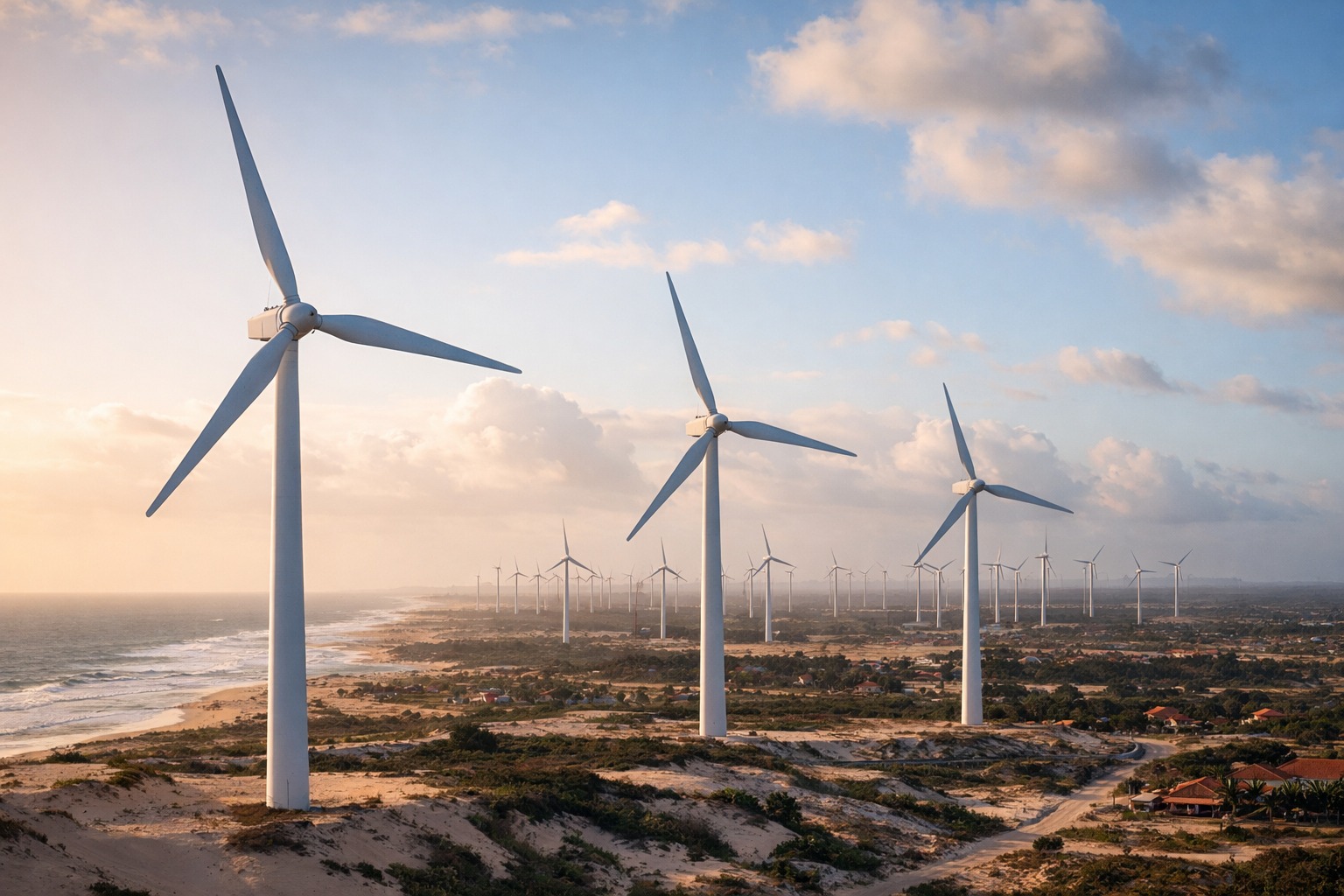
Echoenergia’s Wind Farms Receive Diamond and Platinum Seals and Boost Carbon Credits with Projects that Prevent Large Volumes of Annual Emissions
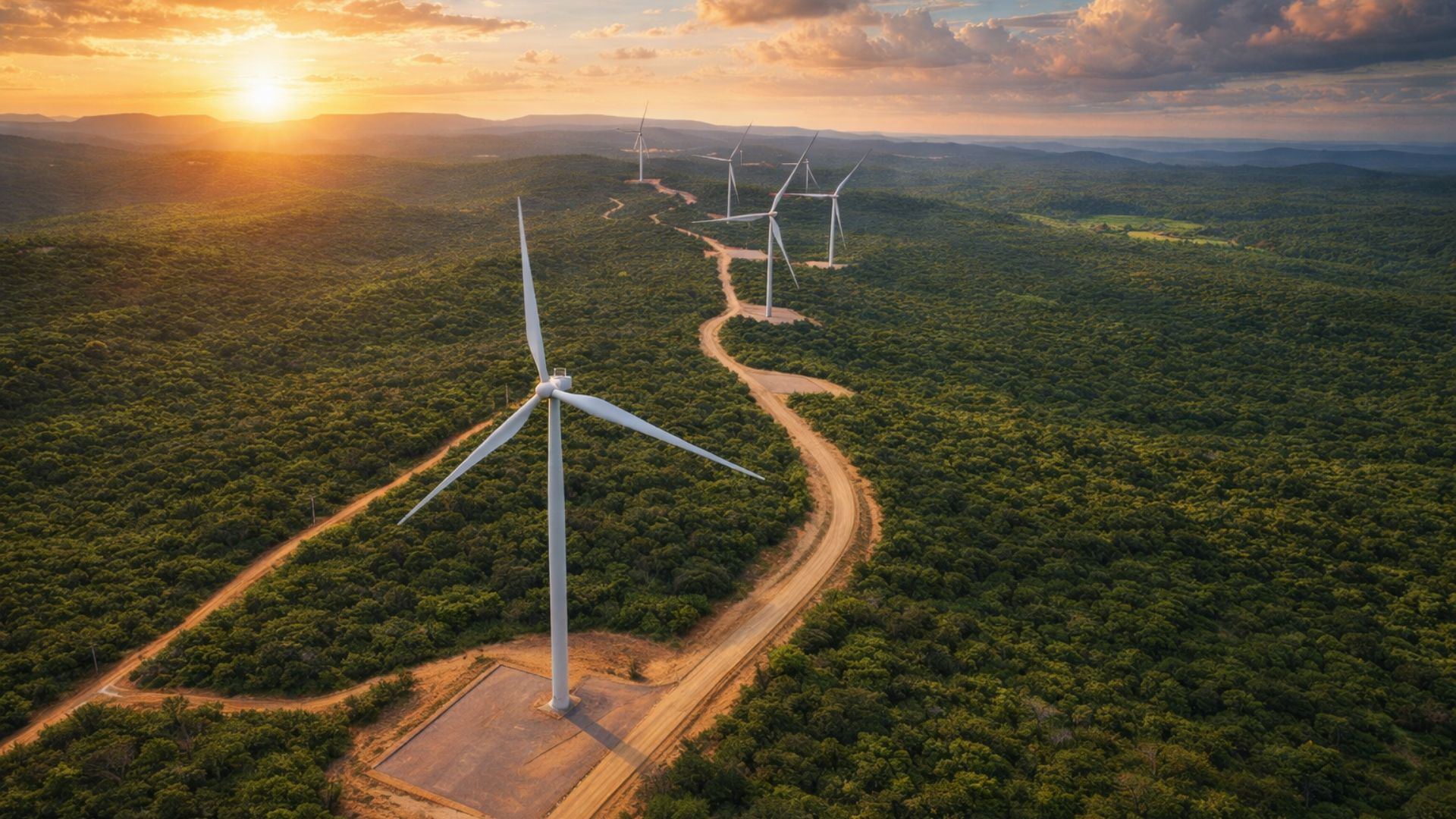

Farmers claim that the incessant noise prevents peaceful sleep and that the dust raised during maintenance work harms local crops. This scenario calls into question the implementation model of the projects and reinforces the need for planning that respects territorial limits and the well-being of the populations living around these plants.
The growth of wind energy and the emergence of new challenges with clean energy
Rio Grande do Norte holds the title of the largest producer of wind energy in Brazil. Taking advantage of the region’s constant winds to supply millions of homes.
However, the rapid advancement of these infrastructures over family farming land has brought to light the challenges with clean energy that the planning sector often overlooks. Initially, the arrival of companies promised economic development and job creation for the interior.
Over the years, residents have realized that financial benefits do not always compensate for losses in quality of life.
The main problem cited by communities involves the minimum distance between wind turbines and homes. In many cases, the towers are just a few meters away from historic residences.
The movement of the blades produces the so-called “stroboscopic effect,” a rapid alternation of light and shadow that causes visual discomfort and dizziness. Additionally, the mechanical and aerodynamic noise, which operates 24 hours a day, generates chronic stress among residents.
These challenges show that “clean energy” is only truly sustainable when it considers the human factor as an integral part of the project.
Impacts on health and daily life of rural families
Public health experts are beginning to monitor the effects that these challenges with clean energy have on the rural population. Many residents report symptoms of anxiety, insomnia, and constant irritability.

The sound emitted by the blades, although within certain technical decibel limits, has frequencies that travel long distances and penetrate the walls of simple adobe and masonry houses. For those living in the absolute silence of the countryside, any constant noise becomes a psychological torture.
In addition to mental health, household economies suffer practical impacts. The heavy vehicle traffic from energy companies damages dirt roads, making it difficult to transport milk and grain production.
The explosions for the construction of the tower bases also cause cracks in cisterns and walls of old houses. The farmer, who once saw the wind as an ally of nature, now views the metal structure as an invasive element that devalues his land and compromises his basic livelihood.
The issue of land lease contracts
One of the major obstacles that make up the challenges with clean energy in RN involves the nature of lease contracts. Many families signed long-term documents, often for 30 or 50 years, without fully understanding the exclusivity clauses and land use restrictions.
In some properties, the landowner loses the right to build new improvements or even to plant certain crops near the companies’ equipment.
The lack of transparency and adequate legal assistance at the time of signing left many producers in a vulnerable situation. The monthly payment for the lease, in some cases, does not cover the losses caused by the loss of productive area or the devaluation of the property for future sale.
Community leaders are now seeking a review of these agreements. Demanding that companies in the wind sector take greater responsibility for the socio-environmental damages caused during the operation of the parks.
Environmental impact and biodiversity in the semi-arid region
Although the source is renewable, the challenges with clean energy also affect the fauna and flora of the potiguar semi-arid region. The suppression of native Caatinga vegetation for the opening of access roads and installation of transmission lines fragments the habitat of local species.
Biologists warn of the collision of birds and bats with the blades, which can disrupt local ecosystems that depend on these animals for pest control and pollination.
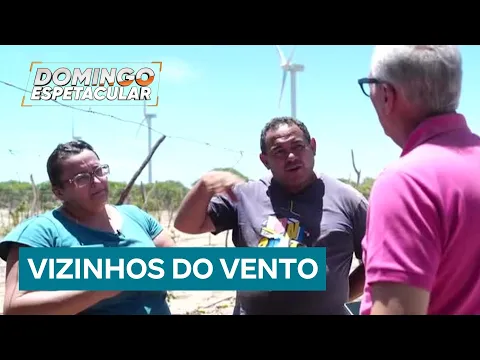

The alteration of the local microclimate also concerns scholars. The presence of hundreds of towers may slightly alter the circulation of air at low levels, influencing soil moisture and the growth of underbrush vegetation.
These impacts, combined with the legalized deforestation for the installation of the parks, show that the energy transition requires a much more attentive look at the preservation of Brazilian biomes. Real sustainability requires that the protection of the global climate does not come at the expense of the destruction of local nature.
The role of the government and regulatory agencies
In the face of increasing challenges with clean energy, the pressure on environmental agencies and the government of Rio Grande do Norte is rising. IDEMA (Institute for Sustainable Development and Environment) faces the challenge of tightening licensing rules without scaring away the billion-dollar investments that the sector brings to the state.
Local lawmakers are discussing laws that establish stricter minimum distances and require companies to invest in development funds for affected communities.
Constant oversight becomes the only tool capable of ensuring compliance with environmental conditions. Often, companies receive operating licenses but fail to mitigate sound impacts after the final installation.
The Public Ministry is also active in various municipalities to mediate conflicts between energy multinationals and rural workers’ unions. The solution lies in open dialogue where corporate profits do not override the constitutional right to a balanced environment and health.
Technical innovation as a solution to the problems
Modern engineering seeks solutions to mitigate the challenges with clean energy reported in the field. New designs of blades with serrated edges promise to drastically reduce aerodynamic noise.
Additionally, artificial intelligence monitoring systems can automatically shut down the towers during the passage of migratory birds or during peak sound sensitivity times for residents.
The use of soundproofing technologies in nearby residences and the creation of “green belts” of dense vegetation around the parks also appear as viable alternatives. However, these technologies require additional investments from operators, who often resist implementation to avoid raising maintenance costs.
The sector needs to understand that social acceptance of the project is as important as wind speed for the long-term success of an energy enterprise.

The search for a just development model to overcome the challenges with clean energy
To overcome the challenges with clean energy, Brazil needs to look at international models of energy co-management. In European countries, rural communities are often partners in wind farms. Receiving a direct share of the profits from energy sales, rather than just a fixed lease amount.
This creates a sense of belonging and allows the community itself to invest in urban improvements, health, and education.
In Rio Grande do Norte, the movement for a “Just Energy Transition” is gaining strength. The goal is to ensure that the state continues to be the engine of renewables, but with a human face. This includes training local youth to work in the maintenance of the towers, preventing all skilled labor from coming from outside.
The integration of technological modernity and rural tradition is the only way for the wind to continue bringing progress without leaving traces of resentment and health problems in the hinterland.
The future of renewable energy in RN
The challenges with clean energy faced by rural communities in Rio Grande do Norte serve as a warning for the entire Brazilian electric sector. The decarbonization of the energy matrix is an irreversible and extremely necessary path, but it should not occur at the expense of the most vulnerable populations.
The state has the opportunity to lead not only in the quantity of megawatts generated but also in the quality of the social impact of its projects.
Balance between economic development and human respect defines the true success of sustainability. While residents of the potiguar interior fight for quieter nights and fairer contracts, Brazil learns that the energy of the future must be clean at the source and ethical in delivery.
Transparent dialogue between companies, government, and citizens will transform the wind into a resource that finally blows in favor of all Brazilians, ensuring that progress arrives without destroying the roots of those who care for the land.





Seja o primeiro a reagir!