





 English
  Francês
  Alemão
  Italiano
  Japonês
  Norueguês
  Portuguese
  Spanish
  4 min of reading


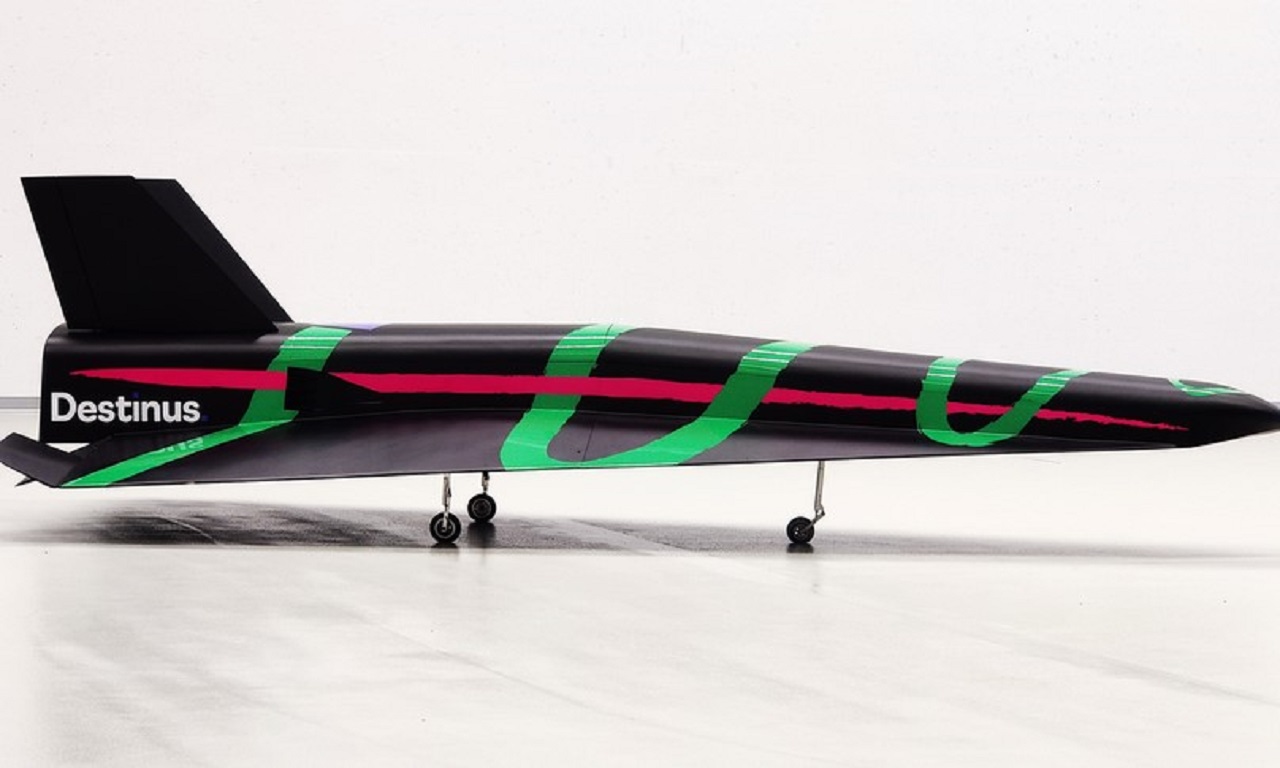
The Hydrogen-Powered Aircraft, Called Destinus, Can Fly at 15 Times the Speed of Sound and Could Change Global Cargo Transport
The founder and former CEO of the space infrastructure company Momentus, Mikhail Kokorich, aims to build a hypersonic, hydrogen-powered airplane capable of flying at 15 times the speed of sound for autonomous cargo delivery worldwide. Although the aircraft is far from being completed, tested, and certified, a funding round has raised US$ 29 million and is expected to help accelerate progress.
Also Read
Destinus Aims to Build Liquid Hydrogen-Powered Hypersonic Aircraft with Only Water as Emission
-
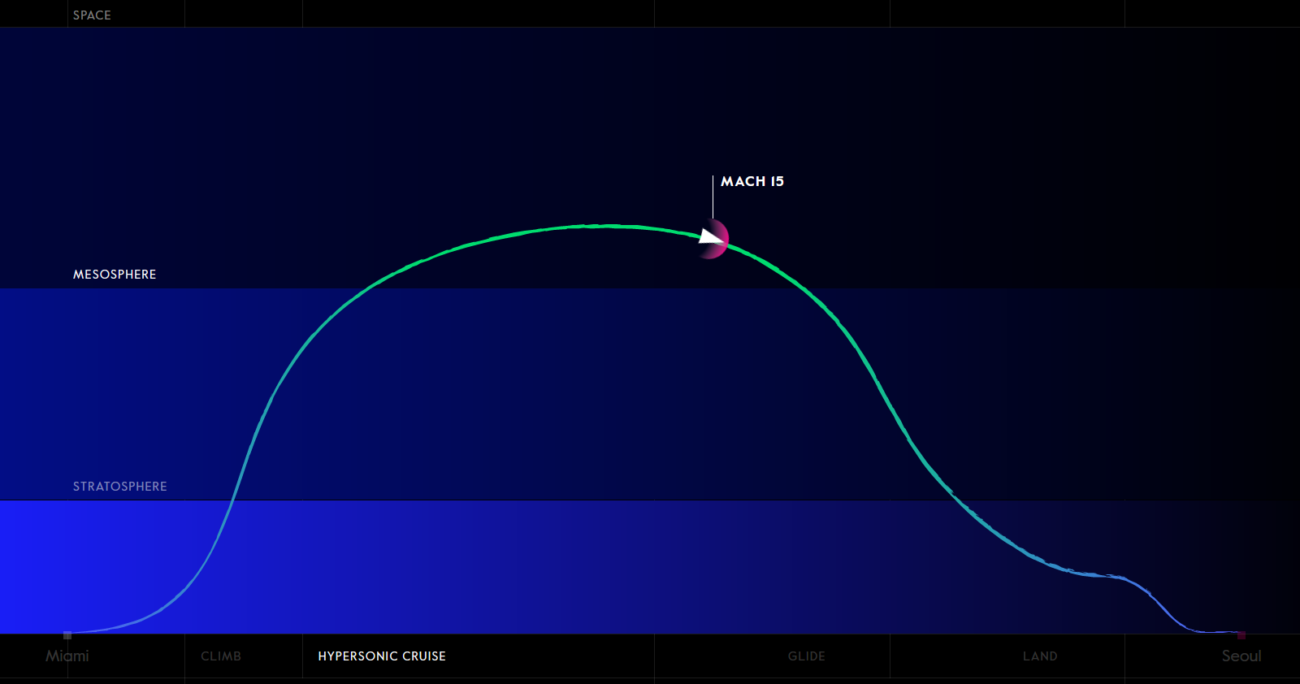
Illustration of a Hypothetical (and Not to Scale) Flight Trajectory from Miami to Seoul. Image Credits: Destinus
The stated plan is to build a hypersonic aircraft (that is, one that travels at multiples of the speed of sound), powered by liquid hydrogen, with only water as emissions, allowing point-to-point delivery to virtually anywhere on the planet.
-
In just three hours, a natural stone floor transforms the entrance of the house with an organic effect, immediate drainage, and a sophisticated non-slip finish that doesn’t puddle water, dries quickly, and impresses with the final result.
-
‘Interlocking brick’ made of earth arrives in the construction industry with cost reductions of up to 40% on the project.

-
Espírito Santo will receive the largest engineering project in its history with the duplication of BR 262, which will have 50 viaducts, 28 bridges, and 2-kilometer tunnels cutting through the most challenging mountainous region of the entire state.

-
A project of nearly 9 million reais already has the first kilometer paved in Santa Catarina and promises to completely transform the access between Jaraguá do Sul and Rio dos Cedros in an area where tourism is growing at a rapid pace.

A hypersonic airplane is a winged aircraft designed to take off from the ground and travel out of the atmosphere and re-enter, all under its own power and navigation. The most famous is probably the mysterious X-37B of the US government (as described), which is supposedly used for space testing for private agencies.

The Jungfrau, as the prototype of the aircraft previously designed by Destinus is called, would be a fully autonomous “hyperplane,” as it does not reach space, staying well below the Karman line, but for aerodynamic purposes, very close to a vacuum. They are aiming for speeds as high as Mach 15 at 60 kilometers – the actual speed will depend on many factors.
Understand What the Hydrogen-Powered Aircraft Will Bring to the Transport Market
This category of aircraft is expected to start with a payload capacity of around one ton, intending to provide “relief and emergency cargo anywhere on Earth.”
The use of cheap and clean hydrogen as fuel could enable hypersonic aircraft to cut costs and compete at some levels with existing cargo providers in the market.
Destinus plans to transport cargo between continents in under two hours using what it calls hyperplanes, rocket-powered aircraft that will take off and land horizontally using a hydrogen-fueled jet engine. Once a certain altitude and speed are reached, the hyperplane will switch to a cryogenic hydrogen rocket engine and accelerate to a hypersonic speed of over Mach 5.
Kokorich stated that the company already has permission to fly at subsonic speeds (presumably in Switzerland, where the company is based), and that necessary supersonic tests and permissions will come with the third prototype (i.e., next year). By flying so high, the noise of its sonic boom would be a fraction of that created by low-altitude fighters and similar aircraft. However, a completely new regulatory framework may be necessary, something Destinus hopes to anticipate.
Hydrogen-Powered Hypersonic Aircraft Could Reduce Time and Unnecessary Costs in Logistics
The chairperson of Destinus’s advisory board, former German Economy Minister and Vice Chancellor Philipp Rösler, said: “It is breathtaking to envision a future where travel anywhere in the world will be available in 1-2 hours. More importantly, the hyperplane in development will use liquid hydrogen to power its engines. This gives a great opportunity to fly fast while being carbon neutral. The only emission from such engines is water. I am excited that companies like Destinus will be able to provide European leadership in the aerospace sector.”
Mikhail Kokorich, founder and CEO of Destinus, said: “We are excited about the broad support from our company. We plan to use the funding to continue the development of our rocket engines and hydrogen respirators, and test the first supersonic flights powered by hydrogen engines in the next 12 to 18 months, changing cargo logistics around the world.”







Seja o primeiro a reagir!