





 Portuguese
  English
  Spanish
  5 min of reading
  0 comments


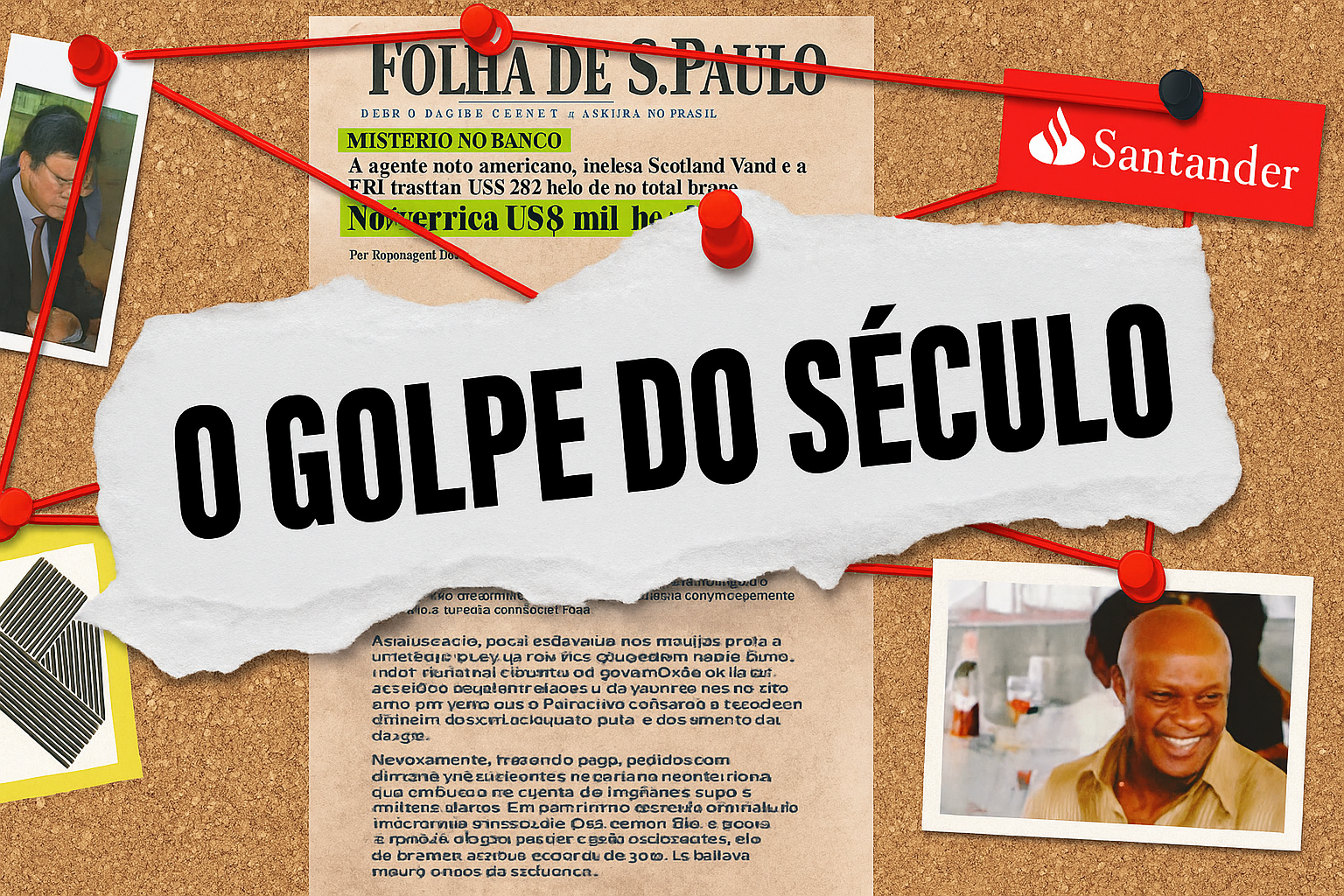
Discover The Amazing True Story Of The Nigerian Who Scammed A Brazilian Bank With The Sale Of An Nonexistent Airport, In The Biggest Scam Of The Global Banking System. Understand How Santander Got Involved In The Biggest Scam Of The Brazilian Banking System — A Surprising Case That Few Know
In one of the most impressive and lesser-known episodes of global financial history, a Nigerian con artist managed to carry out a billion-dollar scam against one of the largest financial institutions in Brazil. The case of the man who sold a fake airport to Brazil is considered the biggest scam in the Brazilian banking system, directly involving Santander bank. This scandal reveals serious vulnerabilities in the international financial system and raises important questions about security in large banking transactions.
The Summary Of The Case: The Scam Of The Fake Airport That Deceived Santander


In 1995, Emmanuel Nwude, a former director of the Union Bank of Nigeria, executed one of the most ingenious fraud schemes ever recorded. The Nigerian posed as Paul Ogwuma, then president of the Central Bank of Nigeria, and convinced representatives of the Brazilian bank Banco Noroeste (acquired years later by Santander) to finance a supposed new international airport in Abuja, the capital of Nigeria. The project was completely fictitious.
The amount involved reached the impressive figure of US$ 242 million (which would be equivalent to over US$ 430 million when adjusted for 2025). This singular fact transformed Emmanuel Nwude into the man who sold a fake airport, consolidating the episode as the biggest scam in the Brazilian banking system to date.
-
Hidden beneath the dense forest of the Sierra Nevada, Betoma emerges in a neighbor of Brazil as the greatest archaeological discovery of the century, revealing a colossal ancestral city covering over 18 km², with 8,334 stone structures and the potential to rewrite the history of South American civilizations.

-
Goodbye iron: new technology from Xiaomi promises to revolutionize the way we iron clothes with 500 kPa steam, continuous flow of 120 g/min, heating in 65 seconds, and six smart modes for different fabrics.

-
Rio Pardo, the most mysterious city in Rio Grande do Sul: untouched Pampas castle, the missing treasure of the Devil Boy, bride’s saint, invisible tunnels, and a 200-year curse today.

-
China retires the J-7 fighter after years of military protection and can now transform military items into drones, following more than 60 years of operation of the J-7, derived from the MiG-21, with thousands of units produced and strategic use in the PLAAF and PLANAF.


How The Nigerian Sold A “Fake Airport” To A Brazilian Bank
The scheme was based on social engineering and manipulation of high-ranking executives of the then Banco Noroeste. Nwude and his gang created fake documents, used forged official correspondence from the Central Bank of Nigeria, and held meetings and phone calls to lend credibility to the supposed investment in the airport.
The promise of exorbitant profits from the venture seduced the directors of the Brazilian bank, who ended up releasing very high amounts for the fake operation. At the time, Banco Noroeste allocated US$ 191 million directly and guaranteed another US$ 51 million in international letters of credit.
Emmanuel Nwude not only deceived a team of experienced bankers but exposed a systemic flaw in compliance and governance mechanisms of global financial institutions — a lesson that the market would never forget.
The Impact On Santander: Consequences Of The Biggest Scam In The Brazilian Banking System
Although Banco Noroeste was the institution directly harmed in the scam, the case had serious implications for Santander, which acquired Noroeste in 1998. The loss caused by the scandal weakened the financial health of the Brazilian bank, making it vulnerable to foreign acquisition.
Santander inherited not only the assets and liabilities of Noroeste but also the responsibility of managing the legal and reputational consequences of what became known as the biggest scam in the Brazilian banking system.
After the discovery of the fraud — which only came to light years later, in 2001 — Santander cooperated with international investigations that resulted in the arrest of Nwude and his accomplices in Nigeria. Emmanuel Nwude was ultimately sentenced in 2005 to 25 years in prison and ordered to pay compensations, but he was released years later.
Why Almost Nobody Knows About The Biggest Scam In The Brazilian Banking System?

It is surprising that a fraud of this magnitude is so little known in Brazil, especially considering the involvement of one of the country’s largest banks at the time. One explanation is the effort of the financial institutions involved to keep the case out of the spotlight, in order to protect their image in the market.
The scandal was also overshadowed by other global financial events in the early 2000s, such as the frauds of Enron and WorldCom, which dominated the headlines at the time. Additionally, the geographic and cultural distance between the countries involved contributed to the case receiving less media attention in Brazil.
Even so, the episode of the man who sold a fake airport to Brazil is often cited in investigations and studies of international banking security as a crucial warning about the risk of sophisticated frauds in the financial system.
The Surprising Details Of The Scam On Santander
Several elements made this scam particularly effective:
- Impeccable Documentation: The gang produced letterhead, contracts, and forged bank guarantees with extreme realism.
- Use Of Technology Of The Time: Faxes, international phone calls, and even in-person meetings were used to sustain the hoax.
- Specific Targets: The scammers carefully studied the decision-making structure of Banco Noroeste, selecting executives who had the power to approve large transfers.
This level of planning shows that this was not a simple internet fraud — but an international scheme involving deep knowledge of the financial system and the human weaknesses that can affect even large institutions.
The Judicial Outcome: Emmanuel Nwude Convicted
After a complex investigation involving Brazilian, British, Swiss, and Nigerian authorities, Emmanuel Nwude and his accomplices were detained in Nigeria. In 2005, the Supreme Court of Nigeria sentenced Nwude to 25 years in prison and ordered the return of a portion of the embezzled amount.
However, much of the money was never recovered — as is the case in many large-scale bank frauds. It is estimated that around US$ 200 million disappeared into offshore accounts.
The Importance Of The Case For The Global Financial Market
The scam of the Nigerian who sold a “fake airport” to a Brazilian bank has become a classic study in compliance and banking risk management courses worldwide. Among the lessons learned from the case are:
- The Need For Rigorous Due Diligence In International Operations.
- The Importance Of Multilateral Verification Protocols To Avoid Decisions Based On Pressures Or Promises Of High And Quick Returns.
- The Role Of Regulatory Institutions In Preventing Frauds Of This Magnitude.
After the case, several banks reinforced their internal audit and control mechanisms to mitigate the risk of similar frauds.
How To Avoid Another “Fake Airport”?
Banking security experts today recommend a series of measures to avoid frauds like the one that affected Noroeste and, by extension, Santander:
Independent Validation Of Foreign Projects: Do Not Rely Solely On The Seller’s Information.
Multiple Levels Of Approval: Billion-Dollar Decisions Cannot Depend On A Few Executives.
Field Investigations: Always Physically Visit Large Scale Works Or Projects.
International Cross-Check: Consult Central Banks, Local Authorities, And Multilateral Institutions (Such As IMF And World Bank).
These practices have become standard after the exposure of the scheme of the man who sold a fake airport to Brazil, helping to shield the global financial system against similar scams.









-

2 pessoas reagiram a isso.