





 Portuguese
  English
  Spanish
  4 min of reading
  1 comment


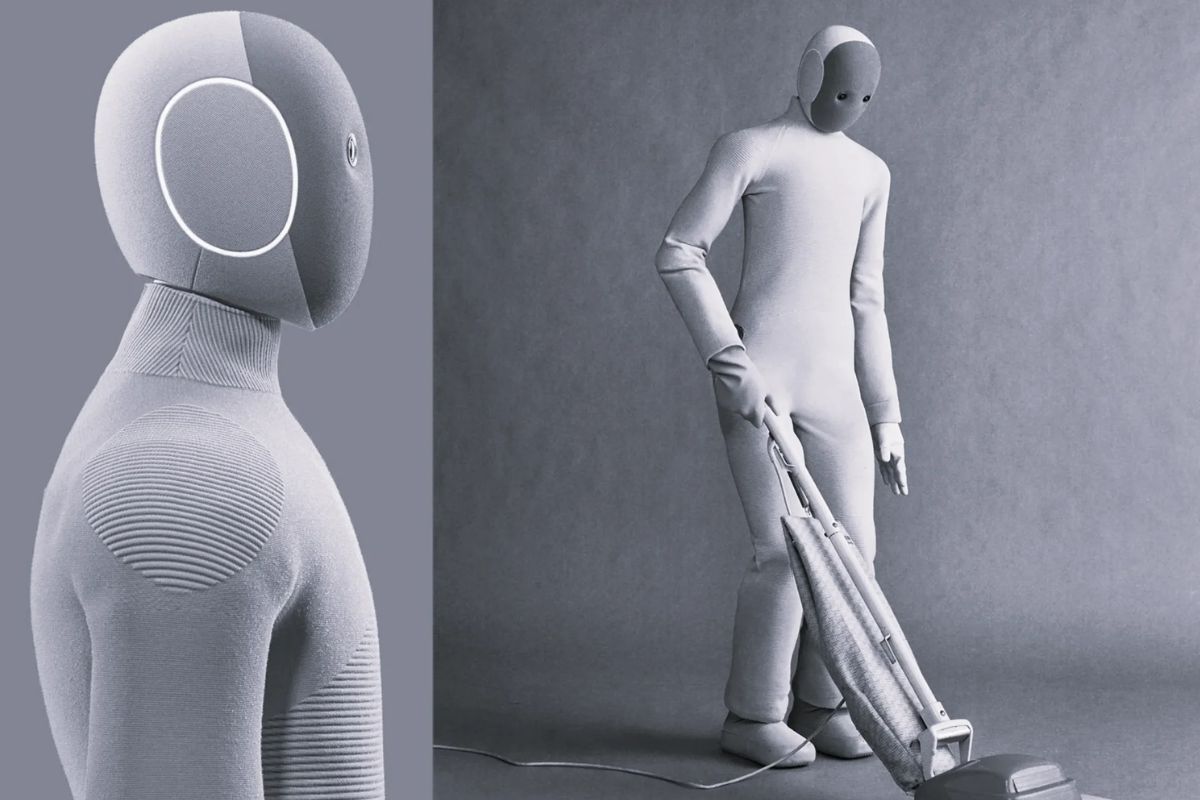


First Humanoid Robot Aimed at Consumers Promises to Perform Household Tasks, Chat, and Learn from its Owner through Embedded AI
The humanoid robot Neo, developed by the manufacturer 1X, marks a new stage in the practical application of domestic robotics. Standing at 1.67 meters tall and weighing about 30 kilograms, the model is the first aimed directly at the consumer market and is already available for pre-order. Designed to assist with simple tasks and daily interactions, the Neo promises to be more than just a technological curiosity; it was conceived to integrate smoothly into household routines with safety and autonomy.
The pre-sale of the humanoid robot is available for US$ 20,000 (around R$ 107,000) or through a monthly subscription of US$ 499 (approximately R$ 2,600), with a minimum commitment of six months. The first deliveries are expected for 2026 in the United States, while the arrival in other countries, such as Brazil, is anticipated in 2027, still without a defined date. The launch consolidates 1X’s entry into a segment that until now seemed distant from the average consumer.
What the Humanoid Robot Neo Can Do

The Neo is designed to perform everyday activities with skill and safety. According to 1X, the humanoid robot can fold clothes, organize shelves, unload the dishwasher, water plants, open doors, and even retrieve objects.
-
Scientists have finally discovered where the plastic that disappeared from the oceans went, and the answer is frightening: it fragmented into such tiny particles that they became invisible and now there are 27 million tons of nanoplastic just in the North Atlantic.

-
The Artemis II mission will take the Orion capsule back to the vicinity of the Moon with four astronauts, a private bathroom with a curtain, a system adapted for men and women, and a level of comfort that highlights how the Apollo era operated at the rawest limits of space exploration.
-
Giant structures on the seabed precisely control oil and reveal how high-tech underwater valves work.

-
China has just tested a giant drone the size of a fighter jet with a wingspan of 25 meters that carries 6 tons, flies for 12 hours, and the most frightening part: it can launch entire swarms of smaller drones directly from the air.


Its lightweight and balanced structure allows it to operate in domestic environments without causing damage, adapting to different types of flooring and furniture arrangements.
In addition to practical functions, the Neo can also interact through language and contextual vision capabilities, understanding verbal commands and recognizing objects and people.

When it encounters an unknown task, the owner can request remote support from a 1X specialist, who takes temporary control to teach the correct execution—a process that contributes to the machine’s continuous learning.
Structure, Strength, and Movement

With a height of 1.67 m and a weight of 30 kg, the humanoid robot Neo combines lightness with strength capability. It can lift up to 70 kilograms and carry around 25 kilograms while in motion, making it functional for various tasks.
The manufacturer utilizes a patented locomotion system called Tendon Drive, which employs high-torque motors and cables that simulate human tendons, ensuring smoother and safer movements.
This engineering gives the Neo fluid movement and a stable posture, capable of autonomously adjusting its center of gravity.
The goal is for the robot to operate in real household environments with obstacles, carpets, stairs, and height variations without compromising performance or safety.
Artificial Intelligence and Contextual Learning
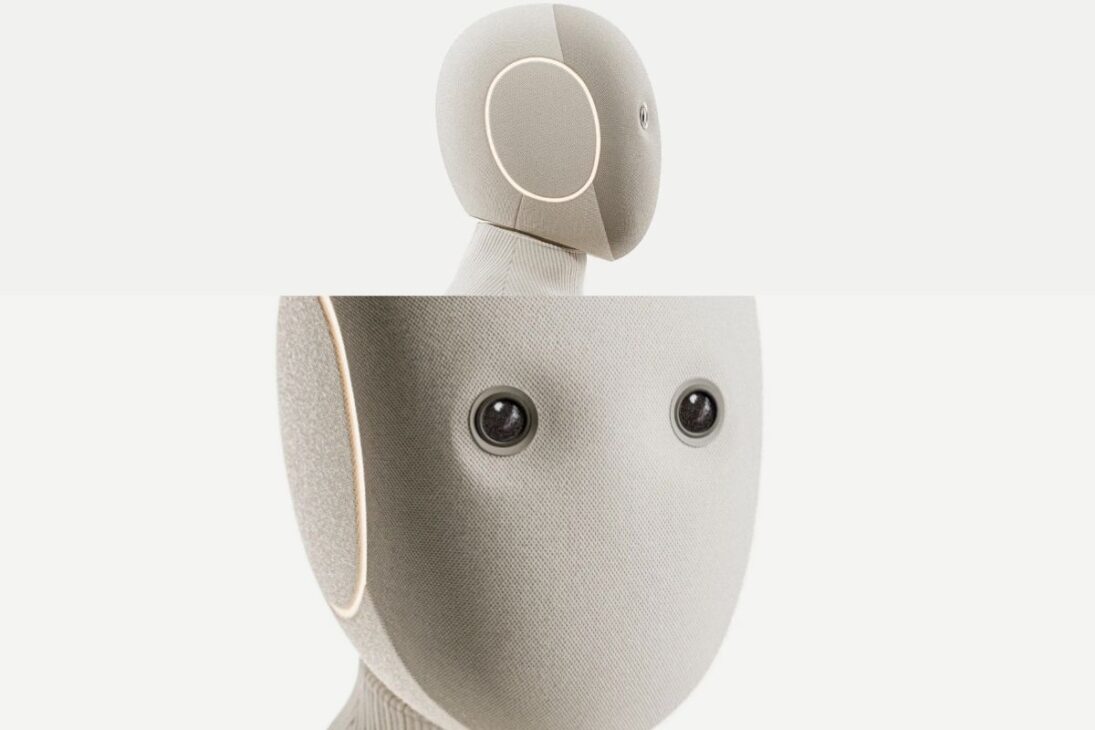
The humanoid robot Neo was developed in partnership with Nvidia, incorporating Artificial Intelligence (AI) models focused on perception, interaction, and contextual memory.
This means the robot can understand what it sees, react to situations, and maintain ongoing conversations, remembering user preferences or habits, such as the arrangement of objects in the home.
With hands with 22 degrees of freedom, the Neo achieves superior precision and flexibility compared to previous versions of domestic robots.
It combines audio, vision, and force sensors to prevent falls, identify obstacles, and handle fragile objects like glasses or books without damaging them.
The manufacturer states that these advances make the Neo a real tool for home use and not just a laboratory prototype.
A Milestone for Domestic Robotics


For 1X, the Neo symbolizes the moment when humanoid robots become accessible products for the general public.
The company’s founder, Bernt Børnich, stated that “humanoid robots have become a product that people can touch and use.” This statement reflects the transition of robotics from research to consumption, driven by the maturation of AI models and the reduction of component costs.
However, the initial price and the need for a monthly subscription show that the Neo, at least at launch, is aimed at early adopters and tech enthusiasts.
The expectation is that advancements in production and increased scale will lower costs, paving the way for domestic robots to become part of daily life in more homes.
The Neo launches a new phase for humanoid robots: moving from laboratories into homes. Its combination of strength, precision, and learning represents a remarkable advancement in the integration of humans and machines.
Starting in 2026, it promises to transform the concept of “household help” into something fully automated and interactive.
Would you have a humanoid robot as an assistant at home? Let us know in the comments if you would let the Neo fold your clothes or organize your kitchen.










Com certeza eu deixaria