





 Portuguese
  English
  Spanish
  4 min of reading
  0 comments


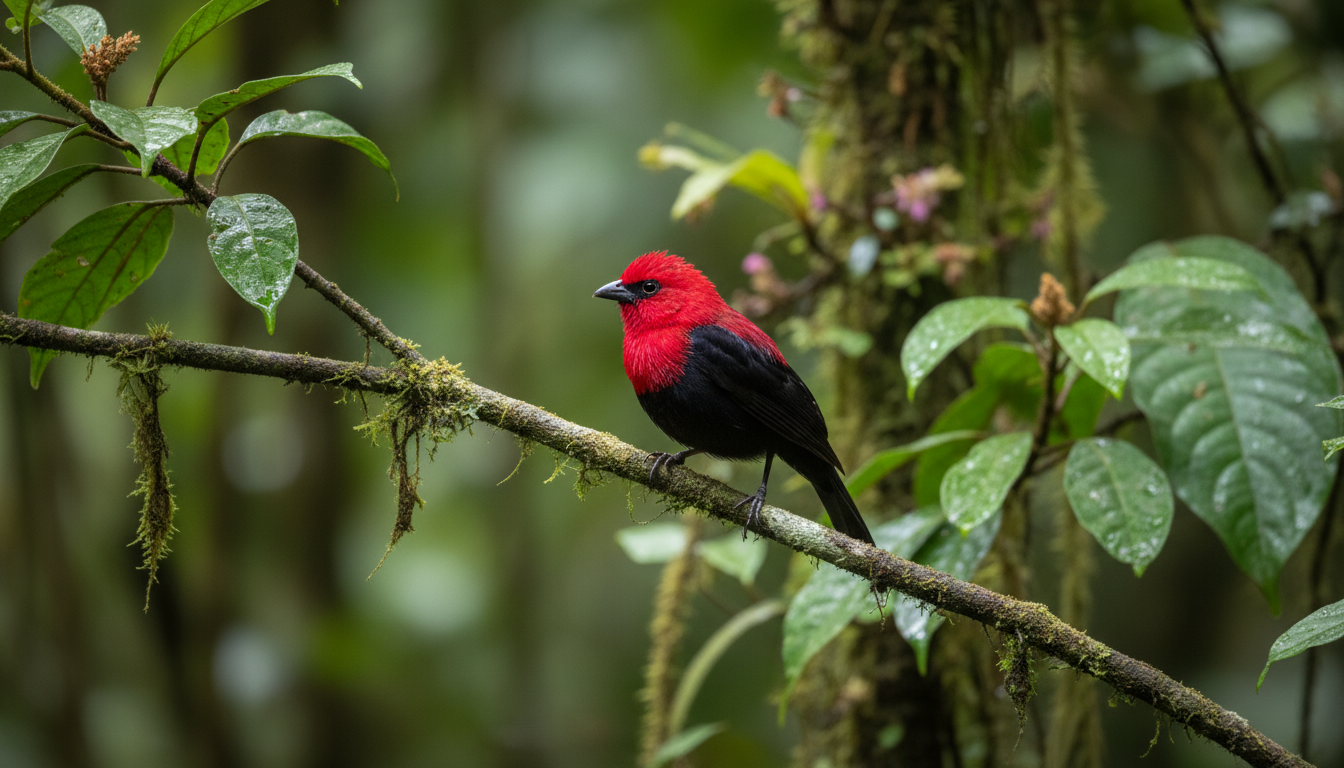
2025-2026 breeding season records 12 nests at the Arajara Geosite in Barbalha, with successful hatching and development of chicks of the critically endangered bird
It was discovered in 1996 in a cave in the interior of Ceará and has since continued to concern researchers. The soldadinho-do-araripe (Antilophia bokermanni), classified as critically endangered by the Ministry of the Environment and BirdLife International, exists in only three municipalities on the planet: Barbalha, Crato, and Missão Velha, all in the Chapada do Araripe. Now, the 2025-2026 breeding season has brought news that renews hope — 12 monitored nests and healthy chicks that have successfully left the nest.
According to a report published by the Blog do Ambrósio Santos, the monitoring took place at the Arajara Geosite, in the Farias Cave — exactly the location where the species was first found nearly 30 years ago. Breeding began on September 29, 2025, and the first nest was identified on October 29.

From egg to flight: how the chicks of the soldadinho-do-araripe survived
The timeline of the season reveals how fragile and precise the reproductive cycle of this bird is. The first eggs appeared on November 10 and 12, 2025, with a natural interval of approximately one day between each laying. After three weeks of incubation by the female, the chicks hatched on November 30 and December 1.
-
The coffee that has already been repurposed into biofuel, concrete, and roadworks now takes on a new unexpected function: becoming a sustainable insulator with six times greater capacity and real potential to replace petroleum-derived foams.

-
Hidden in a 75-hectare forest within a university in Minas Gerais, a newly discovered fungus reprograms the brains of spiders, turns the victims into obedient zombies, and forces them to die exactly where it needs to spread its spores.
-
Country on high alert: banned list of school supplies could result in fines of up to R$ 18.8 million and reveal abusive practices that many schools are still trying to impose in Brazil.

-
The largest oil field in the United States had entire layers that no one knew existed, and the U.S. government has just confirmed 1.6 billion barrels hidden in rocks that have been invisible for decades.
On December 21, the first chick left the nest. Two days later, on December 23, both were already flying free. The season continued until the end of March 2026, with the 12 monitored nests in the area of the Farias Cave.
The nest of the soldadinho-do-araripe is built in less than four days. The female uses dry plant fibers, fungi, and spider webs to construct the structure in forked branches, decorating it with hanging leaves — preferably from fruiting plants that the bird itself consumes. In this way, the nest serves both as shelter and pantry.
Other threatened Brazilian species have also shown signs of recovery. Recently, a bird species considered extinct for over 100 years reappeared in the Northeast and began reproducing in the wild again.

Why the soldadinho-do-araripe is one of the rarest birds on the planet
The story of this bird begins in 1996 when Weber Girão and Ciro Albano discovered it in the Farias Cave, at the Arajara Geosite. Since then, it has become a symbol of the biodiversity of the Chapada do Araripe — and also a permanent alert about the fragility of Brazilian ecosystems.
In 2003, the MMA and Ibama included the soldadinho-do-araripe on the official Brazilian list of threatened species as critically endangered. The following year, BirdLife International confirmed the same classification at the global level. The species depends exclusively on wetlands associated with springs — a habitat increasingly under pressure.
- Distribution: only Barbalha, Crato, and Missão Velha (CE)
- Status: critically endangered (MMA/Ibama 2003, BirdLife 2004)
- Behavior: territorial, does not form flocks
- Male plumage: vibrant red, achieved only after nearly two years
- Breeding period: September to March
The WikiAves highlights that the bird is one of the five species of Ceará’s fauna most threatened globally. Like the tapiti, the Brazilian rabbit that may be disappearing without anyone noticing, the soldadinho depends on habitats that shrink each year.

What sustains hope — and what still threatens survival
The monitoring at the Arajara Park Complex was coordinated by Marcos Xavier, infrastructure supervisor of the company. The maintenance team even intervened directly when heavy rains damaged the support of a nest — the restructuring saved a chick from falling into a stream.
However, researchers acknowledge significant limitations. The 12 monitored nests represent only one area — the Arajara Geosite — and do not necessarily reflect the situation of the species across its entire distribution. Furthermore, there are no updated total population data or consolidated reproductive success rates.
Environmental degradation remains the primary threat. The soldadinho-do-araripe depends on springs and wetlands to survive. Any reduction in this habitat — whether due to deforestation, climate change, or water use — directly compromises the species’ reproduction. As the Arajara Park warns, the birdwatching period from September to March also promotes tourism in the Cariri region, creating an economic incentive for conservation.
The classification data as critically endangered dates back to 2003 and 2004, and no official updates have been published since then. Therefore, although the 12 nests and healthy chicks bring real hope, there is still a lack of a complete picture of the population size and recovery trajectory of this unique species in the world.





Seja o primeiro a reagir!