Portuguese
  Spanish




Engineers Use Advanced Techniques to Raise Submerged Constructions, Avoiding Direct Contact with Water
Underwater construction is one of the most challenging areas of modern civil engineering, requiring specific techniques to raise structures underwater, such as bridge pillars. Although the name suggests that engineers work directly under the water, in reality, the process involves creating dry environments using a structure called cofferdam, according to a video from the Portuguese channel Lesics.
Removing Water to Build
The central point of underwater construction is the removal of water from the work area. This is done by constructing a cofferdam, a temporary dam that isolates the submerged area, allowing work to take place in a dry environment. To raise this structure, guide piles are driven into the ocean or riverbed with the help of machines called pile drivers.Sheet piles, interconnected to minimize leaks, are placed in sequence until they reach the bedrock.
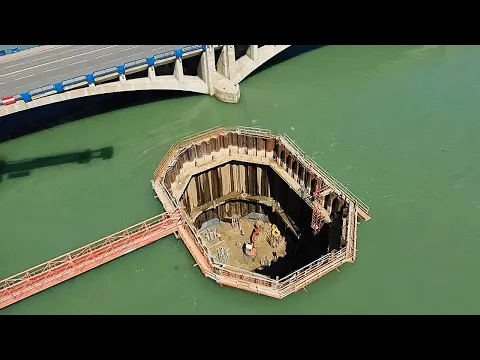

After raising the cofferdam, the water is pumped out of the isolated area, but the process faces challenges. The pressure of the water around the cofferdam can cause leaks and, if not controlled, lead to the collapse of the structure. To prevent this, a technique of bracing is used, consisting of lateral supports that strengthen the structure, preventing collapse due to internal pressure.
-
400 km² of Greenhouses in Almería, Spain, Astonish American Visitor by Producing Millions of Tons of Produce for Cold-Weather Markets

-
Antarctic Volcano Emits Microscopic Gold Particles That Travel Up to 1,000 Kilometers Across the Continent
-
Little-known Japanese factory is the world’s largest zipper manufacturer, producing 7 billion pieces annually and closing half the world’s pants.

-
Brazilian Factory Recycles One-Third of the Country’s Styrofoam Waste, Matching European Levels with 51,000 Tons Reused Since 2007


Geotechnical Studies Ensure Safety
Before construction begins, engineers conduct a detailed geotechnical study of the soil to ensure it can support the load of the permanent structure. The cone penetration test is used to measure the soil’s resistance, helping to determine the ideal depth of the sheet piles.
Even with the removal of water, infiltration remains a problem, requiring continuous pumping. To resolve this, after removing the soil from the cofferdam, the technique of concrete sealing layer is used. This method involves direct concreting over the rock, creating a solid base that prevents future leaks. The concrete is poured through a tremie pipe, ensuring that it settles properly without mixing with the remaining water.
Pillar Construction and Finalization
With the base ready, the construction of the bridge pillar can begin. The skeleton of the pillar is assembled with high-quality rebar, and the concrete is poured into the structure, taking 14 to 28 days to reach full strength. After this phase, the cofferdam is removed, and the underwater pillar is ready to support the bridge.
Underwater constructions represent a combination of advanced technology, precision, and meticulous planning, ensuring the viability and safety of large structures in submerged environments.