





 Portuguese
  English
  Spanish
  5 min of reading
  7 comments


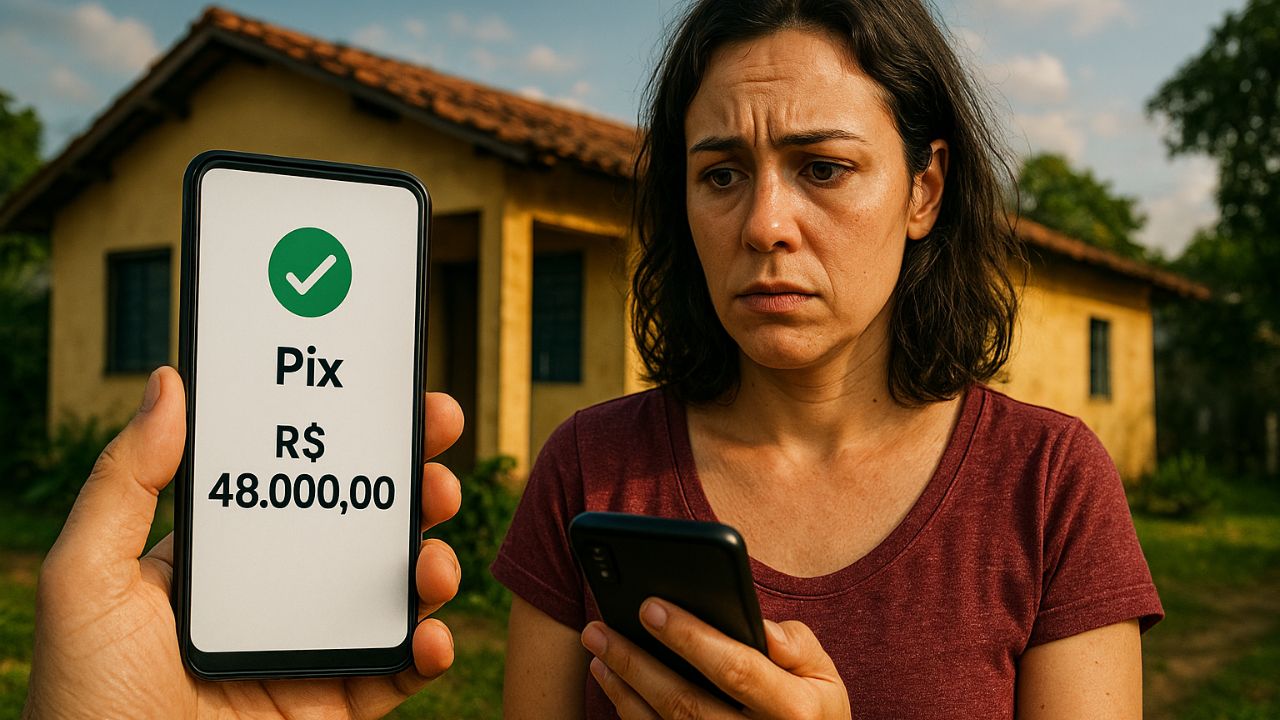


Understand The Serious Consequences Of A Transfer Error And Why Failing To Return The Money Can Be A Crime With Punishment In The Courts, Both Civil And Criminal.
A case that occurred in São Paulo raised a national alert about the consequences of failing to return money received by mistake. A woman received a transfer of R$ 48 thousand via Pix that was supposed to be destined for a construction company. Faced with the error, instead of contacting the sender or the bank, she decided to use the amount to buy furniture and renovate her house, treating the value as an unexpected gain. The company, after several unsuccessful attempts to make contact, reported the case to the police, and the woman is now facing a legal proceeding.
This episode illustrates an ethical and legal crossroads that is increasingly common in the era of instant payments. Retaining funds that have arrived in your account by mistake is not a matter of “luck”, but an act with serious legal implications. The Brazilian legal system has a robust framework for dealing with these situations, triggering two avenues of liability: criminal, which classifies the conduct as a crime, and civil, which imposes an absolute duty to return and may generate compensations.
What Is The Crime For Those Who Fail To Return Money Received By Mistake?
Many people associate this situation with the crime of “embezzlement”, but according to the Brazilian Penal Code (Decree-Law 2.848/40), there is a more precise classification. Embezzlement, described in Article 168, occurs when someone appropriates a property they had legal possession or detention of, based on a relationship of trust. An example would be an employee who does not return company equipment after being dismissed. The breech of trust is the central element, and the penalty is imprisonment from one to four years, plus a fine.
-
Brazil Ignores Trump’s threats to BRICS, Buys 42 tons of gold and reduces the Dollar’s share by 6.45% in international reserves.

-
Havan buys historic football land in Blumenau for a million-dollar amount protected by a confidentiality clause and is already planning to change even the layout of streets to build a megastore in half-timbered style costing 80 million reais.

-
Mercado Livre “opens the vault” and announces a record investment of R$ 57 billion in Brazil in 2026, a value 50% higher than the previous year, with an expansion plan that includes 14 new logistics centers, totaling 42 units in the country and hiring an additional 10,000 employees.

-
How investment in technology can revolutionize the national economy and enhance industrial gains, according to a study that highlights the direct impact on productivity, innovation, and wealth retention within Brazil.


In the case of a bank transfer due to error, the situation is different. The person who receives the money did not have prior legitimate possession; the amount appeared in their account by accident. For this, the Brazilian Penal Code establishes a specific type of crime in Article 169: “appropriation of something obtained by mistake, fortuitous event, or force of nature”. The law understands that the origin of the possession was accidental and, therefore, the penalty is less severe: imprisonment from one month to one year, or a fine. The difference in punishment reflects that the law considers the breech of trust a more serious act than opportunism in taking advantage of someone else’s mistake. The crime is only configured when the person, aware of the mistake, deliberately decides not to return the amount.
In Addition To The Criminal Proceedings, What Are The Financial Consequences?
Although criminal sanctions exist, it is in the civil sphere that the financial consequences become more severe. The obligation to return the money is absolute, based on the principle that prohibits unjust enrichment. The return must include the principal amount adjusted for inflation and added interest. Furthermore, courts have consistently ordered those who refuse to return to pay damages for moral harm, which can multiply the loss.
A report from the newspaper “O Tempo” about a decision from the Court of Justice of Mato Grosso (TJMT) illustrates this point well. In this case, a citizen who received R$ 50 thousand in duplicate and refused to return it was ordered to refund the full amount with interest and, additionally, to pay R$ 10 thousand for moral damages. According to the source, the court justified the compensation due to the “anguish and frustration” of the victim, who had to resort to the justice system to resolve a problem that required only honesty, characterizing the retention of the money as an abuse of rights.
I Received a Pix By Mistake: What Should I Do?
Acting in good faith is the safest and most correct path. The first and most important rule is not to spend the money. Treat the funds as if they do not belong to you, as they legally do not. Avoid transferring, investing, or making any transaction with the improperly received amount.
The safest way to correct the error is to use the specific return function in your bank’s app. When accessing the transaction statement, there is usually an option like “Return Value” or “Reverse Pix”. This method creates an official record that the money was returned to its source, protecting you from future accusations. Never make a new Pix to the person, even if they insist, as scammers may use this tactic to trick you with fake receipts and then contest the transaction.
I Sent a Pix By Mistake: How To Act To Recover?
If you are the one who made the error, the first step is to try a friendly contact. Often, the Pix key (email or phone) serves as a means of contact. Explain the situation calmly and politely. If direct negotiation does not work, immediately contact your bank. Although they cannot cancel the transaction, they can register the occurrence and mediate contact with the financial institution of the recipient.
If cooperation does not occur, the next step is to register a Police Report (B.O.). This document is crucial, as it formalizes the receiver’s refusal and serves as evidence of bad faith, an essential element for characterizing the crime provided for in Article 169 of the Penal Code. With the B.O. in hand, the next step is to seek legal recourse. For amounts of up to 40 minimum wages, it is possible to file a lawsuit in the Small Claims Court, a process generally quicker and at a lower cost.
The speed of Pix has transformed the economy, but it also requires a higher level of attention and responsibility from users. The law is clear: money received by mistake is not a gift, but an obligation that, if not fulfilled, can turn into a significant financial loss and a criminal process.
And you, have you ever gone through a similar situation or know someone who sent a Pix by mistake? Do you think the punishments are fair for those who do not return the money? Share your experience or opinion in the comments!







Eu já já passei por isso ao transferir dinheiro de um banco p outro, errei o último número. Graças a Deus a noite o rapaz devolveu.
Eu tambem. Transferi uns 1000 mas foi tranquilo.
Sim isso é um erro,se apossar de valores que não são seus geram prejuízos para alguém,mas quando caímos em golpes como do Pix que são feitos mesmo com nosso consentimento para pessoas que pegam situações em tramitação como alguém se passando por parente, ações que movemos contra alguma empresa , essa pessoa recebeu valores incorretamente por que o Banco não entra com o bloqueio dos valores e nos devolvem sendo que comprovamos que é um golpe. Só alegam que a conta não tem mais valores e Sempre ficamos com prejuízo!!!!
Rapaz o que de notícias de gente que fez Pix errado não está escrito …. E 10m. 48 100