





 Portuguese
  English
  Spanish
  3 min of reading
  0 comments


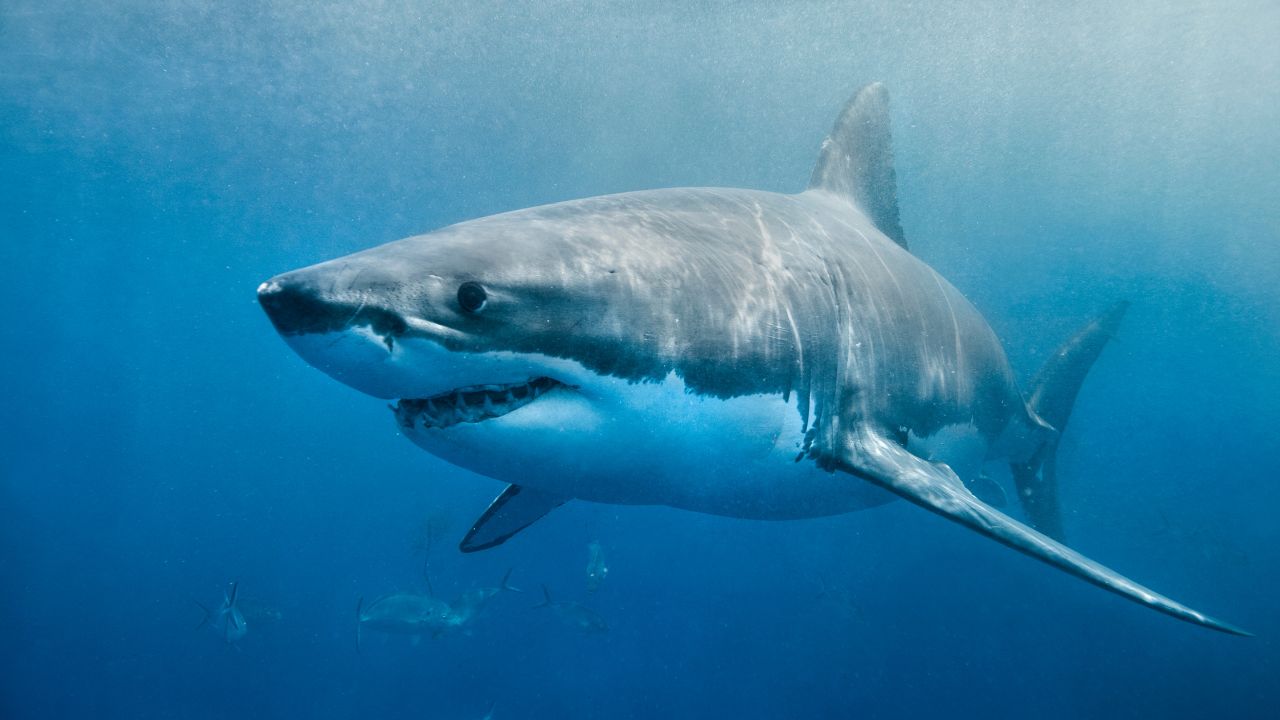
Researchers Monitor Contender, the Largest Great White Shark in the Atlantic, to Understand Its Migrations, Growth, and Impact on the Marine Ecosystem.
Measuring over four meters long and weighing around 750 kilograms, a great white shark named “Contender” is being monitored by scientists from the international organization OCEARCH.
The animal was tagged in early 2025, in deep waters about 72 km off the coast of the USA, between the states of Florida and Georgia.
Through a satellite tracking system, researchers are following the predator’s movements in real-time.
-
Sleeping at different times each day can be a bomb for your heart and even double your risk of having a heart attack.

-
Without help and without heavy machinery, a woman builds a house from scratch with stone, wood, and cement, erects a chimney, creates a complete leisure area, and transforms an empty lot into her dream home.

-
Couple transforms abandoned house after years of being closed; residence was overgrown with weeds, had a green pool, and a deteriorated structure in the interior of Rio de Janeiro.

-
Hidden marks on the walls of the site associated with the Last Supper of Jesus for centuries have been deciphered in Jerusalem, revealing medieval inscriptions left by pilgrims, European nobles, and travelers from the Middle East.


The goal of the study is to deepen the understanding of the behavior, migration, and especially the mysteries of reproduction of the largest great white shark ever documented in the North Atlantic.
What Makes Contender a Great White Shark So Special?
Contender is not just another shark in the ocean.
Its impressive size and the possibility of still being in growth position it as one of the largest specimens of the species ever monitored by scientists.
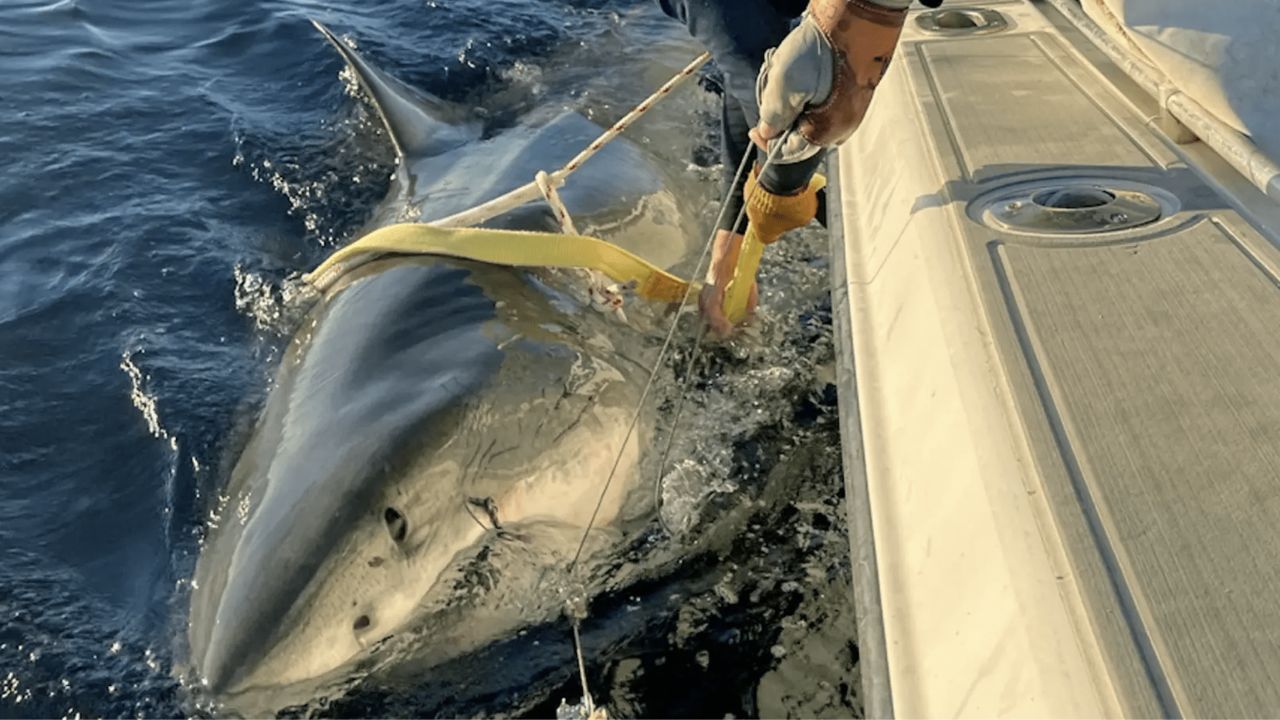
According to researchers, the animal measures over 4.2 meters and weighs around 750 kg, numbers that surpass the average of adult great white sharks, which typically range from 3.5 to 4 meters.
The name “Contender” was chosen precisely because it competes for the title of largest active great white shark.
How Is the Largest Great White Shark Monitored?
Right after capture and release, Contender received a SPOT tag, a type of transmitter that sends data via satellite whenever the animal approaches the surface of the sea.
This technology allows scientists to track its movements, speeds, and diving patterns.

Information is updated on an online platform by OCEARCH, which also provides the history of other large predators tracked by the project.
In addition to location, the tag provides environmental data, such as water temperature and depth, crucial for understanding the preferred environment of the largest great white shark ever studied in the region.
A Predator in Constant Motion
Since it was tagged, Contender has shown a migratory pattern typical of great white sharks in the North Atlantic.
During the summer, it migrated to the colder regions north of the USA and Canada, where seals are abundant—one of its main food sources.
This behavior is strategic: by accumulating energy in summer and fall, the animal prepares for the long journey back to warmer waters in winter.
Contender’s most impressive crossing so far was a trip of 1,400 km between Massachusetts and the Gulf of St. Lawrence, completed in just 73 days.
The Ecological Impact of Contender
According to Chris Fischer, founder of OCEARCH, the largest great white shark plays an essential role in the balance of marine ecosystems.
The presence of large sharks modifies seal behavior. They catch fewer fish, which helps to preserve fish stocks in the region, Fischer stated.
In other words, even unknowingly, Contender helps maintain ocean health by controlling populations of intermediate predators.
There Is Still Much to Discover About Great White Sharks
Despite decades of research, little is known about the reproductive cycle of great white sharks.
The exact location where they mate or where the pups are born remains a mystery. Therefore, tracking a specimen like Contender is so valuable.
It can help scientists identify breeding areas and better understand the migratory habits of the species—something fundamental for conservation and protection strategies of the seas.
Contender may be the largest great white shark currently monitored, but there are indications that it is still growing.
With information from Revista Fórum.









-

-

-

-

12 pessoas reagiram a isso.