





 Portuguese
  English
  Spanish
  5 min of reading
  0 comments


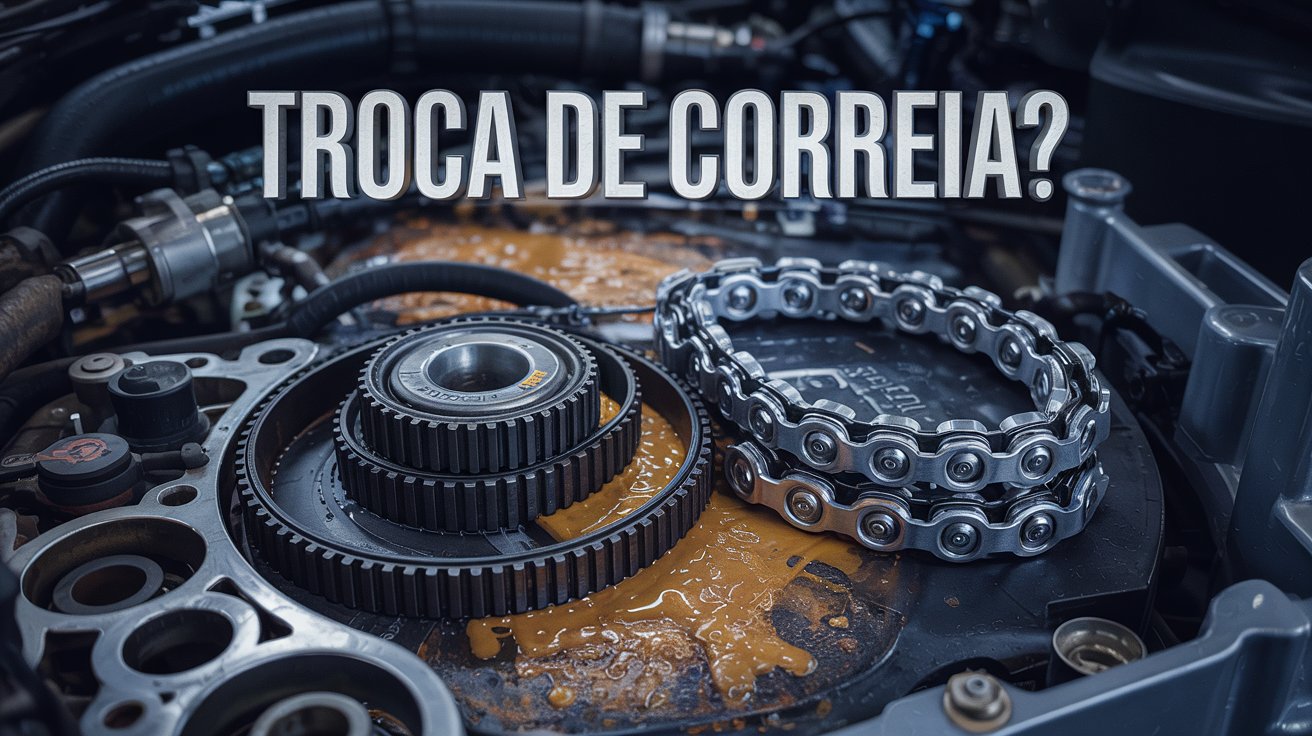
Did You Know That Replacing The Timing Belt With A Metal Chain Can Transform Your Car’s Life? Discover The Engines That Have Already Gone Through This Modification, The Advantages And Limitations Of This Solution. What You Need To Know Before Trying To Make This Change In Your Vehicle! Don’t Miss Out!
The oil-soaked timing belt is an essential component in many modern engines, but it often raises doubts and concerns among drivers, especially regarding the possibility of replacing it with a metal chain.
Although this solution has been implemented in some car models from different manufacturers, it is still not a common practice.
According to experts, the timing belt to chain swap depends on a number of technical factors and, often, is not a viable option for the consumer.
-
A retired IT professional built a 22-meter boat in his backyard in Oklahoma with a school bus engine, light pole masts, and handmade watertight doors to become the redneck version of Jacques Cousteau.

-
China is building a city in Brazil: a complex with an investment of R$ 5.5 billion comes to light, but allegations involving workers draw attention.

-
While Argentina buys old war equipment, Brazil is keeping an eye open and joins the select group of nations with advanced military technology by investing $5.2 billion, producing 36 Gripen fighters in the country, and reducing operational costs.

-
Brazil on alert? Why invading Brazil is a NIGHTMARE for the USA: 8.5 million km², 213 million inhabitants, Amazon covering 60% of the territory, trillion-dollar war, and resistance that even 13,000 aircraft could not control.


In recent years, some three-cylinder engines from Chevrolet and Ford’s 2.0 turbo diesel have started to be equipped with chains instead of timing belts.
These examples have raised questions about the viability of replacing timing belts with chains in other engines, but the answer is not straightforward.
Why Is The Oil-Soaked Timing Belt Chosen?
The decision to use an oil-soaked timing belt is made at the beginning of the engine design process and is related to various benefits.
It generates less friction, which contributes to greater engine efficiency and, consequently, improves fuel consumption.
Additionally, the oil-soaked timing belt is quieter, which provides a more pleasant driving experience with less engine noise.
These factors make the belt an attractive choice for manufacturers, especially when the goal is to increase the durability and performance of the engine.
However, replacing a timing belt with a metal chain is not as simple as it seems.
The adaptation would require deep changes in the engine design, such as the manufacture of custom pulleys and the installation of a chain that has the exact size.
This modification would require specialized engineering, usually performed only by the vehicle manufacturers themselves, meaning it would not be an affordable solution for the average consumer at automotive repair shops.
The Transition From Belt To Chain: Practical Cases
The 1.2 Puretech engine, manufactured by PSA (now Stellantis), went through an interesting transformation over the years.
In its previous version, the engine used an oil-soaked timing belt, but with the launch of the third generation, Peugeot and Citroën adopted a different solution.
The belt was replaced by a metal chain in this new engine model, aiming to improve durability and reduce long-term maintenance costs.
However, it is important to highlight that, despite the successful modification in the 1.2 Puretech line, this swap was not a simple or accessible option for the average drivers.
For older engines or those with timing belt configurations, the adaptation would require a conversion kit, consisting of parts from the latest version of the engine.
This, in turn, would still imply considerable costs and would not be a process that any workshop could carry out without the appropriate technical support from the manufacturer.
Ford Also Adopts The Metal Chain
Another example of this type of adaptation was carried out by Ford in its 1.0 turbo three-cylinder engine, launched in 2020.
In Brazil, this engine was introduced in the Fiesta model, and, as part of its update, it started using a metal chain instead of the traditional oil-soaked timing belt.
This change, although positive, was not accompanied by a conversion possibility for older models.
In other words, drivers with previous versions of the Fiesta or other models with the 1.0 turbo engine do not have the option to simply and affordably switch the belt for a chain.
However, Ford has made conversion kits available in Europe, using original parts to swap the belt for the chain, which makes it possible to carry out the modification in certain versions of the engine.
It’s important to note that, despite this timing belt to chain switch, the Ford 1.0 turbo engine still maintains the oil-soaked timing belt for powering the lubrication pump.
In other words, the change does not apply to all components of the engine, and there are currently no conversion kits available for all engines.
What Prevents The Swap In Other Models?
According to the portal Auto Papo, although the swap of timing belts for chains has become a reality for some engines, the adaptation is not available for all vehicle models.
In the case of General Motors, for example, the three-cylinder engines used in Brazil, like those in the Onix, Tracker, and Montana, do not have versions with a metal chain.
Furthermore, there are no conversion kits available for these models.
This means that the solution to replace the belt with a chain is not an option for owners of these vehicles.
There are also reports that circulated about the potential existence of chain versions of these engines in markets like Mexico and the United States, but this information is not true.
In the US and Mexico, GM offers 1.3 engines with chains, but these engines are different from the 1.0 and 1.2 found in Brazil, making the solution incompatible with the models sold in the country.
Challenges And Limitations Of Engine Modifications
Replacing the timing belt with a chain is not a simple modification and can involve risks.
In addition to the changes in the engine that can compromise its integrity and durability, the adaptation requires specialized technical care.
The engineering behind these modifications is not trivial, and any mistake can lead to performance failures in the engine or even irreparable damage to internal components.
Moreover, replacing a belt with a chain may not be a financially viable option for all vehicle owners.
The cost of a conversion kit is high, and workshops that perform this type of service are not found on every corner.
In many cases, the choice for the oil-soaked timing belt continues to be the most advantageous in terms of cost-benefit for manufacturers and consumers.
And you, have you ever thought about replacing your car’s belt with a chain? Do you think this change would really bring benefits? Comment below!







Seja o primeiro a reagir!