





 Portuguese
  English
  Spanish
  6 min of reading
  0 comments


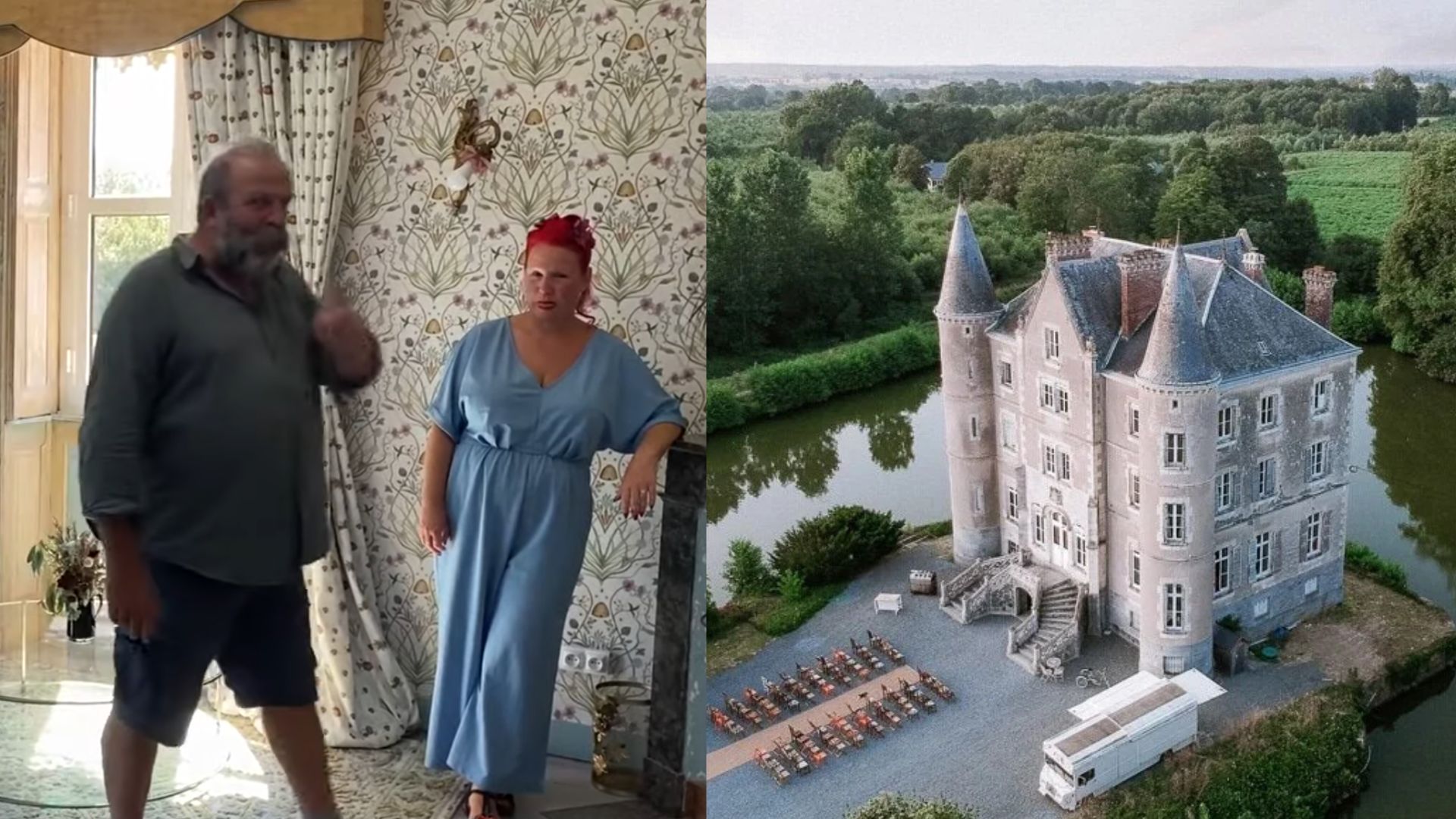
Historical property in the French countryside has been inhabited again after decades of abandonment and has come to gather restoration, family life, and events in a scenario marked by moat, walled garden, orange grove, and dozens of preserved environments with references from different eras.
Dick and Angel Strawbridge have returned continuous use to the Château de la Motte-Husson, in western France, by converting a historical property that had been uninhabited for decades into a family home and event space.
The renovation preserved central characteristics of the property, such as the moat, the walled garden, the orange grove, and the scale of a rural French château, while incorporating essential infrastructure for contemporary living.
The international projection came with the series “Escape to the Chateau”, aired by Channel 4, which followed the adaptation of the mansion and helped transform the residence into a reference for those following restoration projects.
-
How a 7.4 kg latch and 500 kN allows for an extra layer of containers and speeds up the operation of mega cargo ships.

-
Magnets on the refrigerator door may seem harmless, but there is a little-observed detail that raises questions about energy consumption and makes many people wonder if it affects the electricity bill.
-
In Botswana, a salt flat of up to 16,000 km² that was once an African megalake spends months as an absolute white desert, but during the rainy season it transforms into a shallow sea that reappears from nowhere and can be seen from space in the middle of southern Africa.
-
The United Kingdom is transforming toilet paper removed from sewage into an ambitious and surprising project that could forever change the way cities and industries view one of the most unthinkable everyday waste products.

In the couple’s official material, the property appears as a construction of 45 rooms surrounded by parkland, outbuildings, and landscaped areas, a scenario that has come to gather domestic routine and hosting celebrations.
History of the Château de la Motte-Husson and origin of the property

The château is located in an area whose occupation predates the current building.
According to the official historical page of the property, the land housed a fortification situated in the parish of La Motte between the 12th and 14th centuries.
Later, the Baglion family took possession of the area, and the castle was rebuilt within the old square moat between 1868 and 1874, an origin that helps explain the presence of marks from different eras in the architectural ensemble.
This historical formation is reflected not only in the volume of the house but also in the way the spaces are organized.
The complex includes the main body of the château, barn, large outdoor areas, and the Art Deco-style orange grove mentioned by the official site in materials about events.
Instead of reducing this identity, the restoration was conducted to maintain the scenic character of the property and allow it to remain visible in everyday use.
Dick and Angel state that they found the property in October 2014 and completed the purchase in January 2015.
From then on, the property ceased to be just a building of heritage value and became the center of family life.
The process also coincided with the transformation of the house into a television set and a permanent showcase of a restoration followed by an international audience.
Structural renovation brought electricity, sewage, and heating to the château

When the couple took over the château, the priorities were far from aesthetic.
In a report published on the official site, Dick Strawbridge notes that the property had no sewage system, electricity, or heating, three basic conditions that needed to be resolved before any more visible finishing touches.
The description helps to gauge the state of abandonment of the property and the extent of the intervention needed to make it habitable.
The work, therefore, began with the invisible structure that supports the routine of a house of this size.
The château’s own history reports that during the installation of the new sewage system, deep foundations were identified beneath the current construction, a fact that reinforces the overlap between defensive past and later residential occupation.
In properties of this type, adapting the present without compromising the material legacy is often the most delicate stage.
In addition to the technical challenges, the renovation revealed an unexpected collection within the house itself.
Dick reports having found hundreds of magazines predating World War I, as well as a side saddle and Victorian clothing that would have been discarded.
These materials did not solve structural problems but added historical depth to the project by offering concrete traces of previous uses of the château.
Decoration with memory, reuse, and historical references
The internal ambiance followed the same logic of preservation combined with adaptation.
In an interview with Homes & Antiques magazine, Angel Strawbridge stated that the look of the house was assembled with objects found in charity shops, antique fairs, and resale markets.
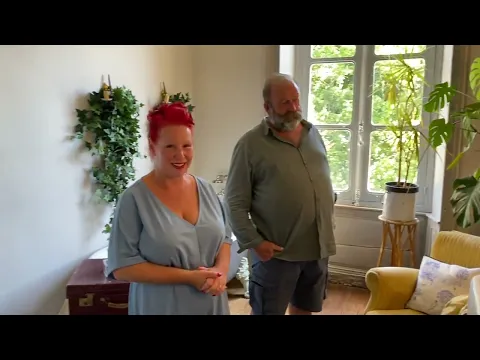

The goal was not to hide the age of the property but to create an interior compatible with its trajectory, without turning the château into a piece frozen in time.
In the visual universe developed by Angel, the repertoire mixes references from Art Deco, Art Nouveau, and illustration, as indicated by the official communication of the brand linked to the château.
This combination appears in prints, wallpapers, and decorative objects that connect 19th-century architecture to more affectionate and personalized choices.
The result is an interior that dialogues with the history of the place without sacrificing comfort and continuous use.
Some rooms better synthesize this proposal.
The Potagerie suite, highlighted in the official project material, was associated with the view of the walled garden and has come to gather decorative design and landscape reading in the same space.
In parallel, other areas were assembled with reused seating, recovered antique pieces, and circulation solutions compatible with a multi-story house, including the installation of an elevator mentioned in the FAQ section.
Moat, walled garden, and orange grove preserve the visual appeal of the property
The appeal of the property also depends on the preservation of the external spaces.
On the events page, the château is presented as a complex set in 12 acres of parkland, with a moat, Art Deco-style orangery, and walled garden.
These elements help explain why the restoration draws attention beyond the interior of the house: it is not just about recovering rooms, but about reactivating a complete historical scenario.
In another official account, Dick states that the orange grove was one of the first points to win over the couple during their visit to the property.

This observation is consistent with the role that the orangery later assumed, as the space became central to the public image of the property and the experience offered at weddings and other celebrations.
The house, thus, began to function on two scales at the same time: family residence and event destination.
Escape to the Chateau expanded the international projection of the property
This dual vocation also accompanies the media trajectory of the château.
In a more recent official publication, the brand linked to the project states that, over nine series, more than 50 spaces have been reconstructed, restored, or reimagined, and that the house has reached audiences from dozens of countries.
The main page of the website currently informs that filming for series 10 has been completed, a sign that the story of the property continues to be updated as a television and commercial product.
At the end of the transformation, the Château de la Motte-Husson ceased to be a large empty building to operate again as a place of residence, work, and constant circulation.
Among historical finds, structural works, and decorative choices guided by reuse, Dick and Angel Strawbridge reorganized the property without emptying what distinguishes it: the visible permanence of the past within a house that has returned to being used every day.








Seja o primeiro a reagir!