





 Portuguese
  English
  Spanish
  5 min of reading
  0 comments


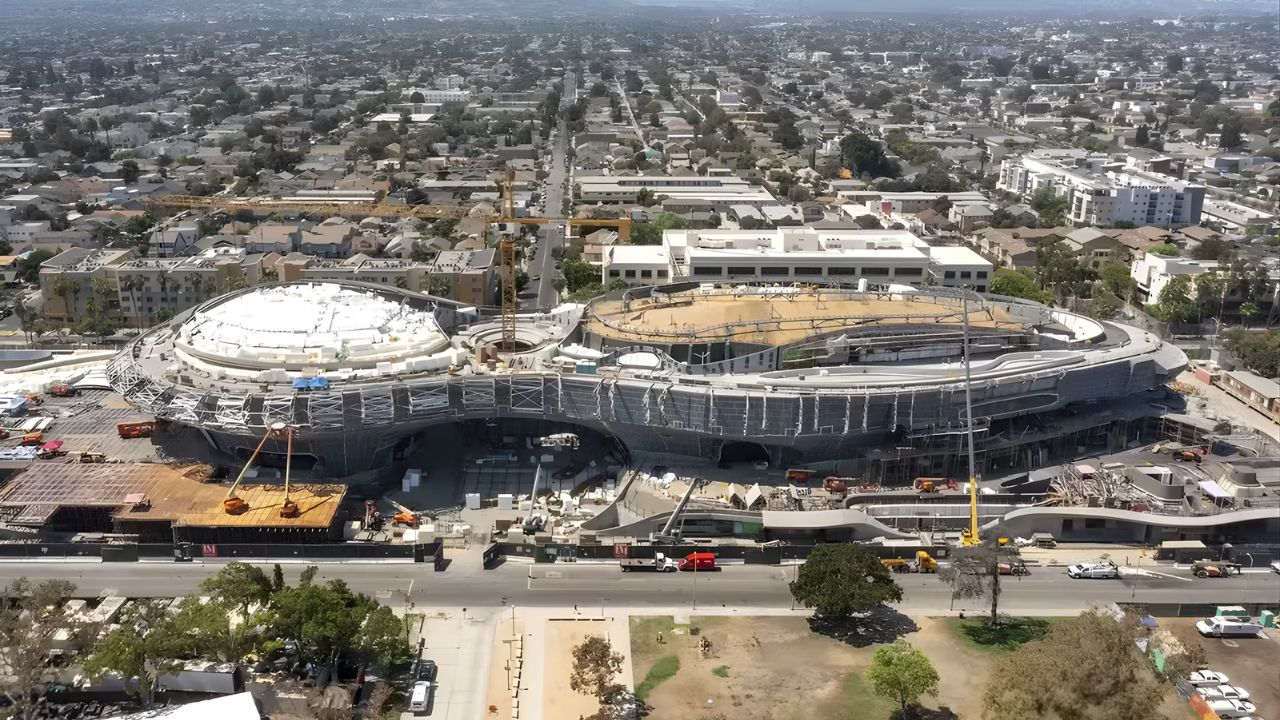
Futuristic museum created by George Lucas with billion-dollar investment opens in Los Angeles and brings together one of the largest collections of narrative art in the world
George Lucas’s museum in Los Angeles costs over $1 billion, has 1,500 curved panels, and will gather one of the largest collections of narrative art. In 2026, the Lucas Museum of Narrative Art, envisioned by filmmaker George Lucas, will enter the final construction phase in Los Angeles, establishing itself as one of the most ambitious cultural projects ever funded with private resources. According to a report from the Los Angeles Times, the museum exceeds $1 billion in investment and is primarily funded by George Lucas and Mellody Hobson.
The project has also been detailed by specialized architecture outlets. According to ArchDaily, the building will be covered by over 1,500 curved composite material panels, each with a unique geometry, forming the organic structure characteristic of the project.
The most relevant fact is that the building combines billion-dollar scale, futuristic architecture, and a collection estimated at over 40,000 works of narrative art. Located in Exposition Park, the museum integrates one of the main cultural hubs of Los Angeles and is expected to open to the public in 2026.
-
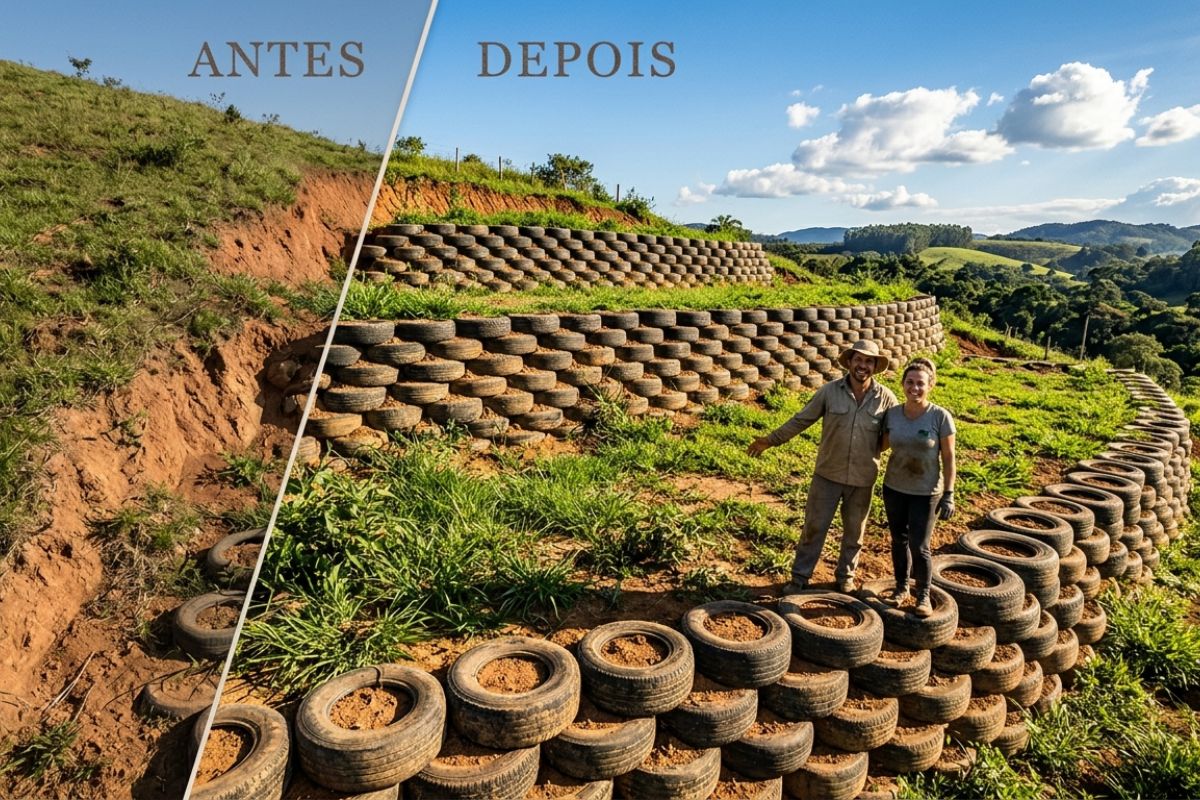
Couple shows how they built a retaining wall on their property using 400 old tires: sloped land turned into plateaus, tires are aligned, filled, and compacted with layers of soil, with grass helping in support and at almost zero cost.
-
Engineer explains drainage during the rainy season: the difference between surface water and deep water, ditches, gutters, and water outlets on the road, as well as drains and drainage mattresses, to prevent erosion, aquaplaning, and flooding at the construction site today.

-
With 55 floors, 177 meters in height, a 15-meter walkway between the twin towers, ventilated facade, and 6,300 m² of leisure space, Ápice Towers already has one tower completed and another nearly at the top.

-
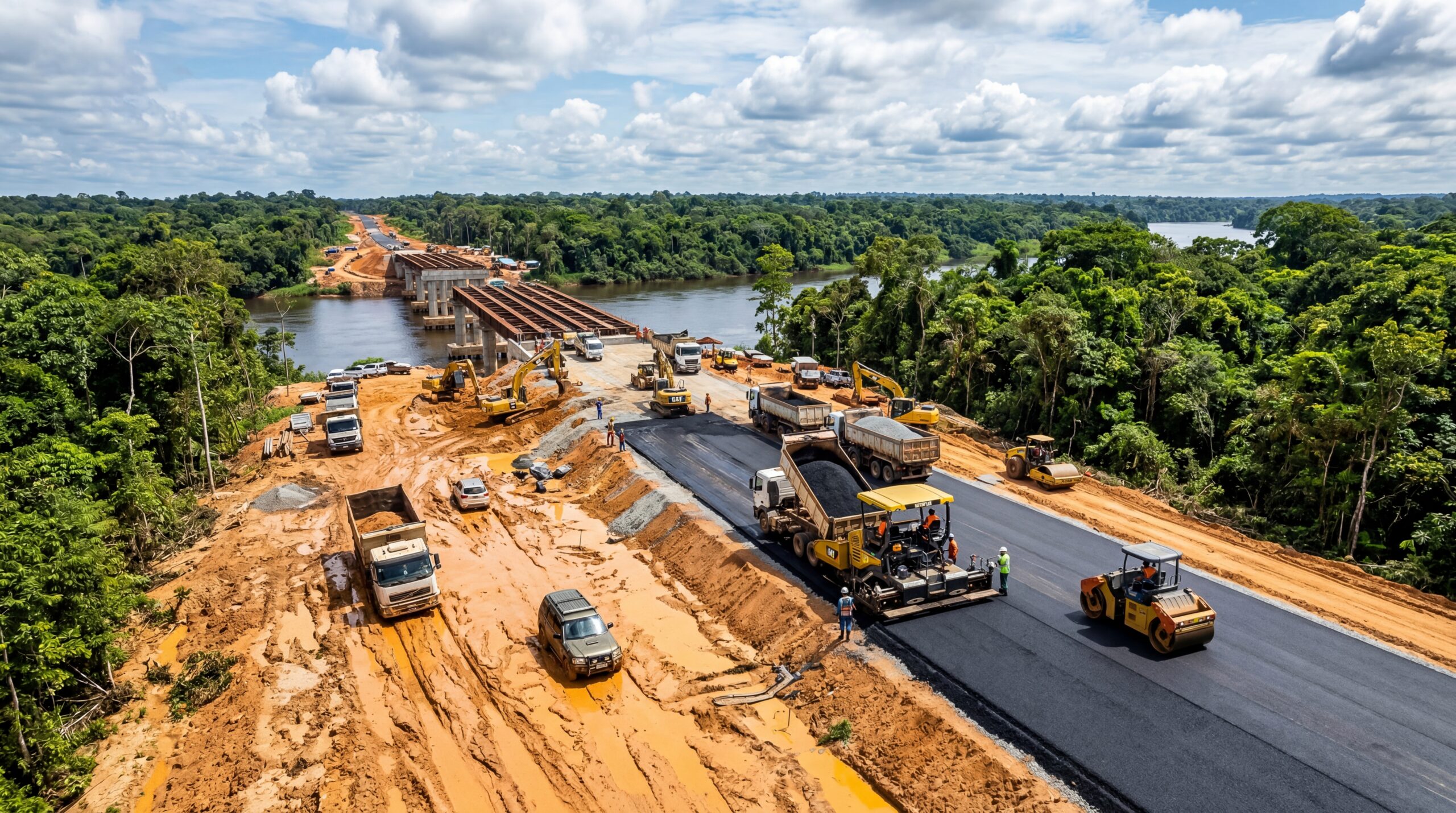
After nearly 50 years of neglect, BR-319 receives R$ 678 million to pave 340 km, gain a 320-meter bridge, and try to lift Amazonas out of the mud, the quagmire, and road isolation.

Architecture in the shape of a spaceship uses 1,500 curved fiberglass panels
One of the most striking aspects of the museum is its architecture. Designed by the Chinese firm MAD Architects, led by Ma Yansong, the building features organic and fluid shapes reminiscent of a futuristic spaceship, a characteristic that quickly transformed the project into one of the most recognizable in contemporary architecture.
The external structure is composed of approximately 1,500 curved fiberglass reinforced polymer (FRP) panels, a lightweight and durable material that allows for the creation of continuous surfaces without sharp angles.

This construction system was developed to give the building a “floating” appearance, without traditional straight lines, breaking with the conventional architectural pattern of museums based on rigid volumes of concrete and steel.
In addition to the visual impact, the use of precast panels contributes to construction efficiency and finishing precision, fundamental elements in projects of high geometric complexity.
Elevated structure creates the effect of a building suspended over a 4.5-hectare garden
Another central element of the project is how the building relates to the ground. The museum was designed to appear suspended, with its main volume elevated over a green area of approximately 4.5 hectares.
This lower space functions as an integrated public park, allowing free circulation of visitors even without direct access to the internal galleries.
According to the architects, the proposal seeks to integrate the museum into the urban landscape, transforming the land into an extension of public space rather than an isolated structure.
The result is a building that not only occupies space but redefines how it is used, creating a continuous relationship between architecture, nature, and urban circulation.
Collection brings together thousands of works and mixes classical art, cinema, and pop culture
The Lucas Museum of Narrative Art was conceived with a specific focus: narrative art, that is, works that tell stories through images. This concept broadens the traditional scope of art museums, incorporating different visual languages.

The collection, according to information released by outlets such as Los Angeles Times, includes tens of thousands of pieces, highlighting:
- Paintings by artists such as Norman Rockwell
- Classic and contemporary illustrations
- Storyboards and concept art from cinema
- Works related to pop culture and science fiction
- Original materials related to the world of Star Wars
This diversity positions the museum as a hybrid space, connecting classical art, the film industry, and contemporary digital production.
The declared goal of the project is to value visual narrative as a form of artistic expression, expanding the recognition of historically underestimated areas within the traditional art circuit.
Solar energy and environmental efficiency are part of the museum’s project
In addition to the iconic architecture, the museum incorporates solutions aimed at sustainability. The project includes the installation of approximately 24,000 square feet of solar panels, which contribute to the energy generation of the building itself.
This approach aligns with contemporary sustainable building practices, especially in large-scale projects.
The integration of energy technology into the building reinforces the proposal to combine aesthetic innovation with environmental efficiency, reducing operational impact over time.
Construction mobilizes advanced engineering and high-precision industrial processes
The execution of the museum required advanced technical solutions, especially due to the complexity of the curved shapes and the elevated structure.
The facade panels were manufactured with a high degree of precision and installed modularly, ensuring visual continuity and structural stability.
Additionally, the construction involved integration between different disciplines, including structural engineering, parametric architecture, and materials technology.
Projects of this type represent a high level of construction complexity, where small variations can compromise the final result, requiring strict control at all stages.
Cultural project expands George Lucas’s influence beyond cinema
George Lucas is widely known for his contribution to cinema, especially with the creation of the Star Wars franchise. However, the Lucas Museum represents an expansion of his work into the cultural and institutional field.
The museum was conceived as a permanent space to preserve and display works that have influenced visual narrative throughout history, including those directly linked to the film industry.
By investing over $1 billion in the project, Lucas transforms a private collection into a public cultural asset, expanding access to works that were previously restricted to private collections.
Museum reinforces global trend of cultural megastructures funded by billionaires
The Lucas Museum fits into a trend observed globally: the creation of large cultural institutions funded by private capital.
Such projects have become more common in recent decades, especially in countries with a strong concentration of wealth. In the case of Los Angeles, the museum reinforces the city’s role as one of the main cultural and creative hubs in the world, expanding its infrastructure dedicated to art, science, and entertainment.

The Lucas Museum of Narrative Art brings together a rare combination of factors: billion-dollar investment, futuristic architecture, diverse collection, and innovative curatorial proposal.
With over $1 billion invested, 1,500 curved panels on the facade, and a collection with tens of thousands of works, the project positions itself as one of the most ambitious cultural initiatives today.
By uniting classical art, pop culture, and technology, the museum not only expands the concept of narrative art but also redefines the role of museums in the 21st century, bringing together different forms of expression in a single space.







Seja o primeiro a reagir!