





 Portuguese
  English
  Spanish
  3 min of reading
  0 comments



BYD’s Profit Rises 14% In The First Half Of 2025, Driven By Global Demand For Electric Vehicles And Aggressive Expansion In International Markets
The profit of the automaker Chinese BYD increased 14% in the first half of 2025. The rise was driven by strong demand for electric vehicles and the company’s aggressive expansion in international markets.
The positive performance abroad offset the difficulties faced within China, where the price war continues to pressure companies in the automotive sector.
Financial Results For The Semester
The most important aspect is that net profit reached 15.5 billion yuan, equivalent to US$ 2.2 billion or R$ 11.9 billion.
-
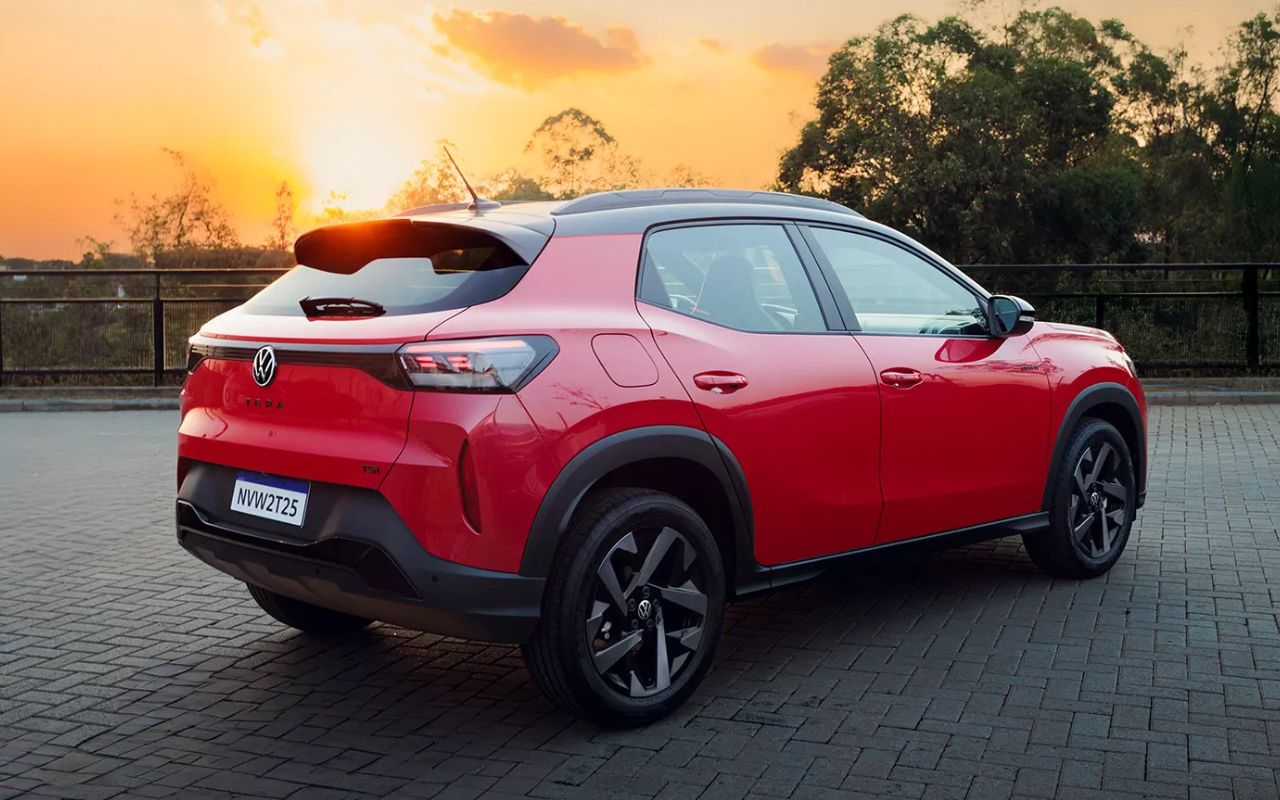
It surpassed the T-Cross, Creta, and Tracker: with nearly 8,000 units sold, the Volkswagen Tera was the best-selling SUV in March 2026.
-
Honda performs miracles in fuel consumption with a hatch that marks 13.2 km/l in the city and 15 km/l on the highway, leaving Polo, HB20, 208, and Onix behind and becoming a reference among compact cars without resorting to turbo or hybrid systems.

-
Six diseases that seem common but can prevent the renewal of the driver’s license for the elderly throughout Brazil and surprise experienced drivers — could any of them affect you without showing clear signs?

-
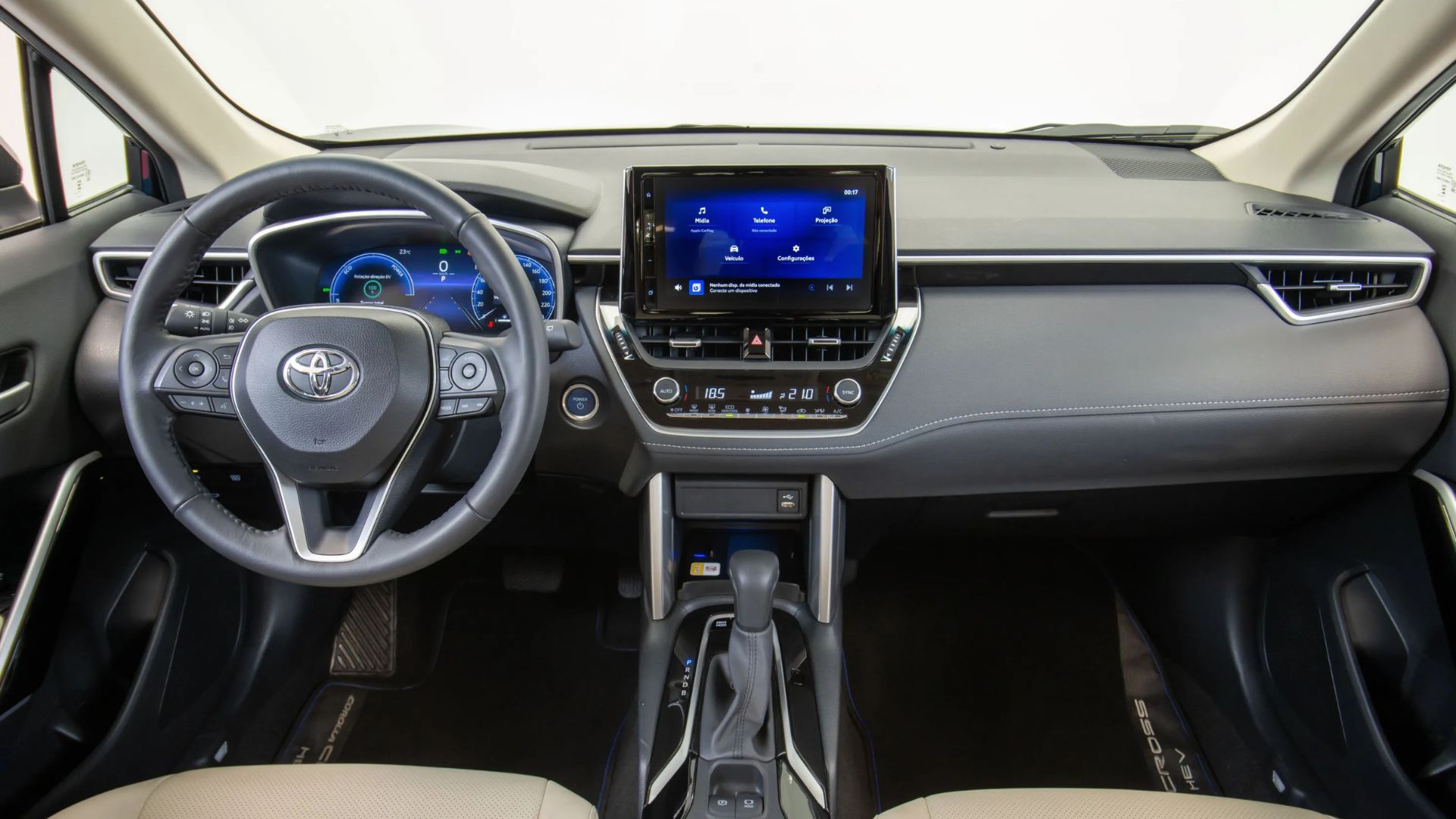
With 122 hp, fuel consumption of up to 17.7 km/l, and a trunk capacity of 440 liters, this hybrid SUV impresses even though it costs up to R$ 47,000 more than the Yaris — meet the Toyota Corolla Cross.

Revenue also rose by 23%, reaching 371.3 billion yuan, approximately US$ 52 billion or R$ 281.8 billion. These numbers were released by the company in an official statement.
The double-digit growth in earnings confirms the significance of the automaker’s international strategy. Expansion into new markets bolstered revenue at a time when margins in the home country face strong pressure.
Pressure In The Chinese Market
Despite the positive balance, the company faces a more challenging second half. The discounts offered in May placed BYD at the center of a heated debate about the future of the sector.
The Beijing government is seeking to curb the price war out of concern that the competition will reduce brand value and lead to losses even for the strongest companies.
Even so, major automakers, including BYD itself, maintained or increased discounts in July.
Some only slightly reduced the cuts, without ending the practice. Therefore, concerns remain active within the automotive industry.
International Expansion As An Asset
Currently the largest electric vehicle manufacturer in the world, BYD sold 2.15 million units in the first half.
This number represents a 33% increase compared to the same period in 2024. However, the volume still corresponds to less than half of the annual target of 5.5 million cars.
Additionally, the company observed a significant shift in the domestic market. 100% electric models recorded solid growth, but plug-in hybrids declined compared to the previous year. This shift reinforced the relevance of exports.
BYD’s unit in Thailand played a key role. From there, the company shipped vehicles to Europe for the first time, serving countries such as the United Kingdom, Germany, and Belgium, according to Xinhua news agency.
Analysts’ Perspective
Despite current difficulties, analysts project a good outlook for the company. The report from HSBC led by Yuqian Ding attributed the decline in sales in July to weaker domestic demand during the summer low season.
Another point mentioned was the company’s decision to prioritize normalizing inventories in its distribution channels. There was also stricter price discipline, which reduced sales momentum in the short term.
Furthermore, analysts believe that such measures should yield more solid results in the future. The expectation is that they will bring sustainable benefits for profit margins, ensuring more stable and balanced growth in the coming years.
Challenges And Perspectives
Therefore, BYD is in a contrasting scenario. On one hand, it reaps robust results from its global presence. On the other, it faces the weight of increasingly fierce competition in the Chinese market.
Most importantly, the internationalization strategy proved effective in the semester and may continue to be a key factor in maintaining the expansion trajectory.
For investors and analysts, attention will be focused on the balance between domestic discounts and external profits throughout the second half of 2025.
With information from O Globo.








Seja o primeiro a reagir!