





 Portuguese
  English
  Spanish
  3 min of reading
  0 comments


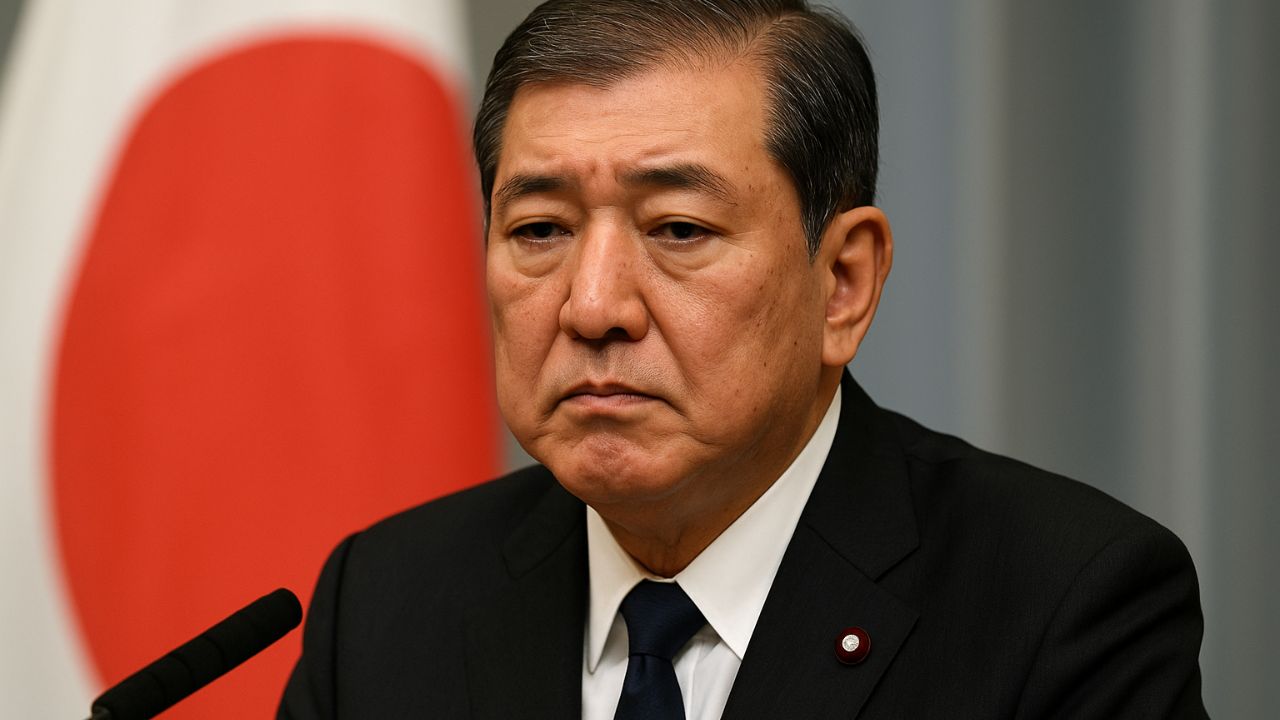
Shigeru Ishiba Resigns as Prime Minister of Japan After Electoral Defeat and Agreement with the USA, Triggering Political Crisis.
The Prime Minister of Japan, Shigeru Ishiba, announced this Sunday (09/07/2025) his resignation from the position, following the defeat of his coalition in the parliamentary elections.
The decision comes at a delicate moment, marked by economic pressures, tensions in domestic politics, and a billion-dollar agreement recently made with the United States.
At 68 years old, Ishiba determined that the Liberal Democratic Party (LDP) should organize an emergency election to choose his successor, remaining in office until the transition.
-
Iran authorizes the passage of ships with essential goods in the Strait of Hormuz, requires coordination and protocols; UN postpones resolution to reopen the oil route, while China, France, and Russia reject the use of force.

-
The Ukraine war exposes the strength of the M113 armored vehicle amid modern warfare with military drones.

-
Maritime geopolitics: China and the USA compete for strategic ports in Peru.

-
Iran shoots down two US aircraft: F-15 fighter crashes in mountainous area, one crew member is rescued and another is still missing; second crash in the Persian Gulf exposes still active air defense, says US intelligence.


Context of the Resignation: Defeats and Public Discontent
In power for less than a year, Ishiba faced increasing political wear and tear. His coalition lost the majority in both houses of Parliament, reflecting public discontent over the rising cost of living.
The most recent defeat, in July, in the elections for the Upper House, intensified the pressure for his resignation.
“In light of the growing political pressure on Ishiba following the repeated electoral defeats of the LDP, his resignation was inevitable,” assessed Kazutaka Maeda, an economist at the Meiji Yasuda Research Institute.
Final Acts Before Departure: Agreement with the United States
Despite the political turmoil, Ishiba finalized a trade agreement with the United States last week, valued at US$ 550 billion.
The pact provides for Japanese investments in exchange for the reduction of tariffs imposed by then-President Donald Trump.
In his final press conference, the Prime Minister stated: “With Japan signing the trade agreement and the President signing the executive order, we have overcome an important hurdle. I would like to pass the baton to the next generation.”
The Japanese automotive sector was one of the most affected by the tariffs, amplifying fears over weak economic growth.
Political instability also contributed to the decline of the yen and government bonds.
Who May Succeed Shigeru Ishiba
With the departure confirmed, the LDP has scheduled a vote for Monday that will define the next steps in the succession. Among the names considered are:
Sanae Takaichi, a veteran of the party, critic of the Bank of Japan’s interest rate hikes, and supporter of more expansive fiscal policies;
Shinjiro Koizumi, Minister of Agriculture and prominent political heir, seen as a figure of continuity.
“Koizumi and Takaichi are seen as the most likely candidates. While Koizumi is not expected to bring significant changes, Takaichi’s advocacy for expansionary fiscal policy could attract market attention,” explained Maeda.
Political Impact and Possibility of Early Elections
Although the LDP has historically been dominant, it currently holds no majority in either legislative house.
This means that the next leader of the party is not guaranteed to automatically assume the position of Prime Minister of Japan.
Analysts point out that, given the legitimacy crisis, the new leader may choose to call for early general elections.
However, a survey by the Kyodo Institute revealed that 55% of Japanese people do not see a new election as necessary at this time.
Meanwhile, the far right, represented by the Sanseito party, has been gaining political strength and may influence the direction of the next government.
Consequences for Japan and International Repercussions
The resignation of Shigeru Ishiba opens a phase of uncertainties for Japan’s politics.
The country faces challenges such as inflationary pressure, the need for economic stimulus, and diplomatic repositioning following the agreement with the United States.
Additionally, the leadership vacuum could delay strategic decisions in areas such as foreign trade, defense, and monetary policy.
Experts state that instability is likely to be closely monitored by international markets, which are waiting for signs about the posture of the next Japanese government.










Seja o primeiro a reagir!