





 Portuguese
  English
  Spanish
  7 min of reading
  0 comments


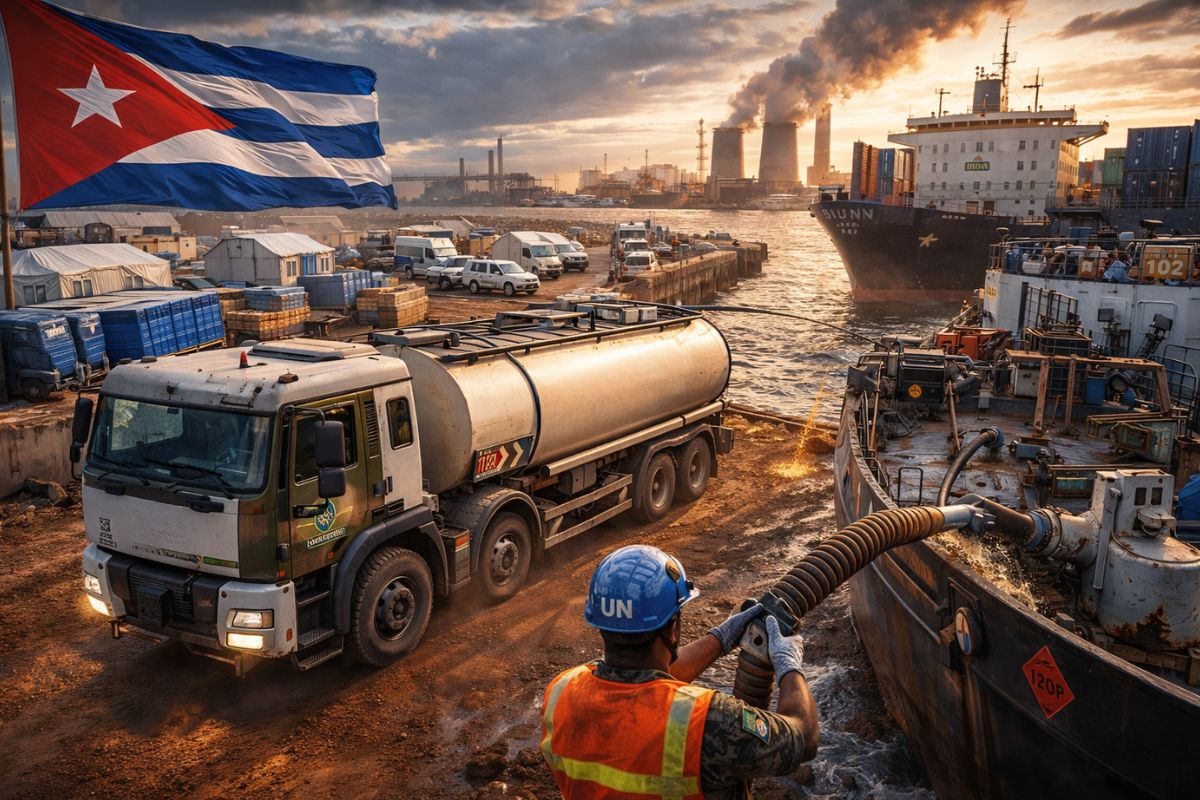
Cuba faces an energy crisis that has lasted more than three months and forced the UN to make an unprecedented decision: to import fuel for the island with a budget of 7.5 million dollars, because without diesel it cannot distribute the humanitarian aid that 20% of the Cuban population needs to survive.
Cuba is experiencing a paralysis measured in containers stuck in ports, postponed surgeries, and children without vaccines. The fuel shortage that has plagued the country for more than three months has reached such a critical point that the UN, present on the island for decades, had to resort to a measure it had never adopted in Cuba: importing diesel with its own resources, at an estimated cost of 7.5 million dollars, just to be able to transport the humanitarian aid that is already in the country but cannot leave the ports. About 200 containers with kitchen kits, solar panels, water purification systems, and food are held up, mainly in the southeast of the island.
The decision reflects the severity of a crisis that goes far beyond the lack of gasoline. The UN Resident Coordinator in Cuba, Francisco Pichon, warned that the energy crisis has systemic and growing humanitarian impacts, affecting health, water, sanitation, food, education, transportation, and telecommunications. The numbers are alarming: more than 96,000 surgical procedures postponed, including 11,000 in children, 32,000 pregnant women without stable access to prenatal care, 3,000 children with delayed vaccinations, and nearly half a million students attending classes on reduced days. Cuba, which has the oldest population in Latin America, sees its elderly unable to reach health centers due to lack of transportation.
Why Cuba has been without fuel for more than three months
According to the portal VEJA, the root of the fuel crisis in Cuba is a combination of mutually reinforcing factors. The economic embargo imposed by the United States, in place for six decades, was significantly tightened in January 2025 with the imposition of an oil blockade that drastically reduced Cuba’s ability to import oil and derivatives.
-
A child takes only bread with sugar to school, and a teacher’s gesture moves millions of people around the world on the web.

-
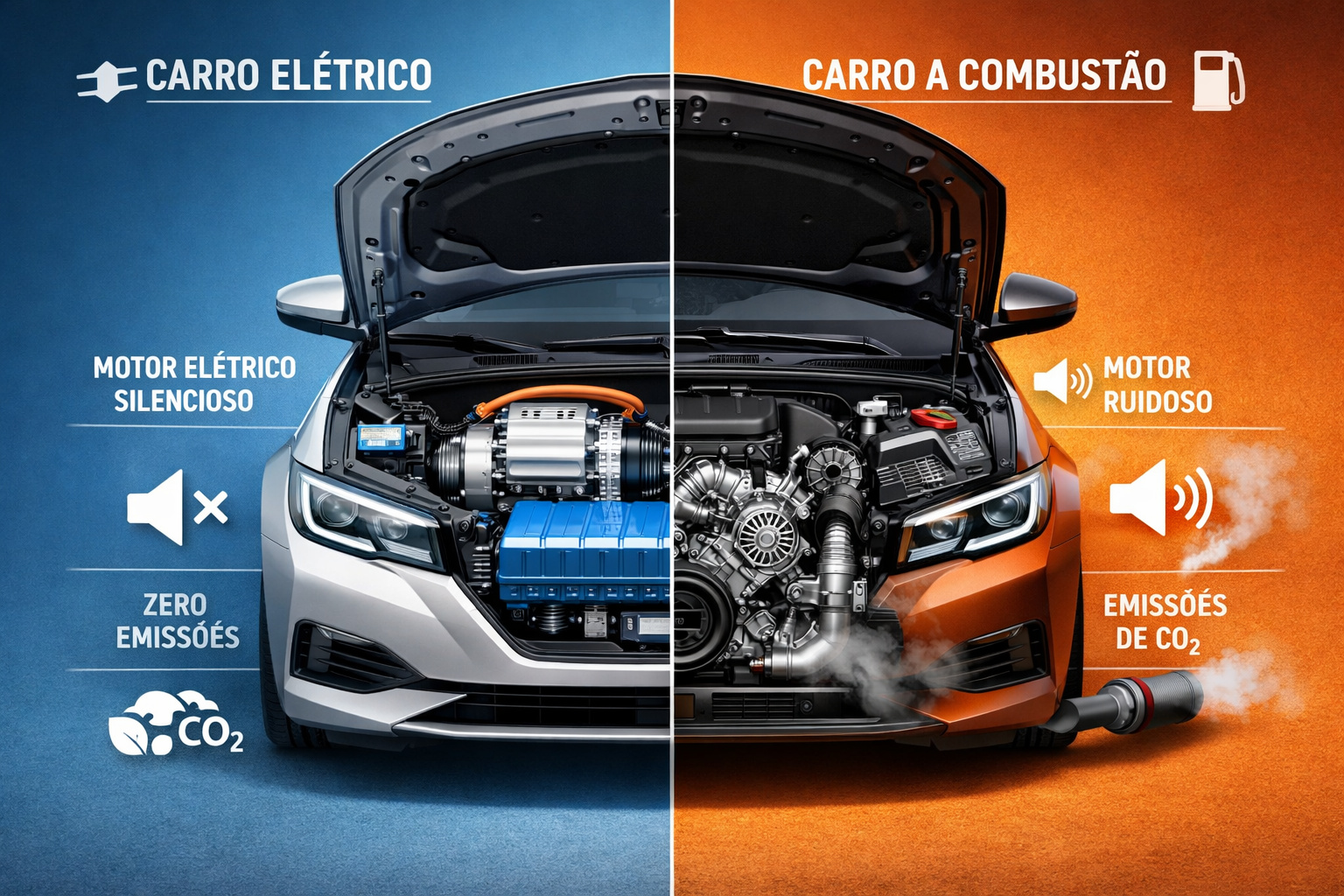
Differences between automotive technologies show advantages in energy efficiency, lower operating costs, and reduced environmental impact in real-world scenarios.
-
Mixing coffee grounds with baking soda creates a paste that eliminates odors from the refrigerator, removes grease from pots, repels insects from the garden, and exfoliates the skin of the face, all with two ingredients that most people throw away or already have in their cupboard.

-
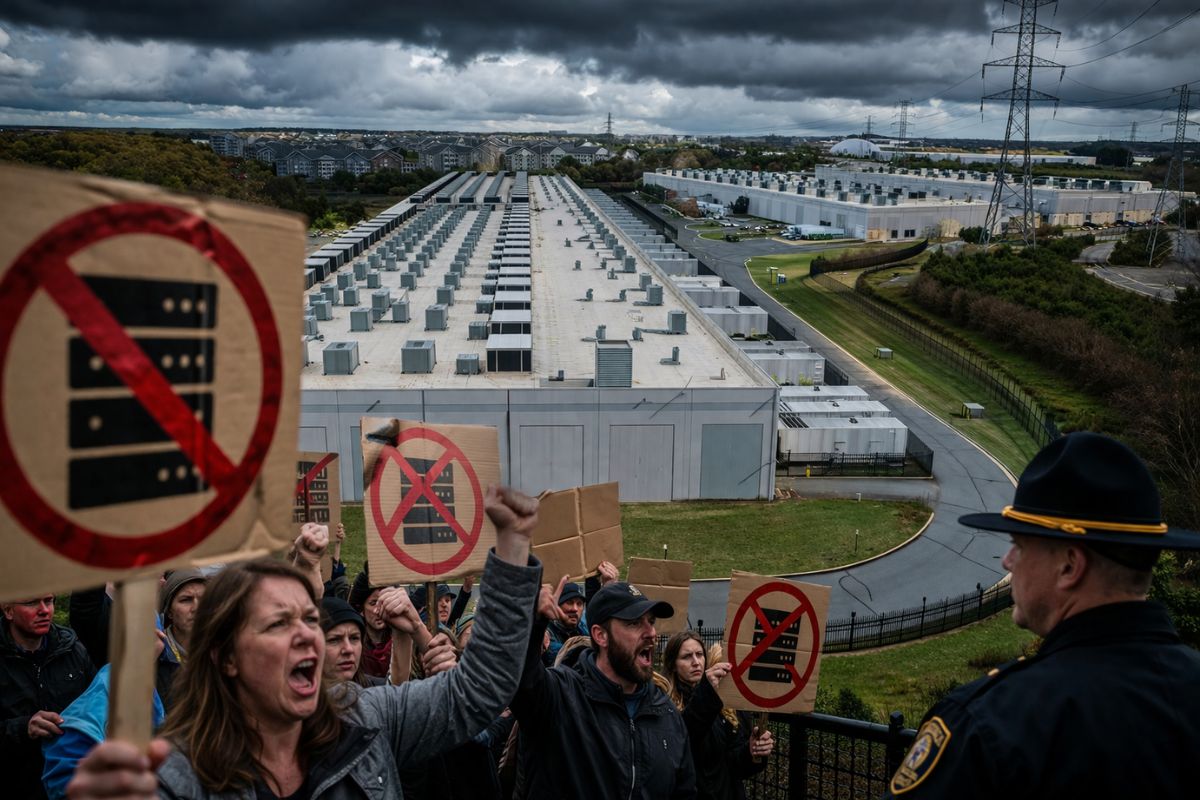
The artificial intelligence race is creating energy monsters that consume more electricity than entire cities, and now American states like Maine want to prohibit new data centers so that the population does not foot the bill for this revolution.
The country, which was already facing chronic supply difficulties, lost its main margin of maneuver to ensure the minimum energy necessary for the basic functioning of national infrastructure.
The timely arrival of limited quantities of fuel, including a shipment of oil sent by Russia and authorized by the United States last week, did not change the overall picture. Cuba continues to operate well below the minimum capacity needed to keep hospitals, public transportation, and food distribution functioning.
The population is dealing with prolonged blackouts, and more than one million people already depend on water deliveries by tank trucks, a system that also relies on fuel to operate. The cycle feeds back: without diesel, water is not distributed; without water, the sanitary crisis worsens; without energy in hospitals, medical procedures are postponed.
What the UN had never had to do in Cuba until now
The UN’s decision to import fuel for Cuba is described by its own representatives as unprecedented in the organization’s history in the country. Étienne Labande, representative of the World Food Program (WFP) in Cuba, explained that the organization has a budget of 7.5 million dollars that covers the needs of the entire humanitarian community involved in the UN plan for Cuba until December. The money will be specifically used to buy and import diesel, without which the trucks transporting humanitarian aid simply do not move.
The scale of the problem is concrete: about 200 containers are stuck in the ports of Cuba, loaded with essential supplies that include kitchen kits, solar panels, UNICEF water purification systems, and food from the WFP.
Even after the funds are raised, the UN estimates that it will take at least a month and a half for the fuel to reach the island. In the meantime, the organization has started using private carriers to move part of the retained cargo, an improvised and more expensive solution that highlights the urgency of the situation in Cuba.
The numbers that reveal the dimension of the humanitarian crisis in Cuba
The data presented by the UN paints a picture of Cuba in functional collapse. More than 96,000 surgical procedures have been postponed across the country, of which 11,000 involve children. In a healthcare system that was already operating under chronic pressure, the massive postponement of surgeries means that treatable conditions become emergencies and emergencies become fatalities.
The lack of fuel directly affects the cold chain necessary to preserve medicines and vaccines, the transportation of patients, and the operation of generators in hospitals.
Approximately 32,000 pregnant women in Cuba have unstable access to prenatal services—a particularly serious statistic in a country that historically prided itself on its maternal health indicators. Three thousand children are overdue for vaccinations, and nearly 500,000 students attend classes on reduced days due to power cuts in schools. The elderly population, the largest proportionally in Latin America, faces difficulties in reaching health centers. Francisco Pichon from the UN was direct: humanitarian consequences continue to worsen daily, despite sporadic efforts to supply fuel from Russia.
The role of the American embargo in aggravating the crisis in Cuba
It is impossible to analyze the fuel crisis in Cuba without considering the role of the economic embargo imposed by the United States, in place since the 1960s. The oil blockade imposed in January 2025 represented a significant escalation, further restricting Cuba’s ability to acquire oil and derivatives in the international market. The mechanism works because companies and countries that trade with Cuba risk suffering American secondary sanctions, which drastically reduces the number of suppliers willing to sell fuel to the island.
Russia, Cuba’s historical ally, sent a shipment of oil last week with authorization from the United States. But the volume was insufficient to change the structural situation of the country. Cuba depends on imports for almost all of its energy consumption, and without regular access to suppliers, any one-time shipment acts as a stopgap that runs out in days. The result is that most of the country’s infrastructure operates in a state of permanent emergency, with blackouts lasting hours and entire communities without access to basic services.
What 20% of the Cuban population depends on the UN to receive
Approximately one in five Cubans directly depends on humanitarian aid distributed by the UN. This proportion makes Cuba one of the countries in the Western Hemisphere with the highest dependence on international assistance, and any interruption in the flow of supplies has an immediate impact on millions of people. The items held up in ports are not superfluous: kitchen kits for families that lost equipment in Hurricane Melissa, solar panels for communities without access to the electrical grid, water purification systems for regions where conventional supply has collapsed, and food for populations facing food insecurity.
Hurricane Melissa, which recently hit Cuba, added an extra layer of emergency to the already existing energy crisis. The UN Resident Coordinator warned that the effects of the natural disaster overlap with the fuel shortage, creating a situation where the response capacity of the Cuban state and the international community is severely compromised. Without fuel, trucks do not deliver water; without treated water, health risks arise; without energy, hospitals do not operate, and without humanitarian aid from the UN, the safety net for millions of Cubans simply ceases to exist.
What could change in Cuba’s situation in the coming months
The short-term horizon for Cuba is one of uncertainty. The UN estimates that, even in the most optimistic scenario, the imported fuel with the 7.5 million dollars will take at least a month and a half to reach the island, which means that the humanitarian aid distribution crisis is likely to persist at least until mid-May or June. The budget covers operations until December, but depends on the effective raising of funds, which is still ongoing.
In geopolitical terms, the prospect of easing the American embargo remains distant. Cuba remains trapped in a cycle where it has no resources to import energy, cannot generate enough internally, and depends on sporadic gestures from allies that do not change the fundamental equation. The UN’s unprecedented decision to import its own fuel to operate in Cuba is, at the same time, a pragmatic act and an indicator of the gravity of the moment: when the world’s largest humanitarian organization needs to buy diesel to deliver food, the problem has ceased to be merely energy-related and has become existential.
Cuba is experiencing a fuel crisis that has paralyzed even the UN, and the improvised solution of importing diesel with humanitarian aid money reveals the size of the problem. Do you think the American embargo should be revised in this context? Is the international community doing enough? Leave your opinion in the comments.







Seja o primeiro a reagir!