





 Portuguese
  English
  Spanish
  4 min of reading
  0 comments


Bradesco Foundation Expands Education with Free Online Courses Focused on Innovation, Inclusion, and Educational Technology.
The Bradesco Foundation reinforced its role in education by expanding the offer of free online courses aimed at contemporary teaching.
The initiative, available through the Virtual School, serves educators, students, and professionals interested in improving pedagogical practices and keeping up with the transformations in the educational environment.
Access is free, digital, and open to participants from all over the country.
-
Federal Institute opens over 700 vacancies in free technical courses in Civil Engineering, Mechanics, Electrotechnics, Computer Science, and Nursing; see how to enroll and study at IFPB.
-
Become a professional in logistics, mechanics, computer science, chemistry, or gastronomy at the Federal Institute: Ifes opens more than 1,000 spots in free technical courses with selection without an exam.
-
Take a 100% online and free course at Itaú: Foundation releases 156 options with certificates, registrations open for all of Brazil, unlimited access, areas such as technology, education, and management, and a flexible schedule without tutoring.
-
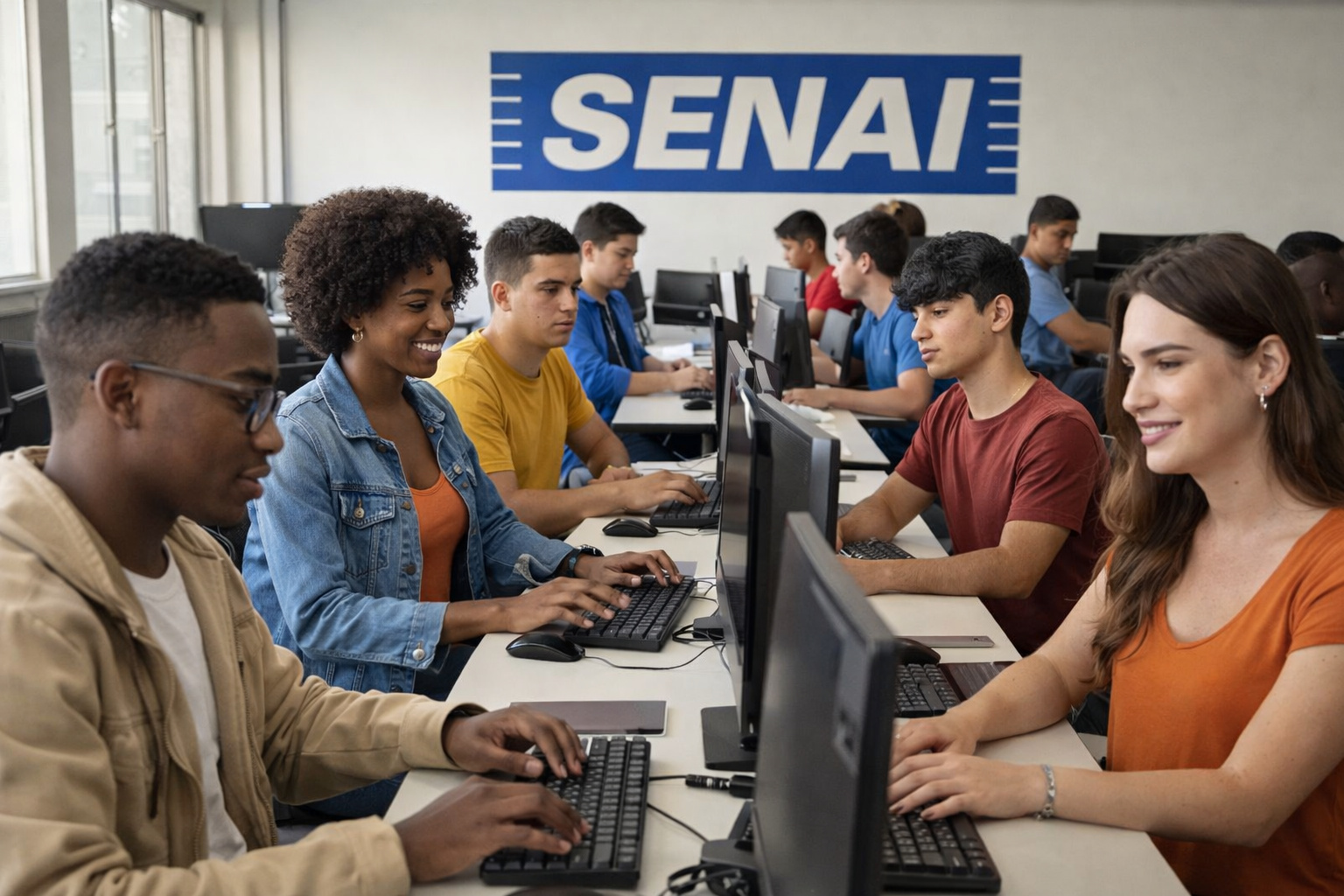
Senai will pay up to R$ 700 per month for those who take free technical courses: there are 12,000 open positions across Brazil and training with access to the technology market.

By prioritizing content related to education and technology, the institution aims to reduce inequalities in access to knowledge and stimulate continuous training, especially in a scenario where digital teaching has become essential.
See Some of the Free Courses Offered by Bradesco Foundation
Best Practices in Video Lesson Production
Among the free online courses offered by the Bradesco Foundation, the content of Best Practices in Video Lesson Production responds to a growing demand for remote and hybrid teaching.
The course guides educators on how to make video lessons clearer, organized, and efficient, improving communication with students.
This approach directly contributes to the quality of digital education by transforming videos into more accessible and engaging pedagogical tools.
Concepts of Creative Learning
Today’s education demands methodologies that stimulate creative thinking.
Thus, the Bradesco Foundation included the course Concepts of Creative Learning, which proposes strategies focused on experimentation and student agency.
By integrating creativity into the teaching process, the course strengthens more dynamic educational practices aligned with the needs of the 21st century.
Design Thinking Applied to Education
Another highlight among the free online courses is Design Thinking for Educators, which presents a methodology focused on collaborative problem-solving.
The course demonstrates how to apply Design Thinking in the school environment, considering empathy, active listening, and collaborative solution-building.
This approach enhances educators’ ability to tackle real educational challenges, making the learning process more participatory.
Computational Thinking Beyond Technology
The Bradesco Foundation also invests in the development of Computational Thinking, a skill increasingly valued in education.
The course teaches how to structure problems, identify patterns, and create logical solutions, skills useful across various fields of knowledge.
Even without requiring prior programming knowledge, the content prepares students and educators for a world that is increasingly data-driven and technology-oriented.
Scratch as a Creative Computing Tool
In the field of educational programming, the institution offers the course Introduction to Scratch: Programming Language in Creative Computing.
The aim is to introduce basic programming concepts through a visual and intuitive language, facilitating learning.
Thus, the Bradesco Foundation helps bridge the gap between technology and education in an accessible and playful manner.
Inclusive Education
The theme of diversity is also present in the course Inclusive Education, which addresses pedagogical practices aimed at accommodating different realities and needs.
The content reinforces the importance of more equitable and accessible educational environments.
This initiative strengthens the role of education as a tool for social inclusion and respect for differences.
Open Educational Resources (OER)
Another relevant aspect of the training is the course Open Educational Resources (OER), which presents teaching materials for free use and adaptation.
The content encourages teachers to share and reuse resources legally and collaboratively.
Thus, education becomes more democratic and connected to the culture of open knowledge.
Advanced Scratch and Integration with the Physical World
Finally, the course Scratch, Its Extensions, and Physical Computing expands the use of the platform by integrating programming with physical devices.
This approach allows the exploration of more complex and interactive projects in the educational environment.
By combining technology and practice, the Bradesco Foundation reinforces its commitment to innovative education aligned with future demands.
Free Certification and Flexible Learning in Bradesco Foundation’s Free Courses
All the free online courses from the Bradesco Foundation offer a certificate at no additional cost, provided the student completes the activities and meets the minimum performance requirements.
The document can be used to enhance the resume, certify complementary hours, and support professional advancements.
Since the classes are self-instructive, participants choose when and how to study. This makes education more compatible with the work and study routine of Brazilians.
Impact of the Bradesco Foundation’s Free Courses Initiative on the Educational Landscape
By combining education, technology, and accessibility, the Bradesco Foundation directly contributes to the training of professionals better equipped to face current challenges.
The free online courses stimulate constant updating and strengthen the culture of continuous learning.
Therefore, the initiative not only expands access to education but also promotes pedagogical innovation, social inclusion, and professional development on a national scale.






-

-

7 pessoas reagiram a isso.