





 Portuguese
  English
  Spanish
  4 min of reading
  0 comments


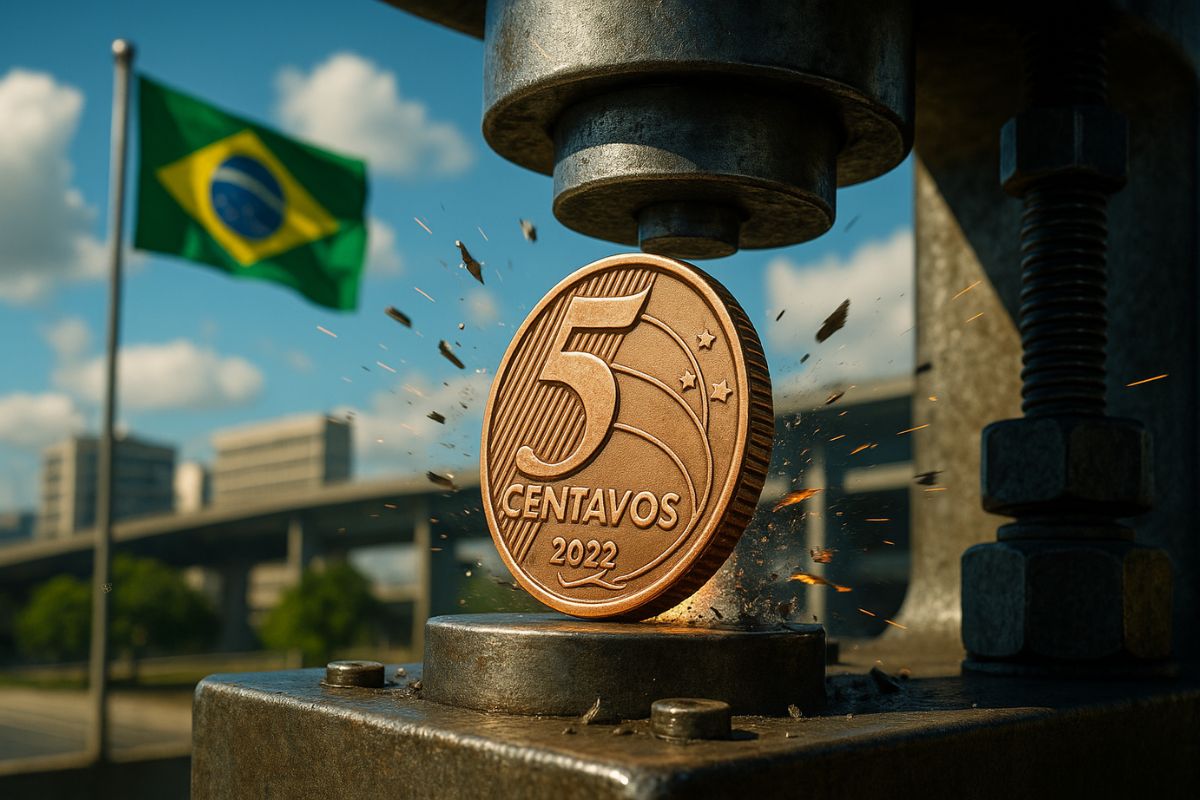
Even With Production Costs Higher Than Face Value, The R$ 0.05 Coin Remains in Circulation in Brazil to Ensure Exact Change, Avoid Price Rounding, and Preserve The Stability of The National Monetary System.
The R$ 0.05 coin is a curious example of the real economy: producing it costs more than it is worth, yet the Central Bank continues its active production. The reason is not financial, but functional. Without this coin, the country would face issues with change, artificial price increases, and harm to the purchasing power of the population, especially for those with lower incomes.
In 2019, UOL reported that producing a R$ 0.05 coin cost R$ 0.30. This high cost arises from the combination of the international price of the metals used in minting and the logistics of production and distribution that involves the transportation and constant replenishment of these items. Even so, the government considers the R$ 0.05 coin essential for monetary balance.
Why The R$ 0.05 Coin Costs More Than Its Value
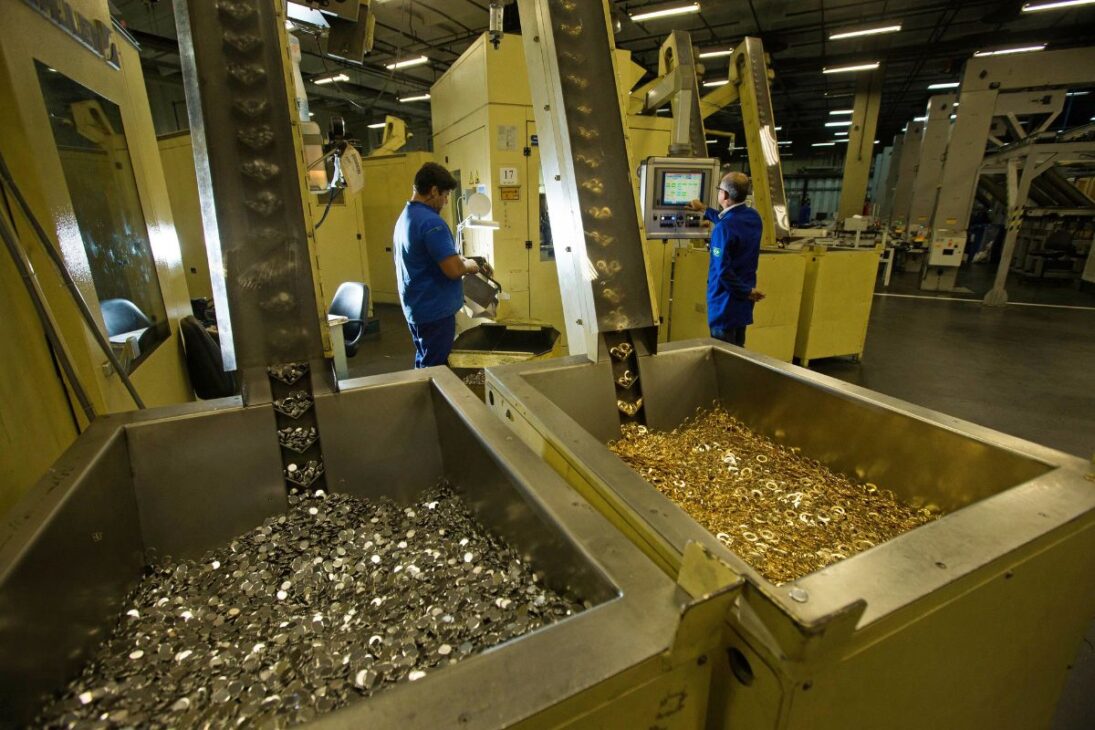
The value of the metal used in the production of the R$ 0.05 coin — an alloy of steel coated with copper — fluctuates according to the international market, which raises production costs.
-
A gigantic dam project in the Himalayas could solve one crisis but silently create another for millions of people.

-
Nikola Tesla said that intelligent people tend to have fewer friends, and now science partially confirms this: a study with over 15,000 people showed that for the more intelligent, socializing too much can even reduce life satisfaction.

-
A superyacht worth US$ 17 million is delivered in impeccable condition, sets out to sail, and hits a bridge in the Bahamas just two hours later.

-
Residents of Australia woke up to a sky completely red like blood before the arrival of Cyclone Narelle, which hit the coast with winds of 250 km/h, tearing off roofs and lifting iron dust in a scene they described as apocalyptic.


When the price of copper rises, the cost of the coin increases immediately.
Additionally, the minting, packaging, transportation, and distribution process adds significant logistical expenses.
Brazil is a country of continental dimensions, and ensuring the uniform circulation of coins across all regions generates a high fixed cost per unit, especially for those of lower value.
The constant demand for replenishment exacerbates the costs.
Low-value coins are easily lost, left idle in drawers, or suffer accelerated wear.
Therefore, the Casa da Moeda needs to continuously manufacture new batches, which prevents costs from decreasing due to scale.
Why The Central Bank Continues Producing
Even with a unit loss, the Central Bank of Brazil cannot simply stop producing the R$ 0.05 coin.
There are economic, social, and technical reasons for this.
The first is to avoid what is known as rounding inflation, which occurs when prices are adjusted upwards in the absence of small coins.
This phenomenon, repeated in thousands of daily transactions, reduces the purchasing power of consumers and disproportionately affects those living on tight incomes.
The second reason is to ensure the functioning of the cash payment system. Despite the advancement of Pix and cards, millions of Brazilians still rely on physical cash for their daily transactions.
In markets, bakeries, and transport, the R$ 0.05 coin allows for exact change and enables commerce to operate without distortions.
Finally, the costs are offset by other monetary issuances.
The production of coins and banknotes of higher values has much lower manufacturing costs relative to their face value, generating profit — the so-called positive seigniorage, which balances the losses from lower-value coins.
What Would Change If The Coin Disappeared
The removal of the R$ 0.05 coin from the market would directly affect consumers’ daily lives.
Without it, prices would tend to be rounded up to multiples of R$ 0.10, leading to widespread increases.
This small increase repeated with each purchase would accumulate as real losses over time.
In commerce, the lack of coins would make giving change difficult and delay transactions, increasing the use of vouchers, candies, or informal adjustments — practices that distort the real value of transactions and reduce the transparency of consumer relationships.
The impact would be even greater in regions where cash usage remains predominant.
For populations without constant access to digital means, small coins remain essential to ensure full purchasing power.
The Balance Between Cost and Social Function
The policy of maintaining the R$ 0.05 coin is a decision balancing fiscal cost and social function.
The Central Bank evaluates that, as long as the collective benefit outweighs the production cost, issuance will continue to be necessary to preserve the integrity of the monetary system.
Moreover, a sudden removal of a denomination requires years of transition.
It would be necessary to modify cash systems, printed prices, fiscal programs, and rounding rules — a costly, complex, and potentially inflationary process.
Therefore, the R$ 0.05 coin plays a role that goes beyond its nominal value: it supports the accuracy of transactions and the trust in Brazilian money, even in a context of rising costs.








-

-

-

-

-

9 pessoas reagiram a isso.