





 Portuguese
  English
  Spanish
  5 min of reading
  0 comments


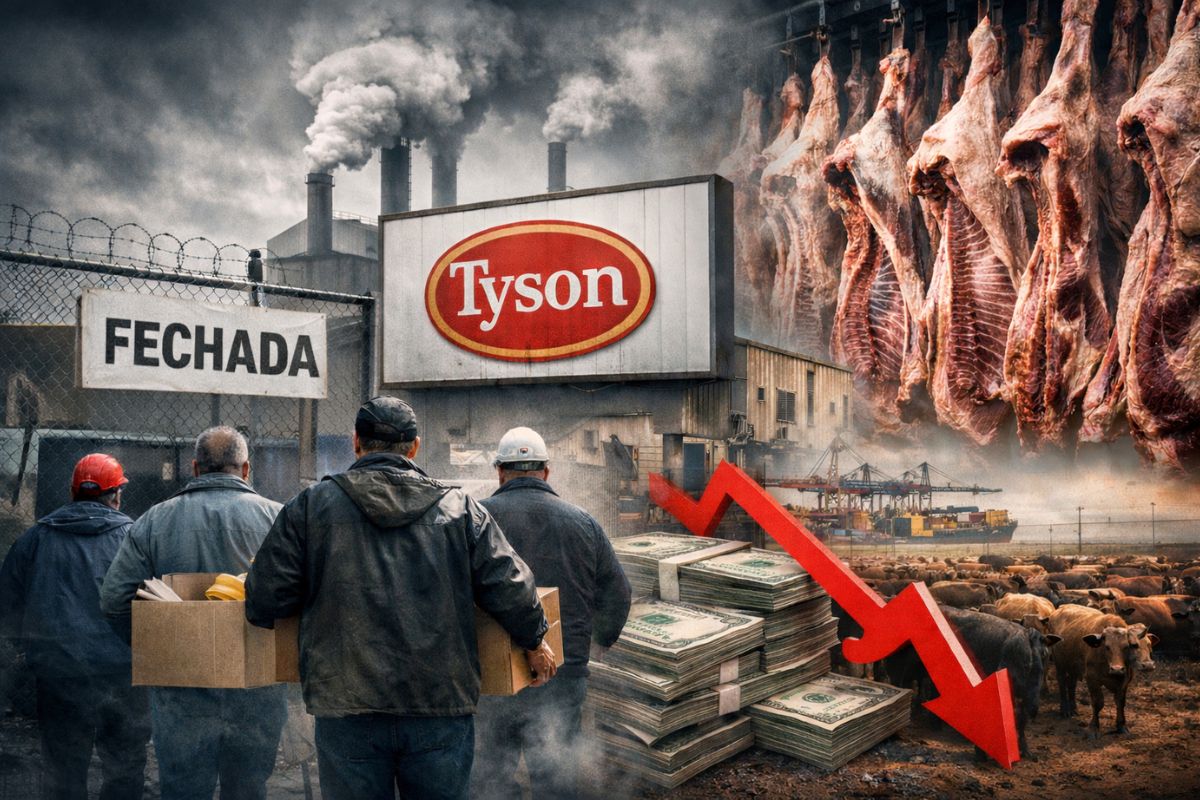
After The USDA Forecasts Lower Production And Declining Exports, Tyson Foods Predicts Losses Of US$ 250 Million To US$ 500 Million In Beef In 2026, In The Next Cycle. With Fewer Cattle, Fixed Costs Weigh On Margins, And The Closure Of The Nebraska Plant Expects 3,200 Layoffs.
Tyson Foods Arrives In 2026 Facing A Scenario Where The Lack Of Cattle Becomes The Center Of The Equation: Fewer Available Animals Means Less Volume Processed, Poor Dilution Of Fixed Costs, And A Silent Competition For Raw Material That Erodes Profitability.
The Alert Gains Weight Because It Is Not Just About A Bad Quarter. USDA Projections Indicate A Decline In Production And Beef Exports, While The Company Already Reports A Negative Operating Margin And Tries To Adjust Capacity, Efficiency, And Financial Discipline In A Cycle Described As One Of The Most Difficult.
Why The Lack Of Cattle Becomes The “Bottleneck” In Beef
The Beef Supply Chain In The US Is Highly Sensitive To The Herd’s Rhythm. When There Is Limited Animal Supply, Slaughterhouses Need To Operate On A Smaller Scale, And This Changes The Unit Cost Of Everything: Energy, Maintenance, Labor, Logistics, And The Very Use Of The Industrial Park.
-
Rain gains strength in April, potentially exceeding 150 mm, placing the North, Northeast, and the coasts of the South and Southeast at the center of the heaviest forecast of the week.

-
A fish that survives out of water, crawls on land until it finds another river, and whose female lays 80,000 eggs at once is infesting rivers and lakes in Brazil, and no one can stop this invasion.
-
WEG took its technology to Spain to create a solar irrigation system that operates independently without needing an electrical grid, and now farmers control everything remotely via their mobile phones.

-
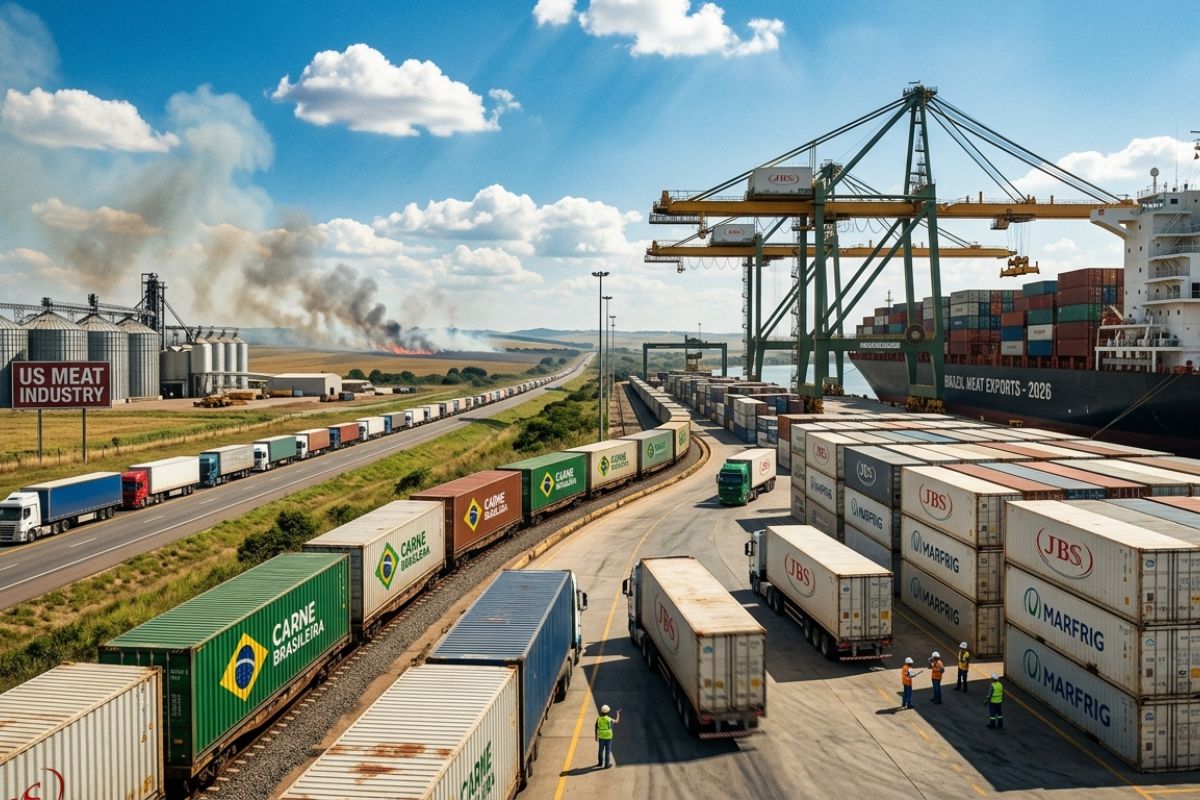
The US faces a meat crisis with fires, pests, and strikes, consumption rises and supply falls to the lowest level since 1952, creating a billion-dollar opportunity for Brazilian exports to grow in 2026.
Tyson Foods Itself Recognizes This Discrepancy: With Fewer Heads Available, It Becomes More Difficult To Spread Fixed Costs Across The Plants. The Result Appears Practically As Constant Pressure On Margins, Even When The Company Tries To Compensate With Operational Adjustments.
What USDA Numbers Suggest For 2026
The USDA Projects That Domestic Beef Production Will Decline By 1% In 2026, Totaling 11.7 Million Tons. Before That, 2025 Had Already Seen A 4% Decline Compared To 2024, With A Production Of 11.8 Million Tons – A Movement That, According To The Same Analysis, Caused The US To Lose Its Position As The World’s Largest Producer To Brazil.
On The External Side, The Scenario Is Also Tight: The Estimate Indicates A 5.6% Retraction In Exports This Year To 2.4 Million Tons In Carcass Equivalent (CEC). Less Production And Less Export Reinforce The Same Problem: A More Stagnant Market With Lower Volumes And Higher Costs To Accommodate.
The Picture Of The 1st Fiscal Quarter Of 2026: Negative Margin And High Costs
The Beef Division Of Tyson Foods Was The Main Factor Of Pressure In The First Quarter Of Fiscal Year 2026. The Unit Closed With An Adjusted Operating Loss Of US$ 143 Million, And The Operating Margin Fell From 0.1% To −2.4%, Highlighting The Shock Between High Costs And Lower Volume.
The Corporate Message Also Makes The Diagnosis Explicit: Limited Supply And Cost Pressure. Practically Speaking, The Equation Becomes More Sensitive Because The Cattle Operation Depends On Scale To “Breathe”; When The Volume Drops, The Margin Becomes The First Thermometer Of Stress.
Plant Closure And Mass Layoffs: Where The Crisis Hits Real Life
In This Context, Tyson Foods Has Already Announced The Closure Of A Unit In Nebraska, With An Expected Layoff Of 3,200 Employees In The Following Months.
This Is The Type Of Decision That Usually Arises When The Company Tries To Align Installed Capacity With Available Volume – An Adjustment That, From An Industrial Perspective, Is Rational, But Socially Is Explosive.
The Critical Point Is That Capacity Does Not Adjust Like A Button. Closing A Plant Reduces Costs Partially, But It Also Changes Logistics, The Supply Network, And The Speed Of Response To The Market. At The Same Time, When The Cattle Cycle Favors Supply Again, Reopening Or Reconstituting Capacity Can Be Expensive And Slow — And This Is What Makes 2026 A Year Of Irreversible Decisions For Part Of The Sector.
The “Counterbalance” Of Results: Other Divisions Support The Quarter, But Do Not Eliminate The Risk
Despite The Weakness In Beef, Tyson Foods Exceeded Market Expectations In The First Quarter Of Fiscal Year 2026: Adjusted Earnings Per Share Of US$ 0.97 And Revenues Of US$ 14.31 Billion. The Momentum Came Mainly From Prepared Foods, With A 7.9% Increase In Sales, And The Fifth Consecutive Quarter Of Volume Growth In Chicken.
The Chicken Division Generated US$ 4.21 Billion In Revenue, While The Pork Division Reported An Adjusted Operating Profit Of US$ 111 Million.
It Is A Short-Term Relief, But It Does Not Eliminate The Structural Problem: Beef Remains An Important Center Of Gravity, And When It Goes Deeply Into The Red, The Market Tends To Recalibrate Expectations.
Market, Expectations, And The “Optimism” That Can Cost Dear
A Report From Santander Mentioned In The News Indicates That The Market Still Projects Relatively Stable Margins For The Beef Division Of Tyson Foods In 2026 – A View Classified As Optimistic By Analysts Who Recall The Historical Margins Of Similar Levels Between Tyson And JBS.
In The Same Analysis, The Scarcity Of Cattle, Combined With The Retention Of Females, Is Likely To Sustain High Costs And Pressured Margins.
The Bank States It Adopts A Neutral Position For The Stocks, With A Price Target Of US$ 64 By The End Of 2026, Almost Aligned With The Quotation Of US$ 65.33 Mentioned In The Market.
In Other Words: The Risk Exists, And The Discussion Is Not Whether There Is A Challenge, But Whether It Is Already Fully Priced In – Especially When The Company Admits It Is Going Through One Of The Toughest Moments Of The Cycle.
What Is At Stake For Tyson Foods Is Not Just To Get Through A Bad Year, But To Decide How To Position Itself In A Cycle Where Cattle Supply And Operational Costs Are Working Against Margins.
Between Projections Of Losses Of Up To US$ 500 Million, Decreased Exports, And Capacity Adjustment With Mass Layoffs, The Competition Becomes About Predictability For Investors, For The Industry, And Above All, For The Communities Living Around The Plants.
If A City Depended On A Slaughterhouse And It Announced Cuts Of Thousands, What Should Weigh More: Company Efficiency Or Protection Of Local Jobs? And, From The Consumer’s Perspective, Do You Feel That The Pressure On Beef Ultimately Reaches Your Wallet Or Remains “Hidden” Behind The Scenes Of The Industry?









-

-

2 pessoas reagiram a isso.