





 Portuguese
  English
  Spanish
  3 min of reading
  0 comments


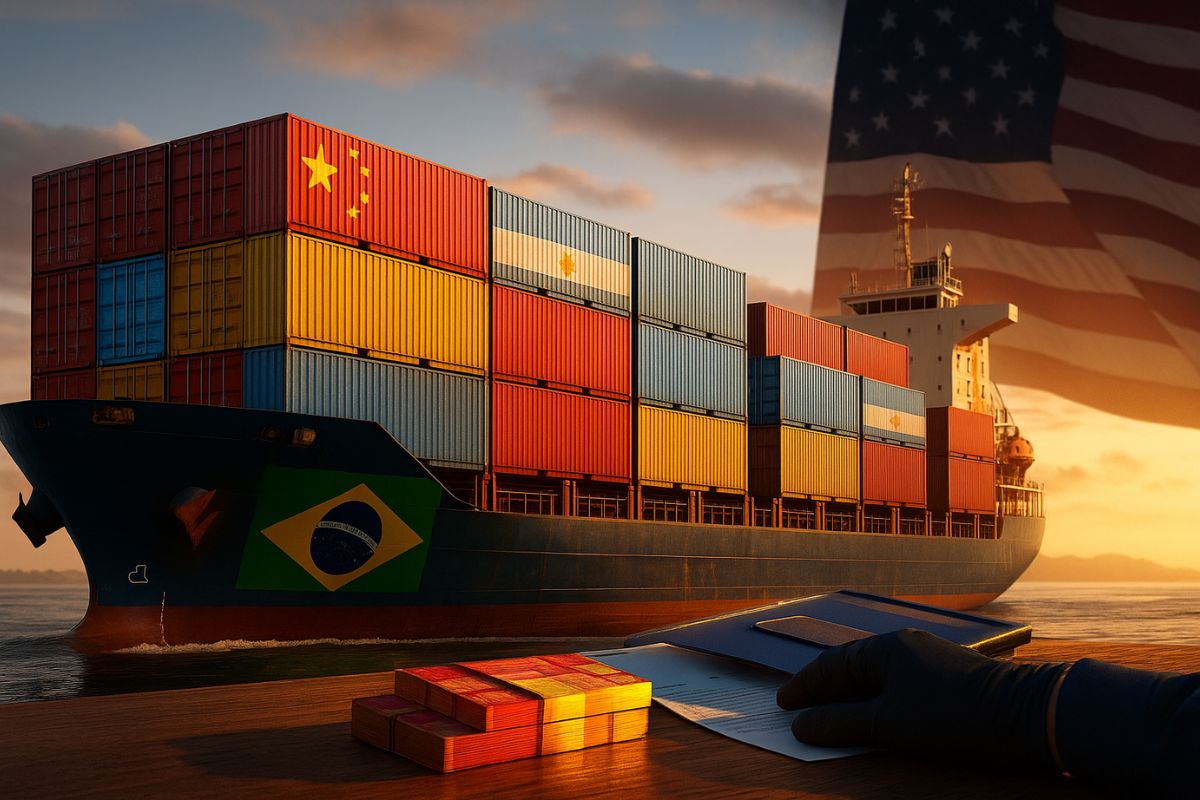
The US Tariffs Slashed Brazilian Sales to the American Market by Almost 20%, But the Immediate Reaction Came from China and Argentina, Which Increased Their Purchases and Helped to Maintain the Surplus. Economists, However, Warn That This Dependence Could Weaken the Country in the Long Term.
The Brazilian foreign trade felt the direct effects of the US tariffs, which imposed surcharges of up to 50% on domestic products. In August, Brazilian exports to the American market fell 18.5%, totaling US$ 2.762 billion, according to data from the Ministry of Development, Industry, Commerce, and Services (MDIC).
The quick reaction, however, came from China and Argentina, which increased their purchases by 31% and 40.4%, respectively, and avoided an even greater drop in the trade balance.
The Immediate Reaction to the US Tariffs
Despite the decline in sales to the US, Brazil managed to close August with a surplus of US$ 6.133 billion, supported by the increase in exports to other markets.
-
Middle East War Hits Fertilizers and Transportation and May Strain Brazilian Wallets
-
Russia Considers Suspending Gas to Europe After Surge in Energy Prices
-
How A War Thousands of Miles From Brazil Started Disrupting Global Shipping Routes, Raising Container Costs, and Putting Up to 40% of Brazilian Beef Exports at Risk
-
Iran-U.S. War Drives Up Oil Prices and Pressures Global Financial Markets

China was the destination that absorbed the most Brazilian products, especially soybeans, which jumped from US$ 2.6 billion in 2024 to US$ 3.3 billion in August 2025.
This shift is seen as a reflection of the trade dispute between Beijing and Washington, as the Chinese government has prioritized South American suppliers over American ones.
Argentina also stood out as an emerging market for Brazil.
After the recession of 2024, the Argentine economy returned to growth under the government of Javier Milei, boosting demand for vehicles, auto parts, and manufactured products.
The Brazilian automotive sector nearly doubled its sales to the neighboring country in just one year, reaching US$ 360.2 million in August.
The Risk of Concentration in Few Partners
Although the repositioning has provided immediate relief, experts warn of strategic vulnerability.
The US typically imports higher value-added products, such as aircraft, machinery, and manufactured goods.
In contrast, China and Argentina focus on agricultural and mineral commodities, which may deepen Brazil’s dependence on primary exports.
According to estimates from Itaú, the tariffs could result in a loss of up to US$ 13 billion in exports over 12 months.
Part of this impact will be compensated by the redirection of sales, but more complex industrial sectors, such as steel and aerospace, have fewer market alternatives.
This reinforces concerns about deindustrialization and loss of competitiveness.
Sectors Seeking Alternatives
Some segments have already found alternative routes.
The beef, for example, has increased its presence in markets such as Mexico, Chile, Russia, and China itself.
Seafood products and fruits have also been absorbed by countries in South America.
However, strategic industrial items — such as iron, steel, and aircraft — remain without significant substitute markets, which pressures the national industry and could compromise higher-skilled jobs.
The View of Experts
For José Augusto de Castro, president of the Brazilian Foreign Trade Association (AEB), the current repositioning is circumstantial and does not solve the structural problem.
He notes that the US is facing high soybean stocks and may use the tariff to protect local producers, while dependence on China could become a vulnerability if the Asian country uses the purchase of commodities as leverage in geopolitical negotiations.
Economists also emphasize that, although the expected surplus for 2025 is US$ 65 billion, down from US$ 74.6 billion in 2024, the positive balance cannot mask the risk of concentration in few trading partners.
Any fluctuation in Chinese demand or the recovery of Argentina could generate significant instability for Brazil.
Do you think that the growing dependence on China and Argentina after the US tariffs strengthens or weakens Brazil’s position in international trade? Share your opinion in the comments — we want to hear from those closely following the impacts of this change.







Seja o primeiro a reagir!