






 Portuguese
  Spanish


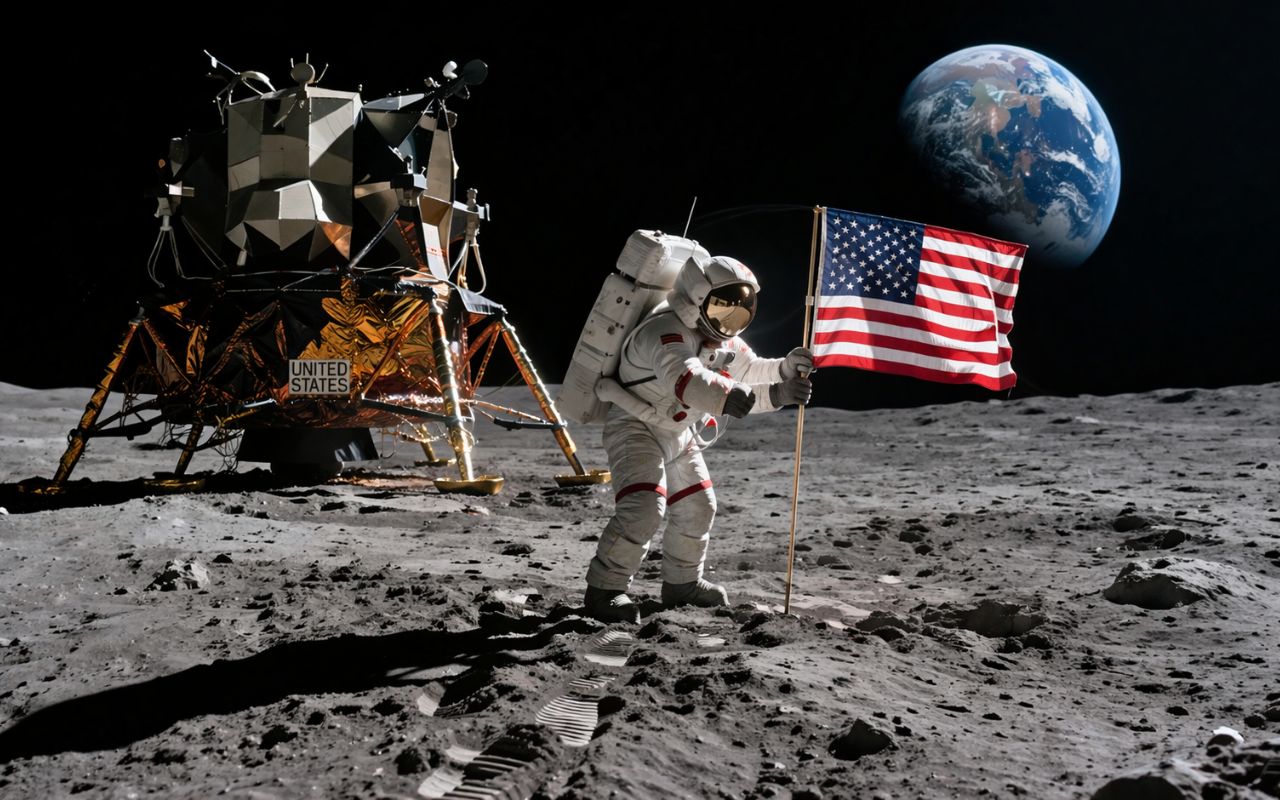

Datafolha survey indicates that part of Brazilians still doubts that man landed on the Moon, highlighting the impact of misinformation.
A recent survey by Datafolha revealed that millions of Brazilians still question whether man really landed on the Moon, even decades after the historic feat.
The survey was conducted in February, with over 2,000 people across the country, and released on March 30.
The goal was to understand the population’s perception of one of the most important milestones in space exploration. The data is particularly relevant amid the advancement of new lunar missions, such as Artemis 2.
-
James Webb Telescope Uncovers Unexpected Clues on Mysterious Moon, Potentially Redefining Planetary Origins

-
$1.5 Billion Sleipnir Vessel Transforms Ocean into Floating Construction Site with 12 Hybrid Engines and Capacity to Lift 20,000 Tons

-
23 Years After Tragedy, Brazil’s Alcântara Space Center to Launch New Suborbital Rocket in 2026 with South Korean SEBIT Project Targeting Near-Space Tests
-
Entrepreneur Turns Neighbor’s Coffee Grounds Waste into Eco-Friendly Pellets, Earning Up to $40,000 Monthly in Brazil


According to the study, 33% of respondents believe that man has never been to the Moon. Meanwhile, 58% assert that the landing on the satellite is a proven fact, and 9% say they are unsure.
Thus, the Datafolha survey highlights a divided scenario between scientific confidence and doubt.
Datafolha survey reveals division among Brazilians about man on the Moon
The results of the Datafolha survey show that the opinion of Brazilians is far from unanimous. Although the majority believe that man has been to the Moon, a significant portion disagrees.
This scenario partly reflects the growth of misinformation. Additionally, conspiracy theories help fuel doubts about widely documented historical facts.
Therefore, the survey reveals more than just numbers: it exposes challenges in scientific communication.
The analysis by gender shows slight differences among Brazilians. Among men, 60% believe that man landed on the Moon, while among women the figure is 56%.
On the other hand, the number of undecided individuals is higher among women. Still, the overall difference between the groups is considered small.
This indicates that skepticism about the topic is relatively evenly distributed in the population.

Age influences the opinion of Brazilians, survey indicates
The survey also revealed that age influences perception on the topic. Young people between 16 and 24 years old are the most likely to believe that man has been to the Moon.
In this group, 64% consider the statement true. In contrast, among people over 60, the figure drops to 51%.
Moreover, older individuals show a higher rate of disbelief. This demonstrates generational differences in interpreting historical facts.
Education impacts Brazilians’ view of the Moon
Among the factors analyzed, education stands out as the most relevant. The Datafolha survey shows that the higher the level of education, the greater the confidence in science.
Among people with higher education, 75% believe that man landed on the Moon. Among those with elementary education, this number drops to 46%.
On the other hand, disbelief is greater among the less educated. This reinforces the role of education in shaping opinion.
Religion also influences Brazilians’ perception
The survey also points out differences among religious groups. Among Brazilians without religion, 65% believe that man has been to the Moon.
Among evangelicals, this figure is lower, at 54%. Catholics present intermediate numbers, with 55%.
Thus, the study suggests that cultural factors and personal beliefs also impact views on science.
Datafolha survey highlights the challenge of information in Brazil
The data from the Datafolha survey reveal a country divided between scientific knowledge and doubt. Although the feat of man on the Moon is widely proven, there is still resistance among part of the population.
This scenario highlights the importance of investing in education and scientific dissemination. After all, understanding historical facts is essential for social development.
Thus, understanding how Brazilians perceive topics such as the man‘s trip to the Moon helps guide policies and information strategies in the country.
With information from Olhar Digital


