






 Portuguese
  Spanish
  4 min of reading
  0 comments


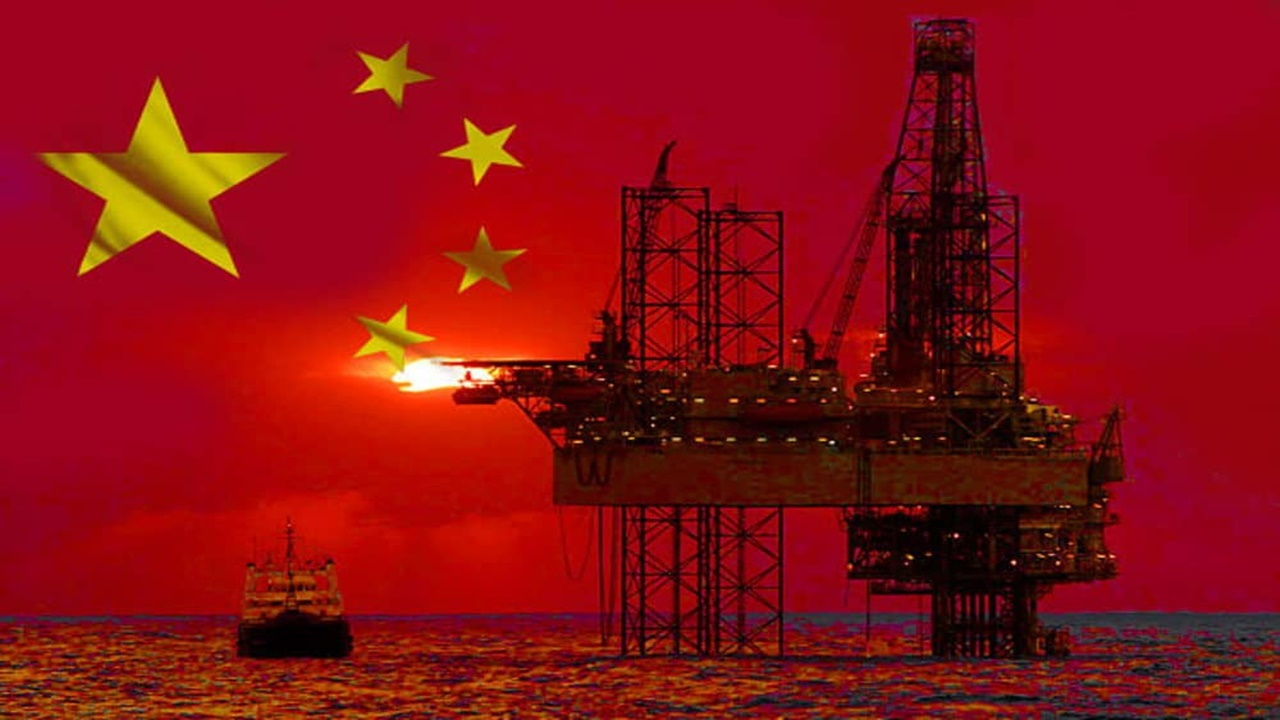
The Strong Chinese Dependence on Middle Eastern Oil Exposes Logistical, Geopolitical, and Financial Risks, Driving Beijing’s Strategy to Reduce Fossil Fuel Consumption and Accelerate Electrification.
The growing Chinese demand for Middle Eastern oil has revealed a sensitive point in Beijing’s energy strategy. More than just a supply issue, it is a structural challenge involving vulnerable maritime routes, geopolitical tensions, and direct impacts on prices, freight, and investment decisions in the global energy market.
Currently, most of the oil imported by China travels through a logistic chain considered one of the most sensitive in international trade. This journey concentrates risks in strategic chokepoints that are not under the country’s direct control, amplifying the perception of energy fragility in a global scenario already marked by conflicts and rivalries among major powers.
Oil Routes and the Weight of Strategic Straits
A large part of the oil that supplies China comes from the Persian Gulf. Right at the beginning of the journey, tankers must cross the Strait of Hormuz, a region historically marked by tensions between Iran, the United States, and Gulf countries.
-
IEA reduces forecast for global oil demand in 2026 after impacts of the Middle East crisis

-
Bank of Japan raises interest rates to 1%, reaching the highest level in over three decades

-
ANP halts LPG reform, and Sindigás sees technical caution as a decisive point for safety, investments, and the future of the cylinder in Brazil.
-
Oil spill in the Caribbean raises environmental alert and increases tension between Venezuela and Trinidad and Tobago





Any military escalation or local incident has the potential to disrupt flows and create immediate volatility in the markets.
Next, vessels face the Strait of Malacca, identified by analysts as the main weak point in Chinese energy security.
This is an extremely narrow channel at its critical point, with only 2.7 kilometers in width, in addition to being highly congested. In this context, accidents, attacks, naval blockades, or regional crises can quickly interrupt the supply of oil.
Furthermore, Malacca is not under China’s direct control. The area is influenced by Southeast Asian countries and naval powers such as the United States.
Therefore, the strait is viewed by the market as a systemic risk, capable of causing an immediate rise in oil prices and maritime transportation costs in the event of any disruption.
The South China Sea Expands Uncertainties in the Energy Market
After Malacca, the route follows through the South China Sea, a region that adds a new layer of risk to oil logistics. This area is one of the main geopolitical tension hotspots in the world, gathering territorial disputes between China, Southeast Asian countries, and Taiwan, in addition to the growing strategic rivalry between Beijing and Washington.
The militarization of islands and reefs, with the installation of bases, radars, and missile systems, increases the risk of incidents between naval forces.
This factor concerns the market, especially because about one-third of global maritime trade passes through this area. Thus, any conflict tends to generate significant impacts on global oil supply and on international prices.
Global Instability Reinforces Perception of Systemic Risk
This vulnerability scenario has gained new dimensions with the recent instability in the Red Sea. Attacks and tensions in the region forced vessels to divert routes around the Cape of Good Hope, extending timelines and increasing freight costs.
Although this factor is indirect for China, it reinforces the perception that logistical chains concentrated in a few critical strategic straits are increasingly exposed.
For investors and energy market operators, this combination of logistical and geopolitical risks has begun to influence expectations of oil prices, transportation costs, and capital allocation decisions for long-term projects.
Pipelines, Ports, and the Belt and Road Initiative
In light of these vulnerabilities, China has sought structural alternatives to reduce its exposure. Among these are investments in land pipelines, logistical corridors, and strategic ports associated with the Belt and Road Initiative.
Launched in 2013, the project anticipates significant investments in infrastructure, including railways, highways, ports, pipelines, and energy networks. The proposal combines land and maritime routes to facilitate trade while expanding Beijing’s economic and geopolitical influence in strategic regions.
These initiatives seek to diversify supply routes and reduce dependence on maritime chokepoints considered critical for oil flow.
Reduction of Oil Consumption Becomes a Geopolitical Strategy
This risk environment helps explain a significant change in Chinese energy policy. The reduction of oil consumption has come to be treated not only as a climate policy but also as a geopolitical tool.
The rapid advancement of electric vehicles, including in heavy transport, is starting to curb demand for diesel. The electrification of trucks, for instance, is already forcing significant revisions in consumption projections for derivatives.
Recent estimates indicate a structural decline in the use of fossil fuels over the decade, with stabilization of total oil consumption between 2025 and 2030.
In this sense, electrification acts as a geopolitical hedge, reducing China’s exposure to logistical chokepoints and external shocks.
By decreasing its dependence on imported oil, China advances in energy transition and simultaneously redefines the risk balance of the global market.
Lower consumption implies lower vulnerability to geopolitical crises, while posing increasing challenges to producers, refiners, and investors who still bet on a structurally growing Chinese demand.





-

1 person reacted to this.