





 Portuguese
  English
  Spanish
  5 min of reading
  0 comments


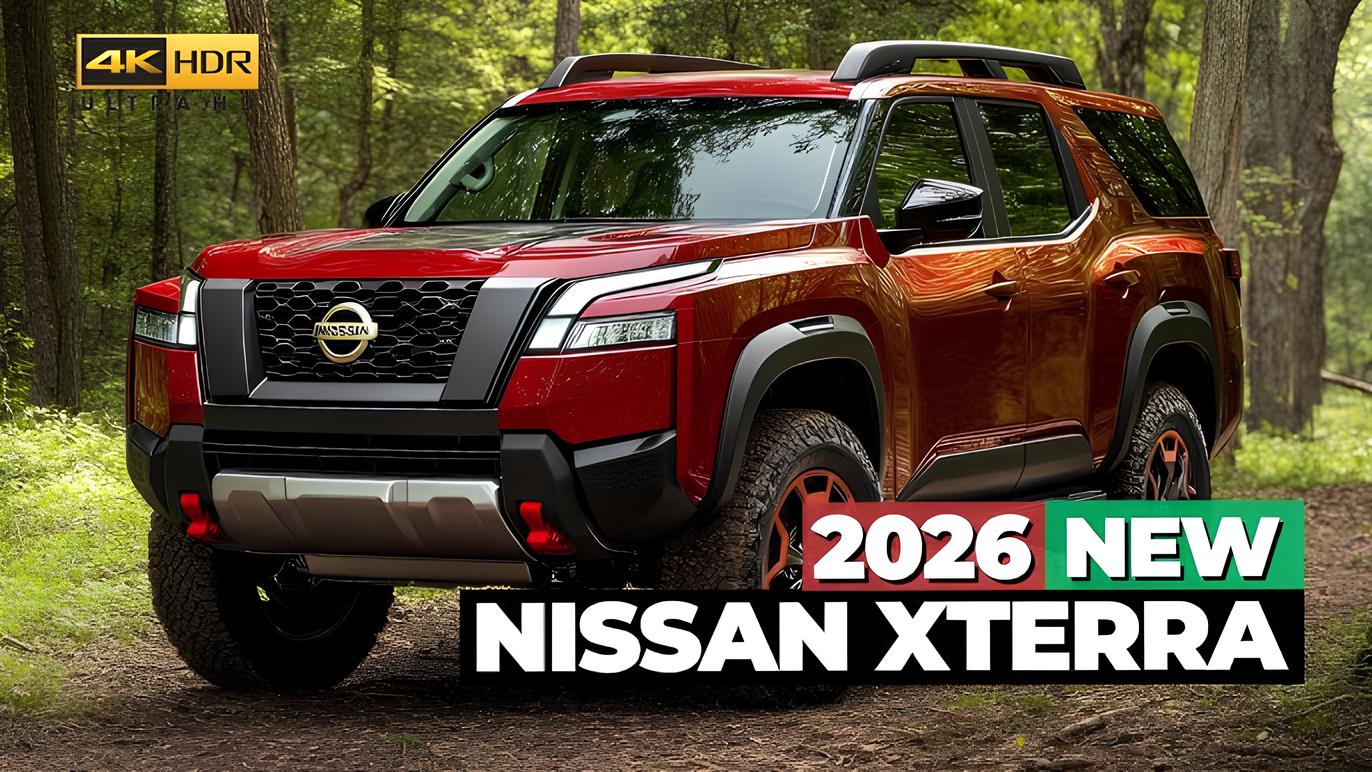
The Return of the Nissan Xterra in 2028 Brings Hybrid V6 Engine, Ladder Frame Chassis, and Four-Wheel Drive with Reduction, Reinforcing Nissan’s Bet on True Off-Road
After more than a decade of absence, the Nissan Xterra is set to return to the global market in 2028. The model, which established itself as one of the most rugged SUVs designed for off-road use in the early 2000s, is preparing a new generation to compete in a segment dominated by modern SUVs, often far removed from the off-road essence.
The new Xterra will come with ladder frame chassis, four-wheel drive with reduction, reinforced suspension, and a hybrid V6 engine, features that reaffirm its adventurous vocation. The announcement reignites nostalgia for those who experienced the model in its early generations and envisions a future where tradition and innovation converge in the same vehicle.
The Return of the Nissan Xterra and the Brand’s Strategy
The global SUV market has never been so hot. In Europe, SUVs already account for 54% of new car sales in 2024, according to JATO Dynamics, while in the United States, the utility and pickup segment reaches 75% of the market.
-
The Toyota Hilux is R$ 75.5 thousand cheaper and bets on the 2.8 turbodiesel engine with up to 204 hp and 50.9 kgfm to catch up with the VW Saveiro, which leads with 4,472 sales.
-
The new Renault Koleos has a screen exclusively for the passenger that is invisible to the driver, heated rear seats, and 29 assistance systems, but its Chinese competitors cost R$ 40,000 less and deliver more power.
-
The car stored for 38 years: when opening the barn door, what appears is breathtaking and looks like a scene from a movie!

-
Fiat works miracles in the Brazilian market, lowers the price of its 0 km hatch to R$ 69,990, reestablishes the model as the cheapest car in the country, and reignites the battle against Kwid and C3.

In this context, Nissan identified an opportunity to reposition the Xterra, targeting an audience that seeks more than just urban style — consumers who prioritize real capability in tough terrains.


The decision to bring back the model is also aligned with the renewal of the Frontier pickup, which will share the same platform. This strategy reduces development costs and strengthens the brand’s presence in the high-resistance utility segment.
Ladder Frame Chassis: Base for True Off-Road in the Nissan Xterra
Unlike many current SUVs that have adopted unibody construction, the new Xterra will maintain the ladder frame chassis, a solution typical of pickups and heavy-duty 4×4 vehicles. This architecture ensures greater torsional rigidity, enhancing performance on trails, steep inclines, and cargo transport.
Moreover, the chassis facilitates repairs and modifications — valued by off-road enthusiasts. This differentiator places the utility closer to rivals like the Toyota 4Runner and Jeep Wrangler, which also preserve this type of construction.
Reinforced Suspension and Four-Wheel Drive with Reduction
Another highlight of the project is the robust suspension, essential for tackling uneven terrains. Nissan is expected to adopt more durable axles and components with greater travel, increasing durability in extreme use.
The four-wheel drive with reduction confirms the proposal of genuine off-road, going beyond what urban SUVs offer with just on-demand traction. This system will allow tackling everything from mud to rocky climbs, expanding the range of adventures the utility can undertake.
Nissan with Hybrid V6 Engine: Innovation at the Service of Power
The most innovative aspect of the new Xterra will be the hybrid V6 engine. While Nissan has yet to reveal all the technical details, the expectation is that the setup combines robust performance with superior energy efficiency.
The partial electrification meets the demands of increasingly stringent environmental regulations while maintaining the model’s characteristic power. This balance between power and sustainability could make the Xterra an attractive option in markets like North America, the Middle East, and Latin America, where there is demand for strong vehicles with a lower environmental impact.
Nissan Xterra: Comparison with Modern SUVs
While many current SUVs prioritize sophisticated design, urban comfort, and embedded technology, the Xterra focuses on mechanical robustness. This does not mean sacrificing connectivity and driver assistance systems, which should be present, but highlights a difference in philosophy.
While a Honda CR-V or a Hyundai Tucson caters to families primarily navigating urban areas, the Xterra targets customers who need real versatility on dirt roads, trails, and rural environments. This distinction could be key to winning a loyal audience.
The Return of the Nissan Xterra and Its Historical Legacy
Launched in 1999, the Xterra was one of the models that helped popularize the image of an affordable yet rugged SUV in the United States. Throughout its generations, it stood out for its boxy design, spacious interior, and mechanical reliability.
In Brazil, the utility was sold until 2014, leaving positive memories among owners who valued its performance off the pavement. This legacy contributes to creating expectations around its return, especially among fans following the off-road market.
Sustainability and New Global Requirements
The adoption of hybrid propulsion is not only an innovation strategy but also a necessity.
According to the International Energy Agency (IEA, 2024), hybrid and electric vehicles already account for more than 20% of global sales. As such, any manufacturer wishing to remain relevant must invest in low-emission technologies.
The hybrid Xterra meets this demand while preserving the adventurous spirit of the model. It is a challenging balance to achieve, but it could differentiate Nissan in demanding markets.
Nissan and the Prospects for Latin America
There is still no official confirmation of a launch in Brazil, but proximity to the production of the Frontier in Córdoba, Argentina, paves the way for possible regional manufacturing. The country has already shown a great appetite for medium and large SUVs, and the Xterra could fill a gap between urban models and more expensive 4x4s.
In the Brazilian market, natural competitors would be the Toyota SW4 and the Mitsubishi Pajero Sport, both also built on pickup platforms. This competition could benefit consumers looking for better cost-benefit options.
What to Expect for the Future of the Nissan Xterra?
The return of the Nissan Xterra in 2028 symbolizes much more than the comeback of a classic model: it reaffirms a concept of SUV that does not compromise mechanical robustness in favor of urban comfort. With ladder frame chassis, reinforced suspension, four-wheel drive with reduction, and hybrid V6 engine, the utility positions itself to challenge not only the nostalgia of fans but also the modern SUVs that have dominated the market.
For Nissan, this move represents a strategic step in the quest for differentiation in a saturated segment. For consumers, it is an opportunity to reconnect with a vehicle that unites tradition, innovation, and true off-road capability.









Seja o primeiro a reagir!