





 Portuguese
  English
  Spanish
  4 min of reading
  0 comments


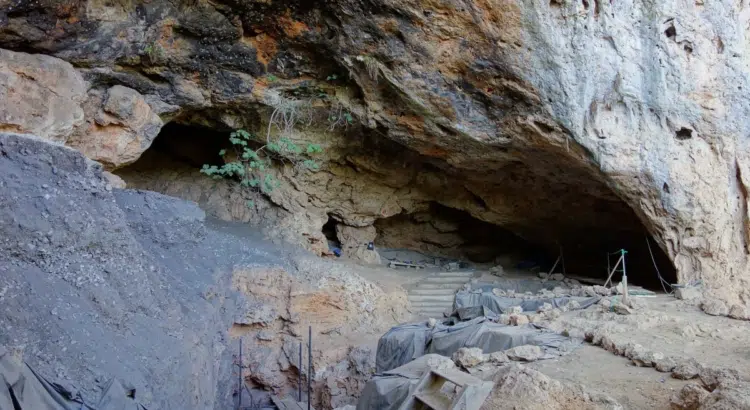
Discovery in Cave in Morocco Reveals Use of Medicinal Plants 15,000 Years Ago, Challenging Concepts of Prehistoric Knowledge
A recent archaeological discovery in a cave revealed impressive evidence about the medicinal knowledge of prehistoric populations in North Africa. Researchers identified traces of medicinal plant use dating back 15,000 years in the Taforalt cave, also known as Pigeon Cave, located in northeastern Morocco.
The discovery challenges long-held perceptions about the medical capabilities of these societies and reveals surprisingly advanced practices for the time.
The study, published in the Nature, was extended by the National Institute of Archaeological and Heritage Sciences (INSAP) of Morocco, in collaboration with international experts.
-
China’s neighbor has a plan to gather thousands of kamikaze drones and cheap missiles with a range of over 1,000 km, putting both Shanghai and Taiwan within striking distance.

-
Ancient boreal forests in Sweden reveal a climate secret by storing 72% more carbon than managed areas, proving that soil preservation is much more effective against global warming than commercial replanting.

-
Ultrafast laser technology reaches 360 Gbps with half the energy consumption of Wi-Fi and promises to revolutionize internal connectivity by eliminating interference and congestion in the radio spectrum.

-
Scientists find gigantic lava fields in an active underwater volcano, and the discovery draws attention to what is happening on the ocean floor.

A detailed analysis of the organic remains found showed that these groups were aware of the therapeutic properties of plants, especially ephedra, used for its analgesic and hemostatic properties.
Taforalt: The Cave That Rewrites Medical History
The Taforalt cave was discovered in 1908 and has since become an important archaeological site. Considered the oldest known cemetery in North Africa, it contains at least 34 skeletons dating back to the end of the Stone Age.
Previous excavations revealed complex burial rituals, such as dental avulsion, the practice of extracting teeth in adolescents, likely associated with coming-of-age rites.
Now, with the identification of macro-remains of medicinal plants, a new perspective on the knowledge of these peoples emerges.
The discovery of ephedra, in particular, suggests that these communities not only recognized the healing properties of local flora but applied this knowledge strategically, both in medical practices and in rituals.
Ephedra is a plant traditionally used in medicine for its alkaloids, such as ephedrine, which acts during instances of respiratory issues and in controlling bleeding.
In the cave, the fruits of this plant were found in areas associated with burials, indicating its use in funeral rites.
According to Dr. Abdeljalil Bouzouggar, director of INSAP, the presence of this plant confirms a sophisticated understanding of natural pharmacology thousands of years ago.
Medicinal Use of Plants in the Upper Paleolithic
An analysis of plant macrofossils revealed that ephedra was not there by chance. The fruits were located near skeletons and tools, suggesting an intentional use of the plant to relieve pain, stop bleeding, and possibly treat infections.
This discovery supports the hypothesis that the hunter-gatherers of Taforalt applied medicinal plants not only in daily life but also in ritual practices related to death.
The identification of such ancient medical practices contradicts the traditional view that medicinal knowledge only began to develop in an organized manner during the Neolithic, about 10,000 years ago.
The use of ephedra 15,000 years ago demonstrates that these peoples had already accumulated enough knowledge to use plants with specific properties effectively.
Ephedra: Ally in Health and Rituals
Ephedra is a plant still recognized in natural medicine today for its effectiveness in treating adverse problems and controlling bleeding.
Rich in alkaloids, especially ephedrine, its decongestant and hemostatic action was likely used in painful procedures, such as tooth extraction, or in coming-of-age rituals.
The study revealed that the ephedra fruits found in Taforalt were associated with specific areas of the cave designated for burials.
This suggests that the plant was used not only to treat the living but also had a symbolic role in preparing bodies for burial, demonstrating an integration between medical and spiritual practices.
According to Spanish archaeologist Juan Pérez, who participated in the research, the careful selection of these plants indicates that these communities were well aware of the practical and spiritual effects of the flora around them. “This was not accidental use. There was knowledge, technique, and purpose,” Pérez emphasized.
Surgical Indices and Advanced Practices
Another surprising aspect was the discovery of cranial trepanation, a procedure that involves drilling into the skull, performed 15,000 years ago.
The analysis of the bone revealed signs of regeneration, historically indicating the individual survived the procedure, which is remarkable for a time with limited resources.
Trepagation was often used to relieve severe headaches or treat trauma. Researchers believe the success of this procedure may have been facilitated by the use of ephedra, whose analgesic and anti-inflammatory properties would help reduce pain and the risk of infection.
In addition to ephedra, traces of other plants that may have been used in medicinal practices were found.
These evidences suggest that the inhabitants of Taforalt had a complex understanding of plant properties, going beyond empirical use and incorporating this knowledge into social and spiritual practices.
Reevaluating Prehistoric Knowledge
The discovery in Taforalt challenges the notion that hunter-gatherer societies had limited knowledge about health and treatments.
The use of medicinal plants 15,000 years ago reveals an advanced understanding of the environment and its practical applications, suggesting that empirical medicine emerged much earlier than previously thought.
This finding necessitates a revision of concepts regarding medical practices in the Upper Paleolithic. What was once seen as mere intuition is now recognized as the result of careful observation and the development of knowledge transmitted across generations.
A team of researchers will continue excavations and analyses at the site, seeking to identify other plants with medicinal uses.
The expectation is that these new discoveries will allow for a better understanding of how knowledge about health and treatments evolved over the millennia, connecting prehistoric practices to traditions that, in some way, have persisted to this day.
With information from Science & Vie.




Seja o primeiro a reagir!