





 Portuguese
  English
  Spanish
  5 min of reading
  0 comments


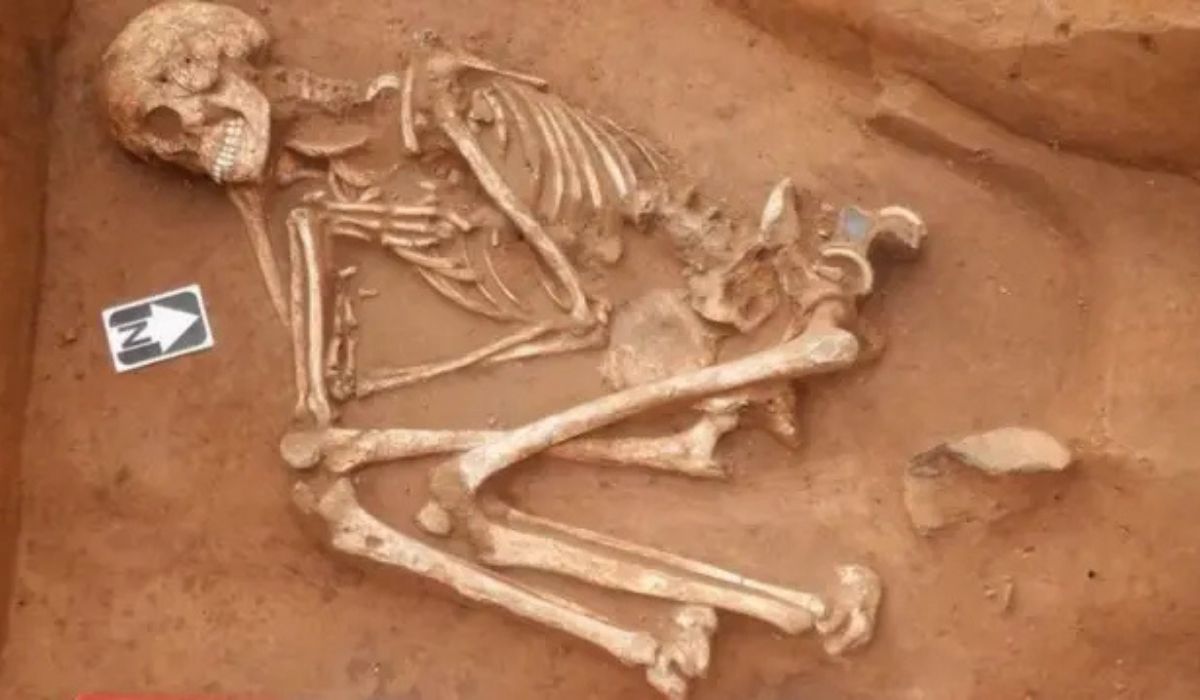
Genetic Analysis Of Thousands Of European Skeletons Identified Ancient Traces Of A Still Common Virus In Childhood, Revealing Integration Into Human DNA And Continuous Coexistence Between Pathogens And Populations Since Remote Historical Periods.
The virus associated with childhood roseola and part of common fevers in early childhood, HHV-6B (Human Herpesvirus 6B), has been circulating among humans for at least 2,500 years and, in some cases, has had its genetic material stably integrated into people’s DNA.
This finding is from a study that reconstructed ancient genomes of the viruses HHV-6A and HHV-6B from remains found in archaeological sites across Europe, indicating infections and integrations occurring since the Iron Age.
The research was published in the journal Science Advances and conducted by teams from the University of Vienna in Austria and the University of Tartu in Estonia.
-
Archaeologists use satellite technology and find a mysterious structure of 500 m² buried up to 6 meters beneath an ancient city in Egypt.
-
Supercomputer calculates when humanity may disappear from Earth, predicts a scorching supercontinent, temperatures of up to 70 degrees, and a planet moving towards becoming uninhabitable.

-
INMET danger alert: heavy rains between the 3rd and 4th may drop up to 100 mm/day and winds of 60 to 100 km/h in several regions of Brazil require extra caution.

-
The parts crisis may bring back the drop notch and microSD in 2026; while Windows 11 promises to become lighter, leaks mention batteries of up to 10,000 mAh and 200 MP cameras.


The scientists analyzed thousands of skeleton samples to identify viral traces preserved in human genetic material and, based on this data, reconstruct the historical trajectory of these herpesviruses in Europe.
Currently, epidemiological studies indicate that around 90% of children are infected with HHV-6B by the age of two.
In most cases, the infection occurs asymptomatically or with mild symptoms, such as fever, and in some children, it can cause roseola, a common disease in early childhood.
Genetic Traces In Iron Age Skeletons
To locate signs of a virus that typically infects early and remains latent in the body, the researchers adopted a large-scale tracking strategy.
A total of nearly 4,000 samples from individuals buried in different regions of Europe were examined, covering periods from the Iron Age to the Middle Ages.
From this set, the team managed to reconstruct 11 ancient viral genomes.
The oldest of these was identified in the remains of a young person who lived in present-day Italy between 1100 and 600 B.C., a period associated with the Iron Age in the region.
Other genomes were found in individuals who lived in medieval England, as well as samples from Belgium and Estonia.
Viral traces were also identified in archaeological materials from Italy and Russia attributed to the early historical period.
According to the authors, the geographical distribution of these samples indicates that human herpesviruses of type 6 were widely disseminated in Europe more than two millennia ago.
One of the central aspects of the study is that the identified genomes indicate not only transient infections.
In some cases, the data is compatible with the integration of viral DNA into human chromosomes, a rare phenomenon, but already documented in modern studies on HHV-6.
When HHV-6 Becomes Hereditary
Like other herpesviruses, HHV-6 can remain latent in the body after the initial infection.
The difference, according to the scientific literature, is that the subtypes HHV-6A and HHV-6B have the ability to integrate their genome into human DNA, under specific circumstances.
When this integration occurs in germ cells, the viral genetic material can be transmitted to descendants, becoming part of the inherited DNA.
Current estimates indicate that about 1% of the global population carries this hereditary form of the virus in all the cells of the body.
This data helps explain why the identification of HHV-6 in ancient DNA is uncommon.
As highlighted by the authors, only cases where the virus has been genetically inherited are more likely to be detected in ancient remains, which makes such findings rare.
In an institutional statement, researcher Meriam Guellil from the University of Vienna states that while almost the entire human population is infected with HHV-6 throughout life, only a small fraction carries the virus in a hereditary form, which limits detection in archeogenetic studies.

Viral Timeline Reconstructed From Ancient Genomes
Based on the reconstructed genomes, researchers claim it is possible to trace the evolution of HHV-6 in Europe for over 2,500 years, utilizing sequences that range from the 8th to the 6th century B.C. to contemporary genetic data.
The comparison between ancient and modern genomes also allowed observation of evolutionary differences between the two analyzed subtypes.
According to the authors, the data suggest that HHV-6A lost, over time, the ability to integrate into the human genome, while HHV-6B retained this characteristic.
The cases identified in individuals from medieval England are notable for being associated with hereditary forms of HHV-6B.
According to the study, these individuals are among the oldest known hosts of integrated human herpesviruses in chromosomes.
In Belgium, the archaeological site of Sint-Truiden concentrated the highest number of positive samples, including individuals carrying genomes of HHV-6A and HHV-6B.
For researchers, this indicates the simultaneous circulation of both viruses in certain European populations of the past.
Impact Of The Study On The Current Understanding Of The Virus
Although better known for causing roseola and fevers in childhood, HHV-6B is studied for its relationship with other clinical conditions, such as febrile seizures in young children.
The study does not assess clinical effects on ancient individuals but contributes to the understanding of the long association between the virus and the human species.
According to Guellil, modern genetic data have already indicated that HHV-6 may have evolved alongside humans since very early periods, possibly dating back to migrations out of Africa.
For the researcher, ancient genomes now provide direct evidence of this presence in the distant past.
The authors emphasize that the study does not alter the current clinical understanding of HHV-6 but offers a broad historical and evolutionary context.
The research connects common infections in modern childhood to genetic records preserved for millennia, allowing observation of how these viruses accompanied human populations over time.







-

-

3 pessoas reagiram a isso.