





 English
  Francês
  Alemão
  Italiano
  Japonês
  Norueguês
  Portuguese
  Spanish
  3 min of reading


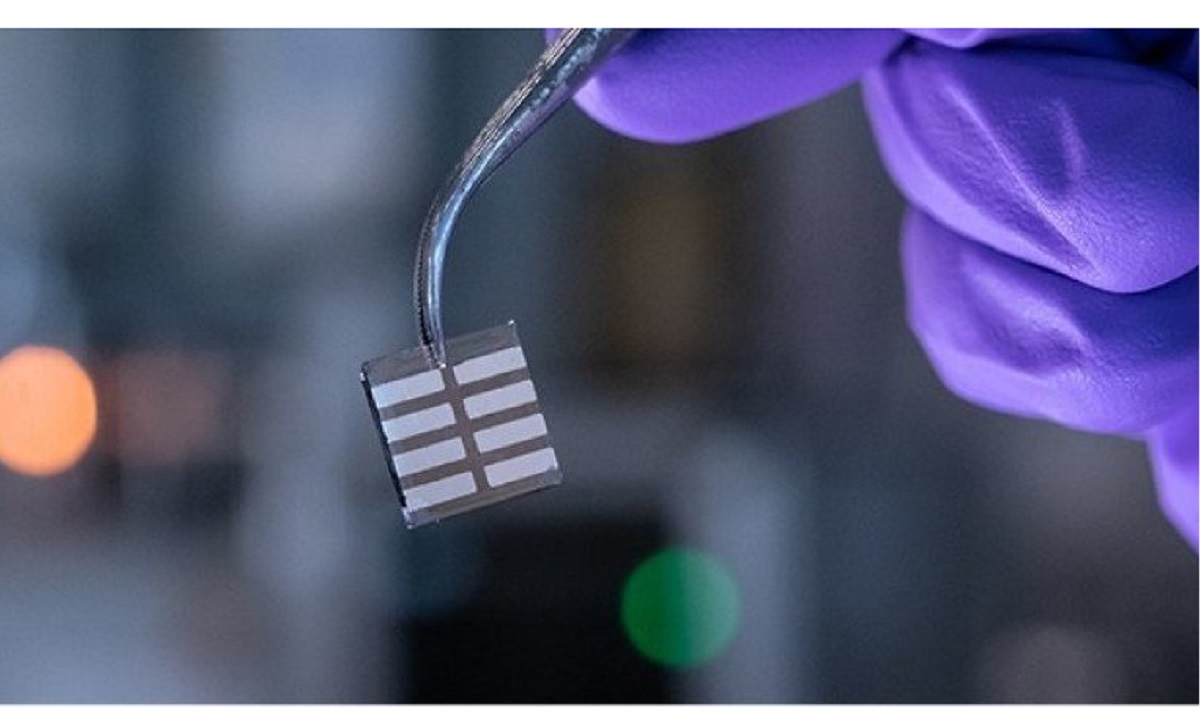
The New Material Capable of Converting Sunlight into Solar Energy and Generating Clean Electricity Is Sodium Bismuth Sulfide, Grown in the Form of Nanocrystals
Researchers have discovered materials capable of capturing sunlight at levels higher than conventional silicon solar cells and generating solar energy, but with a thickness 10,000 times smaller, generating clean electric energy. The newly discovered material is sodium bismuth sulfide (NaBiS2), which is grown in the form of nanocrystals and then dispersed in a solution that can be applied to create 30-nanometer-thick films.
The new material that generates solar energy is composed of non-toxic elements that are abundantly available in the Earth’s crust for commercial use. Bismuth-based compounds are already widely used as substitutes for lead in solders for over-the-counter stomach medications.
“We have discovered a material that converts sunlight into solar energy more efficiently than traditional solar cell technologies and can be printed from an ink. This new material that converts sunlight has the potential to manufacture lightweight solar cells that can be easily transported or used in aerospace applications,” according to Yi-Teng Huang from the University of Cambridge in the UK.
-
Rio Grande do Sul accelerates energy transition: State invests in renewable technologies and consolidates decarbonization strategies and pathways to attract billions in new industrial investments.

-
With 160,000 m² of collectors, an area larger than 20 football fields, Silkeborg, in Denmark, hosts a solar thermal plant that heats 19,500 homes and could become the largest solar heating plant in the world.

-
A study reveals the expansion of renewable energy procurement in Brazil and shows how companies are taking advantage of opportunities to reduce expenses, ensure energy efficiency, and strengthen strategic environmental commitments.

-
Roraima bets on the sun to escape high tariffs: Amid the energy crisis and price hikes, solar energy is growing in Roraima and transforming consumption in the North region.


Material Capable of Being Converted Into Solar Energy Can Be Used Differently
Cells capable of transforming into solar energy, made from carbon-based polymers, can also be used in the form of ink and can form thin coatings. However, they still face durability issues. Silicon solar panels, on the other hand, remain thick and heavy.
Researchers also found that NaBiS2 remained stable in ambient air throughout the entire 11-month study without the need for encapsulation, which strongly contrasts with other new photovoltaic materials, such as lead halide perovskites. This fact means that the long-term durability of the material generating clean solar energy is a fundamental requirement for commercial solar cells.
Furthermore, the team discovered that there are two critical factors to explain the strong light absorption of sodium bismuth sulfide. These are the effects of crystal disorder and the role of sodium.
The sodium and bismuth ions in NaBiS2 have similar sizes, which means that instead of occupying different crystallographic sites, they occupy the same site. As a result, the crystalline structure of the solar energy material changes to rock salt, a substance similar to table salt (sodium chloride).
However, sodium and bismuth are not uniformly distributed in the material, and this non-homogeneity has a significant effect on the intensity of solar light absorption. Some similar effects were found in current work on the similar compound AgBiS2; however, NaBiS2 has a stronger and sharper onset of light absorption solar, as sodium, unlike silver, does not contribute to the electronic states around the band gap of the semiconductor. Thus, there is a higher concentration of electronic states available for light absorption.
“Disorder has been seen as the enemy of solar cells, known to kill efficiency in conventional solar materials such as silicon (Si), cadmium telluride (CdTe), and gallium arsenide (GaAs); researchers typically focus on avoiding it at all costs. This work, along with other recent studies from our group and others, shows that this is not necessarily the case.”









Seja o primeiro a reagir!