





 Portuguese
  English
  Spanish
  5 min of reading
  0 comments



Mining: The Largest Amethyst Deposit in the World is in Brazil and Located in Rio Grande do Sul. Discover the Fascinating Formation of Amethyst Crystals and Their Geological Mysteries, Where China is the Largest Buyer.
The Mining Revolution in Rio Grande do Sul: Ametista do Sul, a town in southern Brazil, holds a fascinating secret beneath its surface. In the mid-1920s and 1930s, local farmers began to find pieces of shiny, colorful stones while preparing the soil and the largest amethyst deposit in the world was discovered. These amethyst fragments quickly became a trade currency, marking the start of a new business in the region.
The amethyst crystal – highly valued for its distinctive purple color, luster, and hardness – is a variety of quartz and, as such, is a silicon oxide (SiO2). They appear as elongated crystals with pyramid-shaped terminations, filling rounded cavities known as geodes. Geodes have diameters ranging from a few centimeters to meters, with pieces weighing between 200 and 300 kilograms being common, a true work of art in mining.
The Largest Amethyst Deposit in the World is in Brazil
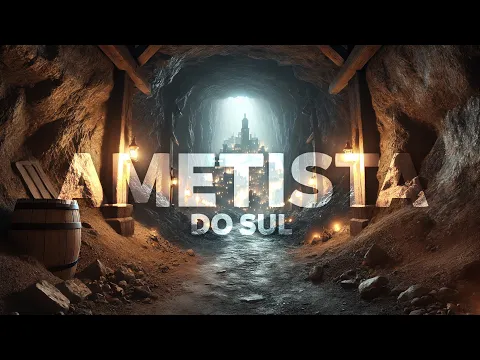

Ametista do Sul houses one of the largest amethyst deposits in the world. This is due to the concentration and quality of the stones found in the region, resulting from four mineralized flows that formed layers of basalt containing amethyst geodes. In Rio Grande do Sul, an amethyst geode reached the spectacular weight of 35 tons.
-
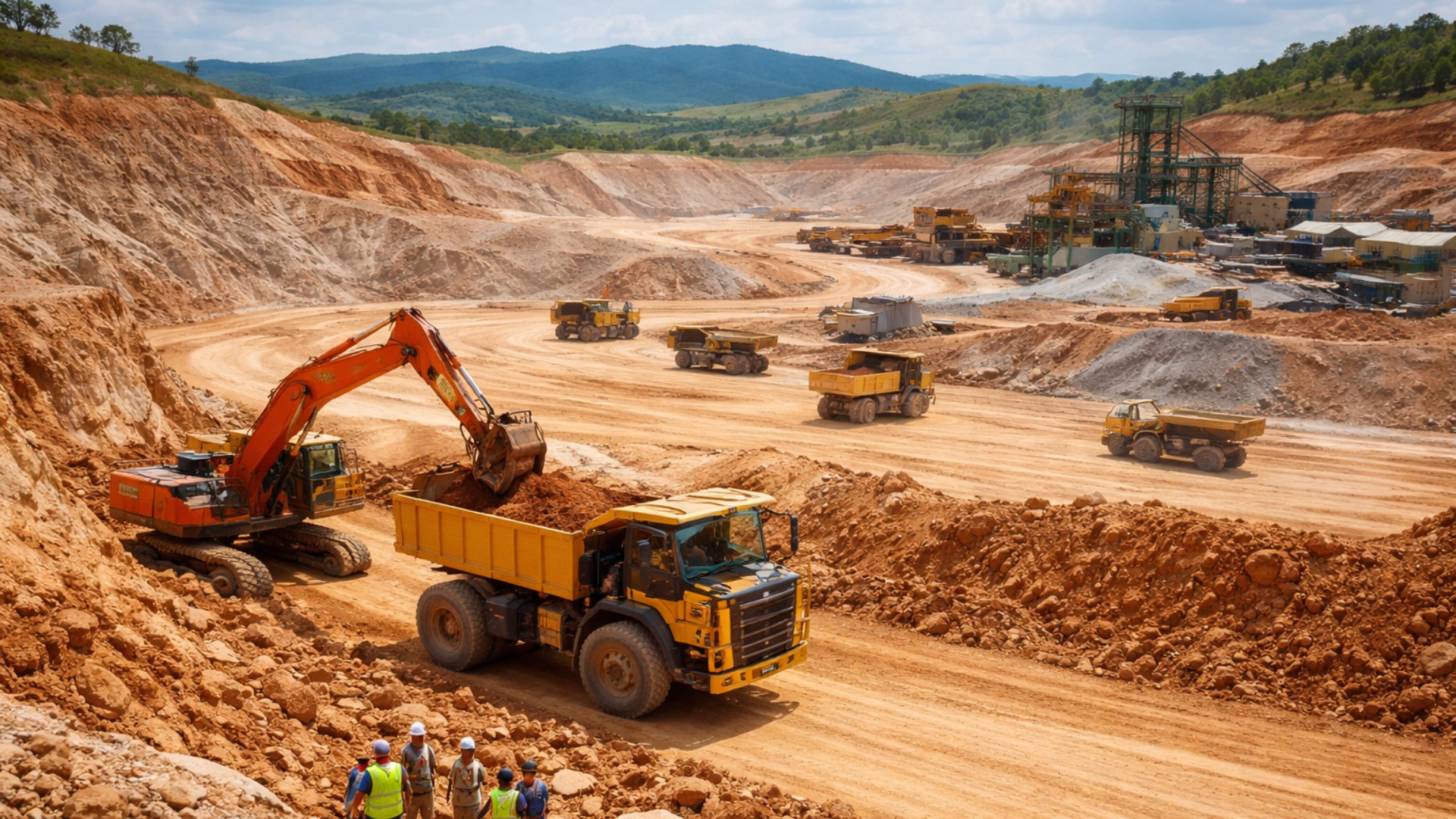
After China, it’s now the turn of the USA to ‘secure’ a share of Brazil’s natural resources: the country buys critical rare earths for R$ 3 billion and enters the center of the global technology dispute.
-
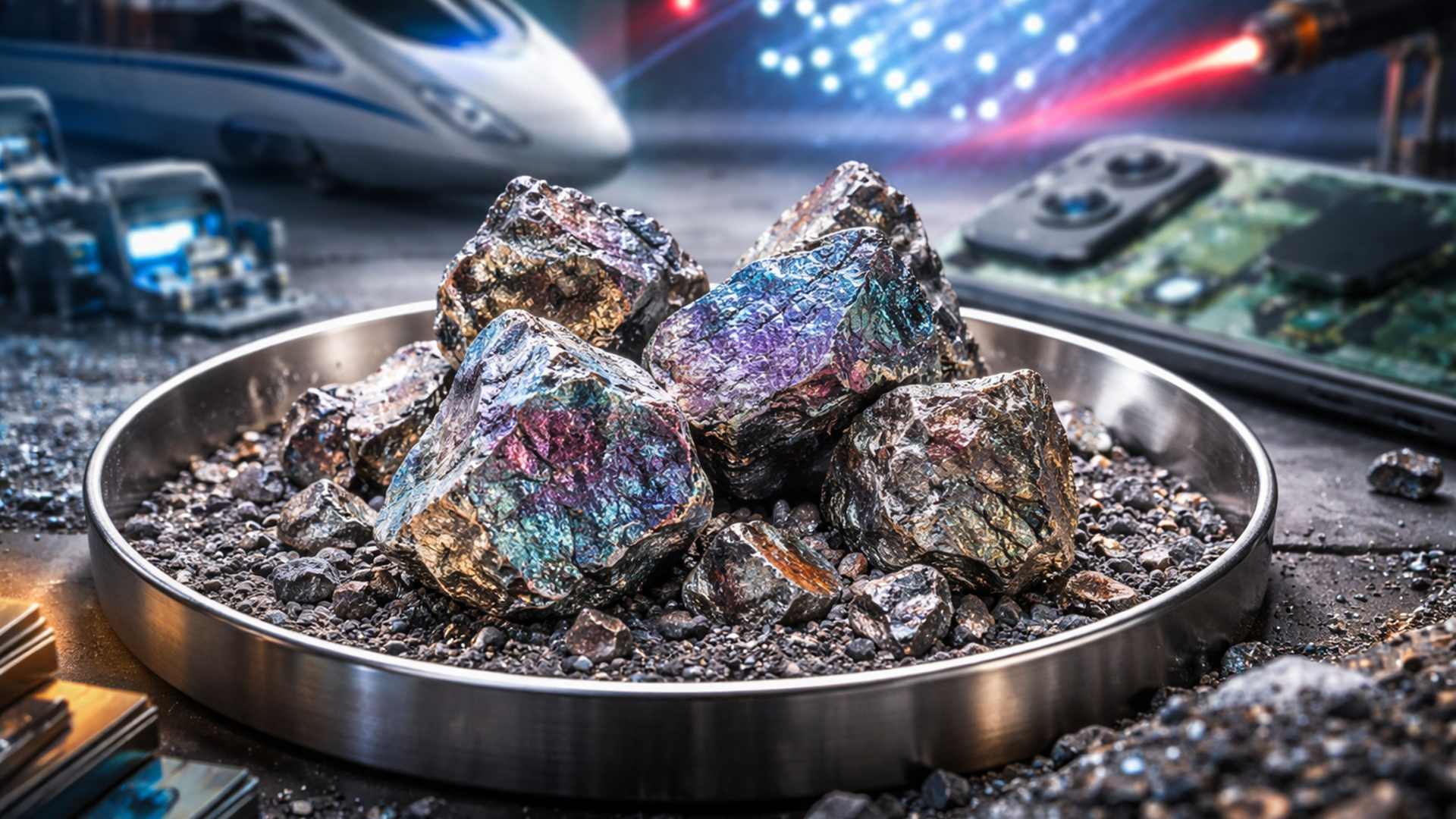
Rare earths are in everything, from cell phones to bullet trains, and what almost no one realizes is why they have become the target of such a delicate global war.
-
Historic bankruptcy of Centauro shocks the market, and the century-old company puts more than 500,000 products, machines, and complete infrastructure up for online auction.

-
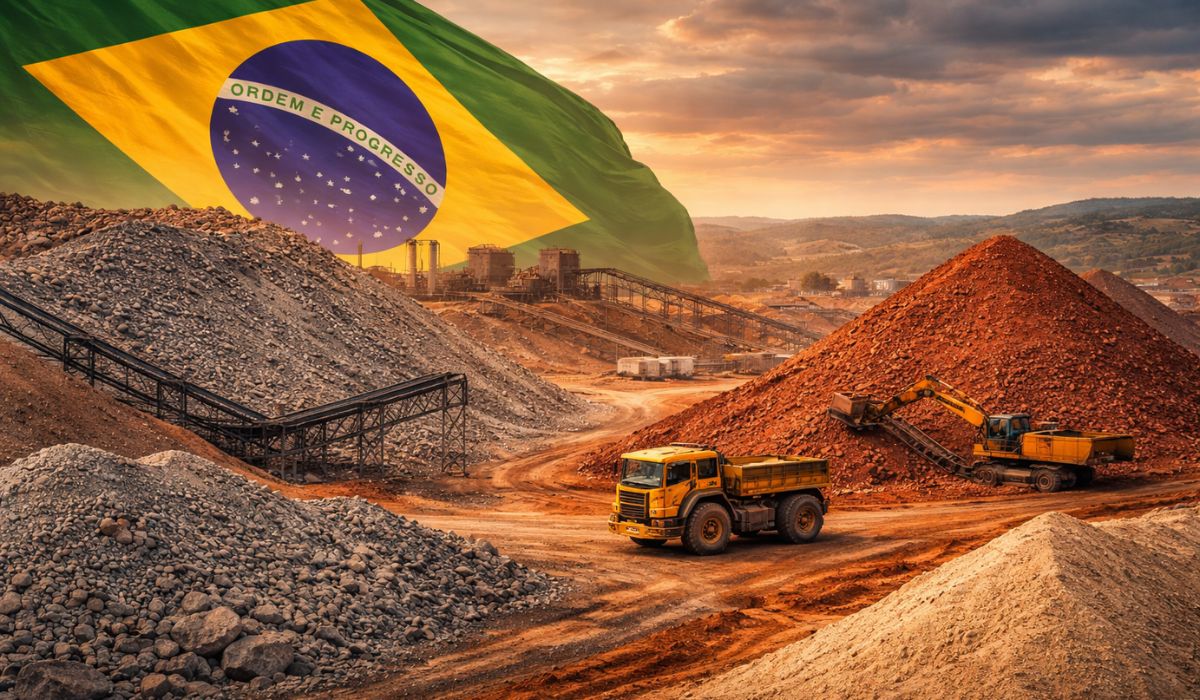
Brazil extracts 26.3 million tons of ore from what was previously treated as waste, transforming residues into wealth, producing over 3 million tons of sand, and demonstrating how national mining is relearning to generate value.

This abundance of amethyst is not found in other areas of Rio Grande do Sul, where occurrences in mining are more sparse. Only in this small area of the state is the incidence and quality of the stones so notable, making it one of the largest deposits in the world.
The Fascinating Formation of Amethyst Crystals and Their Geological Mysteries
Amethyst crystals, known for their purplish color due to the presence of tetravalent iron ions (Fe4+), are found in geodes within the volcanic rocks of the Serra Geral Formation, part of the Paraná-Etendeka Basalt Province. The color intensity increases from the center to the termination of the crystal, and when heated to 475°C, amethyst acquires a yellow or reddish color, being called “Topázio Rio Grande.” The commercial value of amethyst in the mining sector varies according to the intensity of its color.
In geodes, in addition to amethyst, minerals such as agate, colorless quartz, rose quartz, calcite, apophyllite, zeolites, onyx, jasper, opal, gypsum (selenite), barite, and silicified anhydrite are found. These geodes formed due to volcanic activity associated with the fragmentation of the supercontinent Gondwana and the opening of the South Atlantic Ocean, resulting in the outpouring of a large volume of lava about 125 to 138 million years ago. In the region of Presidente Epitácio, in São Paulo, the thickness of the basalt layers reaches 1,700 meters.
The formation of amethyst geodes is attributed to the action of aqueous fluids rich in silica that percolated through the basaltic rocks, filling cavities and fractures, and precipitating minerals such as amethyst, chalcedony, and calcite. This process occurred between 109 and 87 million years ago, during the volcanism of Tristan da Cunha. The minerals that precipitate at high temperatures formed during the cooling of the lava, while those that form at lower temperatures, such as amethyst, emerged in already consolidated basalts. mining
The Commercial Value of Amethyst: Most of the Production (95%) is Destined for Export, with China Being the Largest Buyer
In addition to amethyst, other stones found in the region, such as selenite and agate, also hold high commercial value due to their scarcity and beauty. The commercial value of amethyst is directly related to its color. The more purple and uniform the stone, the higher its price in the market. Some amethysts with lighter tones or inclusions of other stones, such as calcite, are worth less.
However, technology allows adding value to these lower-quality amethysts. When subjected to a burning process in special furnaces, the stones acquire the color of citrine, a variation of amethyst that is also highly valued. mining
The gemstones produced are raw products, but go through a semi-processing, with most destined for the international market in the form of hammered pieces, suitable for cutting, or as geodes cut in half. The value of amethyst in the gemstone trade varies according to the intensity of the color, with darker-toned amethyst being the most valuable. The quality of the crystals also plays a significant role in the value of “in natura” samples. mining
According to data from the small-scale mining inventory report provided by the Ministry of Mines and Energy in 2018, most of the production (95%) is destined for export, with China being the largest buyer (70% of the consumer market), along with India, Thailand, the United States, Europe, and Latin America. The remaining production (5%) is absorbed by the domestic market, notably in the southeastern region. The trading center is located in Soledade, Rio Grande do Sul.
Ametista do Sul: Much More than a Stone, the Pride of Brazilian Mining
Ametista do Sul is much more than just a mining town. It is a place that holds geological, historical, and cultural riches, with an entire universe hidden beneath the earth. From the extraction of amethyst to its transformation into products and experiences, this small town in southern Brazil is a true treasure waiting to be discovered. mining
Whether for the beauty of the stones, the energy they transmit, or the impressive underground city, Ametista do Sul is a unique destination in Brazil and the world that deserves to be explored by all those seeking to uncover the secrets and charms of Rio Grande do Sul.
I would love to know if you were already familiar with Ametista do Sul. Please tell us your experience in the comments section. Don’t forget to leave 5 stars and enable notifications from CPG to stay updated on all the news in the mining world. Until next time!









Seja o primeiro a reagir!