





 Portuguese
  English
  Spanish
  5 min of reading
  0 comments


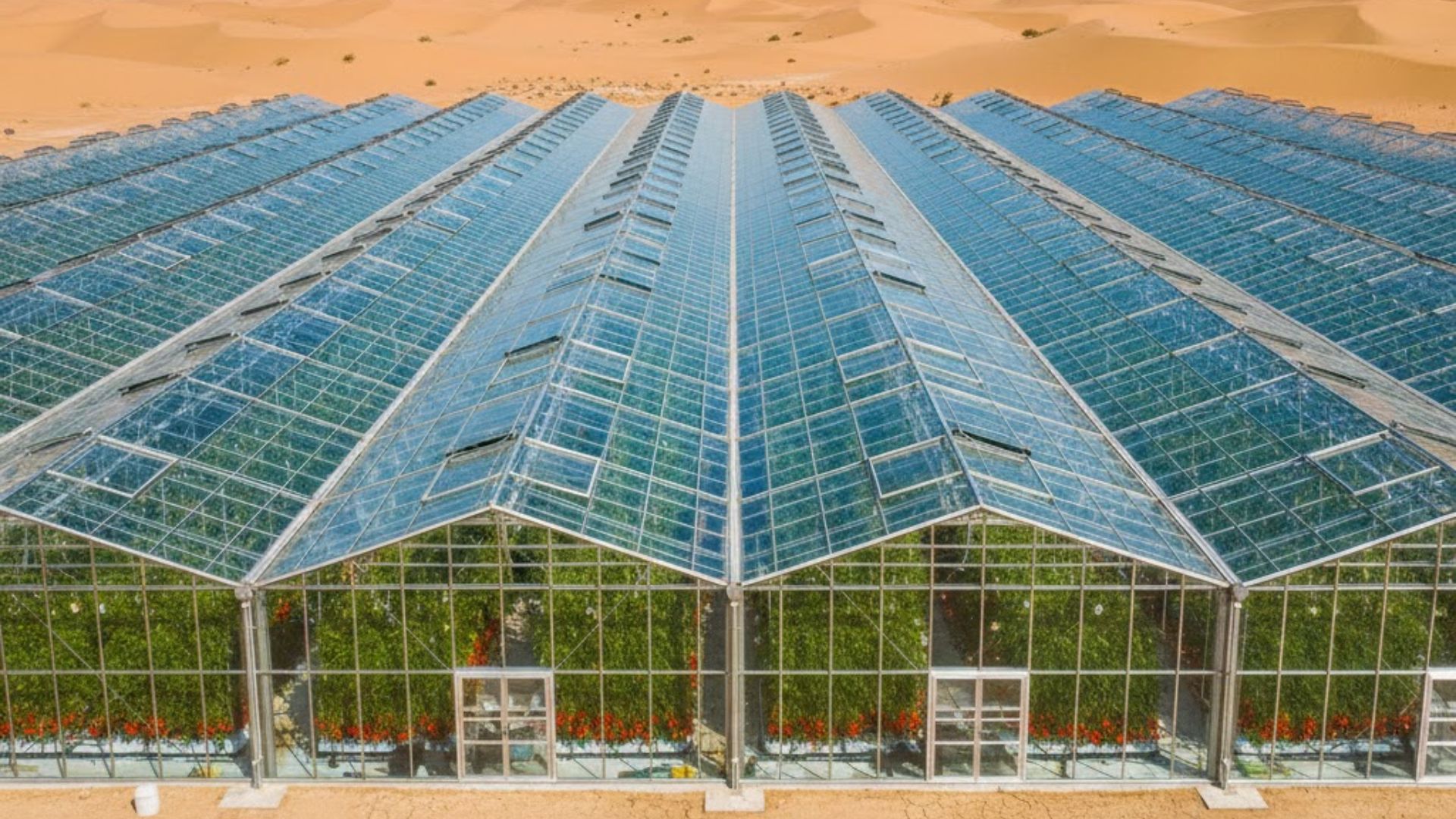
High-Tech Greenhouses from Pure Harvest Maintain Continuous Production of Tomatoes and Fruits in the Emirates, with Controlled Microclimate and Short Logistics, Capacity Over 15 Million kg Annually and Focus on Quality Without Residue and Electrified Climate.
With capacity above 15 million kilograms per year, Pure Harvest Smart Farms operates climate-controlled greenhouses that deliver tomatoes, leafy greens, and berries throughout the 12 months, even under the extreme heat of the United Arab Emirates.
This is a case of controlled environment agriculture that has consolidated in the Gulf since 2017, with production close to consumer centers and a focus on reducing reliance on air-freighted food imports.
The company claims to produce year-round with a consistent quality standard and availability, supported by high-tech cultivation parks and integrated post-harvest processes.
-
Brazilian nanotechnology surprises by transforming soybean seeds into intelligent structures that accelerate germination and may change the future of agricultural productivity in the country.
-
Brazil reaches historic record of judicial recoveries in 2025, with 2,466 companies in crisis and agribusiness leading the financial collapse.

-
From 13 borrowed cows to millions of liters per year: Argentine producer transforms small beginnings into an empire with technology, management, and high productivity of cows.
-
In just two months, Brazil exported 372 thousand tons of beef to China, and now the sector is racing against time before the quota of 1.1 million tons runs out and a 55% tariff comes into effect, changing everything.
Climate-Controlled Greenhouses in the United Arab Emirates
The production units are strategically distributed across the country, with a highlight on the Al Ain hub in the emirate of Abu Dhabi.
In these glass greenhouses, the microclimate is controlled to maintain temperature and humidity within stable ranges, enabling continuous cycles.
The logic is typical of protected cultivation: sensors and automation systems help preserve productivity in months of greater thermal stress, reducing yield and size fluctuations.
Supply is concentrated in retail chains within the country and nearby markets, sustained by the principle “grown here, not flown here,” which prioritizes local production and short paths to the shelves.
Electrified Climate Control and Energy Efficiency
Climate control is one of the technical pillars of the operation.
In partnership with the refrigeration and air conditioning industry, the company has implemented an electrified heating and cooling plant in its greenhouse in the desert, combining high-efficiency heat pumps and chillers.
The system is designed to meet simultaneous heating and cooling demands with lower energy and water consumption compared to conventional setups, which is central to enabling precision horticulture in one of the most challenging environments on the planet.
This arrangement allows for maintaining internal conditions even when external temperatures exceed 45 °C, something common in the Gulf summer.
Biological Control and Quality Without Residue
Pest management prioritizes biological control.
According to Pure Harvest, the use of beneficial insects instead of chemical pesticides aims to ensure products are “free of pesticide residues,” an attribute valued by retailers and consumers seeking traceability.
The strategy includes seed selection adapted to protected cultivation, specific cultivation and pruning practices, and access to abundant natural light, modulated by shading according to the season.
The company also claims to have significantly superior efficiency compared to open field crops and traditional desert greenhouses, resulting from productivity gains per square meter and better utilization of water and inputs.
Portfolio with Tomatoes, Leafy Greens, and Berries
Tomatoes account for the largest share of the portfolio and come in various varieties, from grape types to elongated ones, as well as fruits aimed at extended shelf life.
The operation also includes leafy greens and berries, with a focus on strawberries grown in protected systems, which enhances the local supply of fruits historically dependent on long-distance imports.
The standardization of harvesting, classification, and packaging is a key component to meet contracts with large chains, reducing losses and ensuring sizes and sweetness within specifications.
Short Chain and Logistics Close to the Consumer
The short supply chain design is part of the competitive differential.
By producing less than 100 kilometers from the consumer, the operation shortens logistics times, decreases transportation losses, and reduces exposure to external freight cost shocks.
The model also mitigates typical seasonality in arid climates, as the internal environment of the greenhouses does not depend on the abrupt variations of the desert.
The result is a stable availability of fresh items throughout the year, with lower price volatility for the end consumer compared to products that arrive by air.
Expansion and Investments in Agritech in the Gulf
The expansion of recent years has included new production sites and regional partnerships to accelerate the construction and adaptation of infrastructure, with retrofits of greenhouses and integration of technological packages for efficiency gains.
This evolution has been supported by relevant fundraising rounds in the agro-tech ecosystem of the Middle East, allowing for scaling the operation and investing in energy, water, and post-harvest systems.
In parallel, the company has begun to communicate capacity growth goals and to explore higher value-added products within the same framework of protected agriculture.
Food Security and Public Policies
In the regulatory and institutional field, the case aligns with official food security strategies and productive diversification of the country.
Gulf governments have indicated in public guidelines an interest in more resilient supply chains, especially after events that affected global logistics.
By offering local production at a commercial scale, the model of climate-controlled greenhouses gains relevance as a tool for reducing the risk of shortages in sensitive categories, such as fresh fruits and vegetables.
The fact that it operates under international quality and traceability standards helps integrate protected production into modern retail purchasing protocols.
Real-Time Management Within the Greenhouses
The operation in a controlled environment requires workforce qualification for real-time monitoring and quick responses to internal microclimate variations.
Management uses constant readings of parameters such as air temperature, relative humidity, and, when applicable, nutrient solution indicators.
In commercial greenhouses, decisions on ventilation, evaporative cooling, heating, shading, and irrigation are made according to production goals and quality criteria, maintaining harvest consistency.
This is a less visible component than the glass structures, but it is crucial for sustaining productivity that allows reaching the publicly communicated annual target.
Annual Availability and Quality Standard
Pure Harvest also highlights that by replacing international flights with short routes, the model reduces the footprint associated with the transport of perishable foods.
Although detailed emissions accounting depends on multiple variables, the shorter distance and stability of the cold chain tend to preserve sensory and nutritional quality, factors that weigh in negotiations with supermarket chains and food service.
The continuous presence on the shelves, without strong interruptions between seasons, reinforces the positioning of availability “all year round.”
Transparency About Publicly Disclosed Numbers
The figure of 15 million kilograms per year has been cited by international media and in public communications from the company itself, referring to the installed capacity and the total annual production in the country.
In a sector subject to variations due to harvest, climate, and market, the transparency about capacity and about protected cultivation standards helps to contextualize the scale, especially when compared to the recent history of desert horticulture, which was previously heavily reliant on air freight imports of items such as premium tomatoes and strawberries.







-

-

14 pessoas reagiram a isso.