





 Portuguese
  English
  Spanish
  3 min of reading
  0 comments


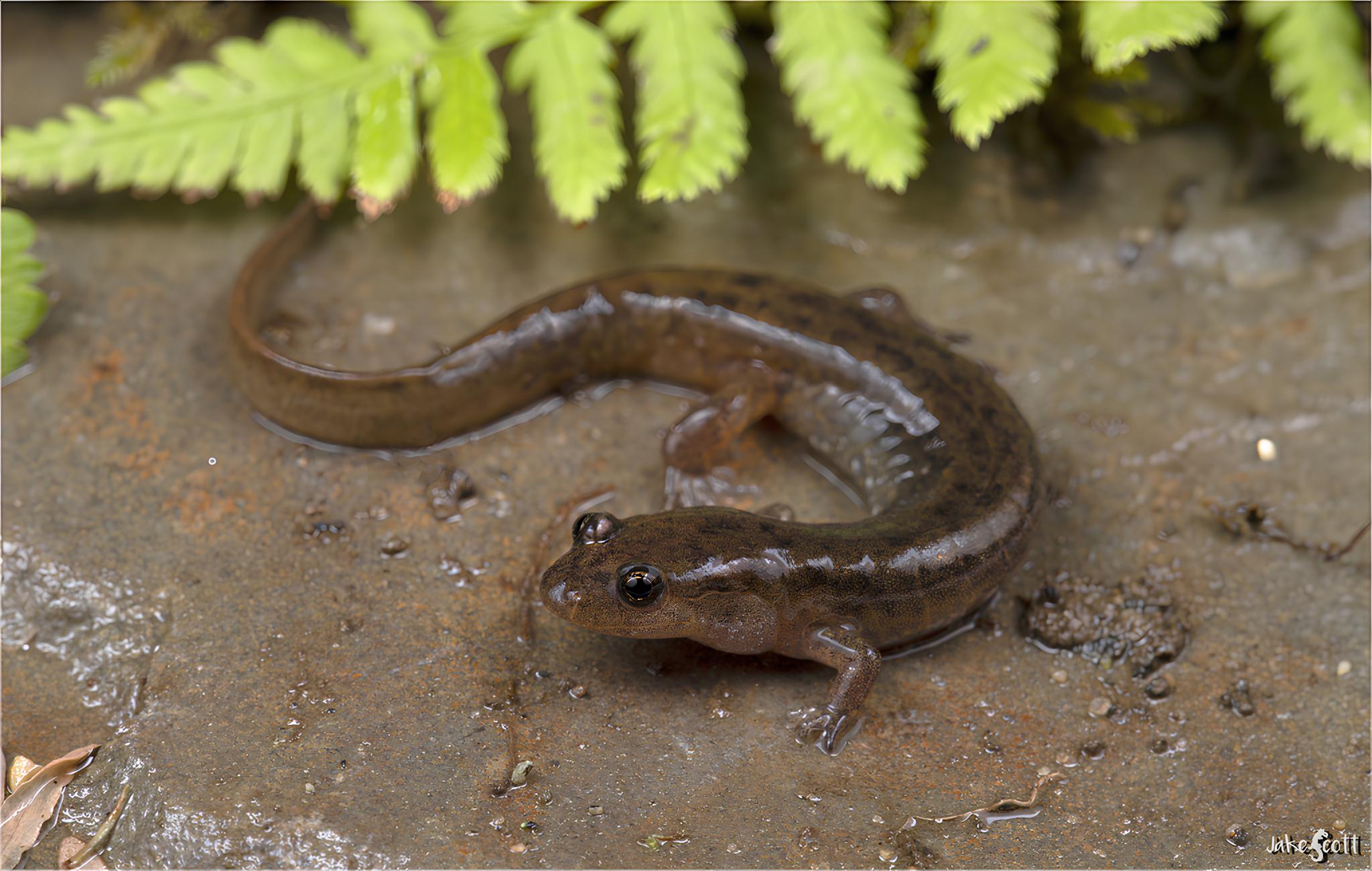
Without Lungs and Breathing Only Through the Skin, the Desmognathus Fuscus Defies Biology and Reveals One of the Most Extreme Respiratory Systems in the Animal Kingdom.
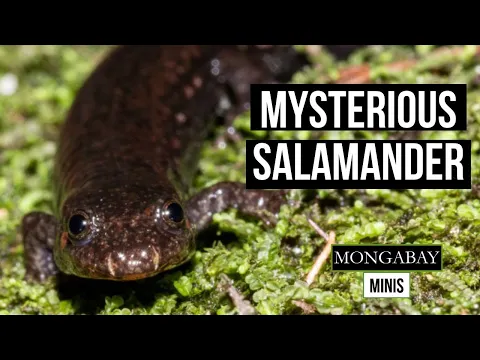
When it comes to animal respiration, the rule seems absolute: lungs for mammals, birds, and reptiles; gills for fish; tracheae for insects. The Desmognathus fuscus, known as the lungless salamander, completely breaks this logic. This North American amphibian belongs to the family Plethodontidae, the only major group of terrestrial vertebrates that completely eliminated lungs throughout evolution.
Instead, all the oxygen needed for its survival is obtained through cutaneous respiration, meaning directly through the skin and the mucosa of the mouth. This is not a respiratory complement — it is the animal’s only means of gas exchange.
How Exclusive Skin Breathing Works
The skin of the Desmognathus fuscus is not just a protective covering. It functions as a highly specialized respiratory organ.
-
Scientists use artificial intelligence to create nearly indestructible steel that does not rust and could change the way industrial energy and oil parts are produced.

-
Instead of buying new electric trucks, India is removing the diesel engines from old vehicles and installing electric propulsion for 40% of the price, and this simple idea could be the solution that polluted megacities around the world have been waiting for.

-
Circles in the Sahara plantations: ISS reveals Sharq El Owainat, in Egypt, irrigated by a center pivot with water from the Nubian Sandstone Aquifer, growing between 1998 and 2019, 290 km from the nearest city.
-
40% still call it a fraud: Soviets monitored Apollo, mirrors on the Moon still return lasers today and rocks confirm it; in 2026, 4 astronauts will return to lunar orbit and the race restarts against China.

Extremely thin, rich in blood capillaries, and permanently moist, this skin allows for the direct diffusion of oxygen from the environment into the bloodstream, while carbon dioxide is eliminated in the opposite direction.
For this to be possible, three conditions are critical and non-negotiable:
– Constant Humidity: without water, gas exchange simply collapses
– Moderate Temperatures: excessive heat speeds up the metabolism beyond the capacity to absorb oxygen
– Low Metabolic Rate: the animal consumes less oxygen than lunged vertebrates
This set of adaptations makes the Desmognathus fuscus a true living limit of vertebrate physiology.
Extreme Dependence on the Environment and Constant Risk
Breathing through the skin comes at a high price. Unlike animals with lungs, the lungless salamander cannot tolerate dry, hot, or polluted environments. A simple reduction in soil or vegetation moisture already compromises its survival.

Because of this, the species is found almost exclusively in very specific environments:
– Dense forests
– Shaded areas
– Near streams, springs, and permanently moist soils
This dependence turns the Desmognathus fuscus into a highly sensitive environmental bioindicator, used by researchers to assess the quality of forest ecosystems and the water integrity of the soil.
Metabolism Adjusted to the Limit of Survival
Without lungs, there is no room for energy waste. The metabolism of the Desmognathus fuscus is adjusted to the minimum necessary to maintain vital functions.
Movements are economical, behavior is discreet, and most activity occurs during periods of high humidity, usually at night or after rain.
This metabolic efficiency is so refined that the species can survive on oxygen levels that would be insufficient for most terrestrial vertebrates of the same size.
Why Losing Lungs Was an Evolutionary Advantage
From an evolutionary standpoint, abandoning lungs may seem like a regression. However, studies published in journals like Herpetologica indicate that this adaptation brought significant benefits:
– More Compact and Flexible Body, facilitating life in crevices and moist soils
– Better Buoyancy Control, useful in flowing streams
– Lower Energy Expenditure, as there is no active pulmonary ventilation
Over millions of years, natural selection favored individuals capable of surviving solely with cutaneous gas exchanges, consolidating one of the most extreme respiratory systems ever observed among vertebrates.
A Living Limit of Vertebrate Biology
The Desmognathus fuscus is not just a zoological curiosity. It represents an extreme natural experiment, showing how far vertebrate physiology can go without collapsing. Its existence challenges basic concepts taught in textbooks and reinforces how evolution does not follow linear or predictable paths.
In a world marked by global warming, deforestation, and loss of soil moisture, species like this also serve as a silent alert: when the environment changes too quickly, organisms that live on the edge simply cease to exist.








-

-

-

-

-

-

50 pessoas reagiram a isso.