





 Portuguese
  English
  Spanish
  4 min of reading
  0 comments


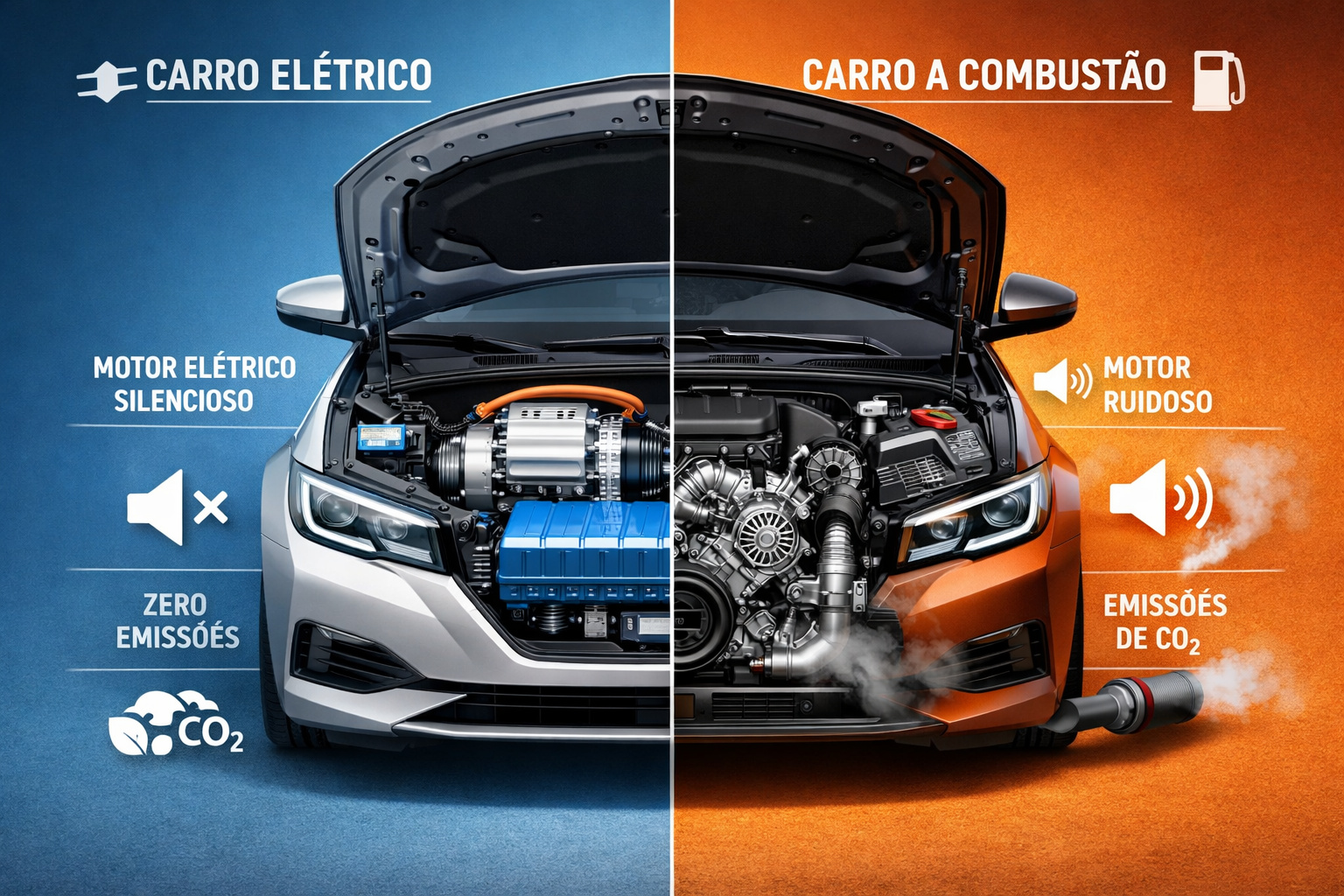
The discussion between electric cars and combustion cars has gained even more strength in recent years, especially in light of global concerns about sustainability, maintenance costs, and performance.
The information was released by “UVE (Association of Electric Vehicle Users)”, which translated and adapted a study originally presented by the GasTroll channel on YouTube, adjusting the data to the European reality and, especially, the Portuguese context.
In this context, in addition to the traditional comparison between electricity production and fossil fuels, the study delves into fundamental aspects such as performance, maintenance, and environmental impact — decisive factors in the choice of the modern consumer.
-
A child takes only bread with sugar to school, and a teacher’s gesture moves millions of people around the world on the web.

-
Mixing coffee grounds with baking soda creates a paste that eliminates odors from the refrigerator, removes grease from pots, repels insects from the garden, and exfoliates the skin of the face, all with two ingredients that most people throw away or already have in their cupboard.

-
The artificial intelligence race is creating energy monsters that consume more electricity than entire cities, and now American states like Maine want to prohibit new data centers so that the population does not foot the bill for this revolution.

-
A SR-71 Blackbird lost both engines at 25,000 meters altitude over the Soviet Union in 1984 while spying on Russian nuclear submarines, and the crew had to choose between ejecting in enemy territory or trying to restart the engines while in free fall towards the Barents Sea.

Therefore, understanding the differences between Electric Vehicles (EV) and Internal Combustion Vehicles (ICV) has become essential for those seeking economy, efficiency, and sustainability.
Superior performance and quieter driving experience
First of all, one of the most relevant points in the comparison between electric and combustion vehicles is performance.
Electric vehicles offer maximum power available immediately upon acceleration, providing quick responses and a more dynamic driving experience.
On the other hand, combustion vehicles rely on the progression of acceleration through the gearbox, resulting in a more gradual power delivery.
Additionally, acoustic comfort also differentiates the two systems.
While the electric car provides silence during driving, the combustion vehicle maintains a constant noise from the engine operation, which directly impacts the user experience.
Thus, in addition to being more efficient, the electric car also stands out for its comfort and smoothness while driving.
Cheaper maintenance and simplified structure
Another determining factor in the choice between electric and combustion is maintenance.
An electric vehicle has only about 1% of moving parts compared to a combustion vehicle, which drastically reduces the need for maintenance.
Additionally, the EV does not use:
- Engine oil
- Spark plugs
- Coolant
In contrast, the combustion vehicle requires:
- Oil change every 10,000 km
- Replacement of spark plugs every 50,000 km
- Coolant change every 2 years or 30,000 km
Moreover, the wear of brakes and tires is also lower in electric vehicles.
This occurs due to regenerative braking, which uses the motor to decelerate the vehicle, reducing the use of conventional brakes.
In combustion cars, on the other hand, brake pads need to be replaced, on average, every 60,000 km, while tires last about 40,000 km.
As a result, the average annual maintenance cost is significantly different:
- Electric vehicle: about 50 € per year
- Combustion vehicle: about 180 € per year
Therefore, in addition to being simpler, the electric car is also more economical over time.
Environmental impact and energy sustainability
In terms of environmental impact, the difference between the two systems is even more evident.
Electric vehicles have 0 g/km of CO2 emissions, meaning they do not emit polluting gases during use.
On the other hand, combustion vehicles release various pollutants, such as:
- Carbon Dioxide (CO2) — starting from 95 g/km
- Carbon Monoxide (CO)
- Hydrocarbons (HC)
- Sulfur Dioxide (SO2)
- Aldehydes (CHO)
- Nitrogen Oxides (NOx)
Additionally, more than 60% of the electricity produced in Portugal comes from renewable sources, according to data from APREN.
Thus, when charging an electric vehicle, especially at night, it is possible to take advantage of energy generated by wind farms that would otherwise be wasted.
Combustion vehicles, on the other hand, directly depend on fossil fuels, which require complex processes such as:
- Oil exploration
- Transportation of raw materials
- Refining
- Distribution
Another important point involves the durability of batteries.
The batteries of electric vehicles can last up to 30 years before being recycled, with up to 95% of the raw material used being recoverable.
In contrast, combustion vehicles have a much more limited recycling process after disposal.
Moreover, the noise impact is also significant.
Electric vehicles do not emit noise, contributing to the reduction of noise pollution in cities.
On the other hand, combustion engines significantly increase urban noise levels.
Conclusion: which is more worth it?
Given all this data, it is evident that electric vehicles offer important advantages in performance, maintenance, and sustainability.
Moreover, the reduced cost, lower environmental impact, and technological evolution indicate a clear trend of growth for this type of propulsion.
On the other hand, combustion vehicles still maintain a relevant presence, mainly due to the already established infrastructure and the more accessible initial cost.
However, as technology advances and renewable energy production grows, electric cars are likely to become increasingly competitive.
Would you still choose a combustion car knowing these differences, or are you already considering switching to an electric one?






Seja o primeiro a reagir!