Geochemist Kliti Grice and her team say the leg bones of a small meat-eating dinosaur that lived in Brazil 115 million years ago contain structures shaped like red blood cells, along with chemical traces of heme, the molecule that lets blood carry oxygen.
The study was published on November 2 in the Proceedings of the National Academy of Sciences. Grice leads the WA-Organic and Isotope Geochemistry Centre at Curtin University in Western Australia.
“Fossilised red blood cells with distinct chemistry related to heme have never been found in situ in any fossil, let alone a dinosaur. This is a world first,” Grice told The Guardian.
A dinosaur named after a fire
The animal is Aratasaurus museunacionali, a small theropod known only from a partial right hind limb. The fossil was found in 2008 in a plaster mine near Santana do Cariri, in Ceará state.
-
Astronomer Kristen McQuinn and her team used Hubble to count the oxygen in 37 nearby dwarf galaxies and found they kept only about 11% of what their stars made, with supernova-driven winds pushing the rest out

-
NASA’s Swift principal investigator Brad Cenko says tungsten pieces and parts of the mirrors of the 1.5-ton observatory could survive when it falls back to Earth this week, after 22 years and more than 2,000 gamma-ray bursts
-
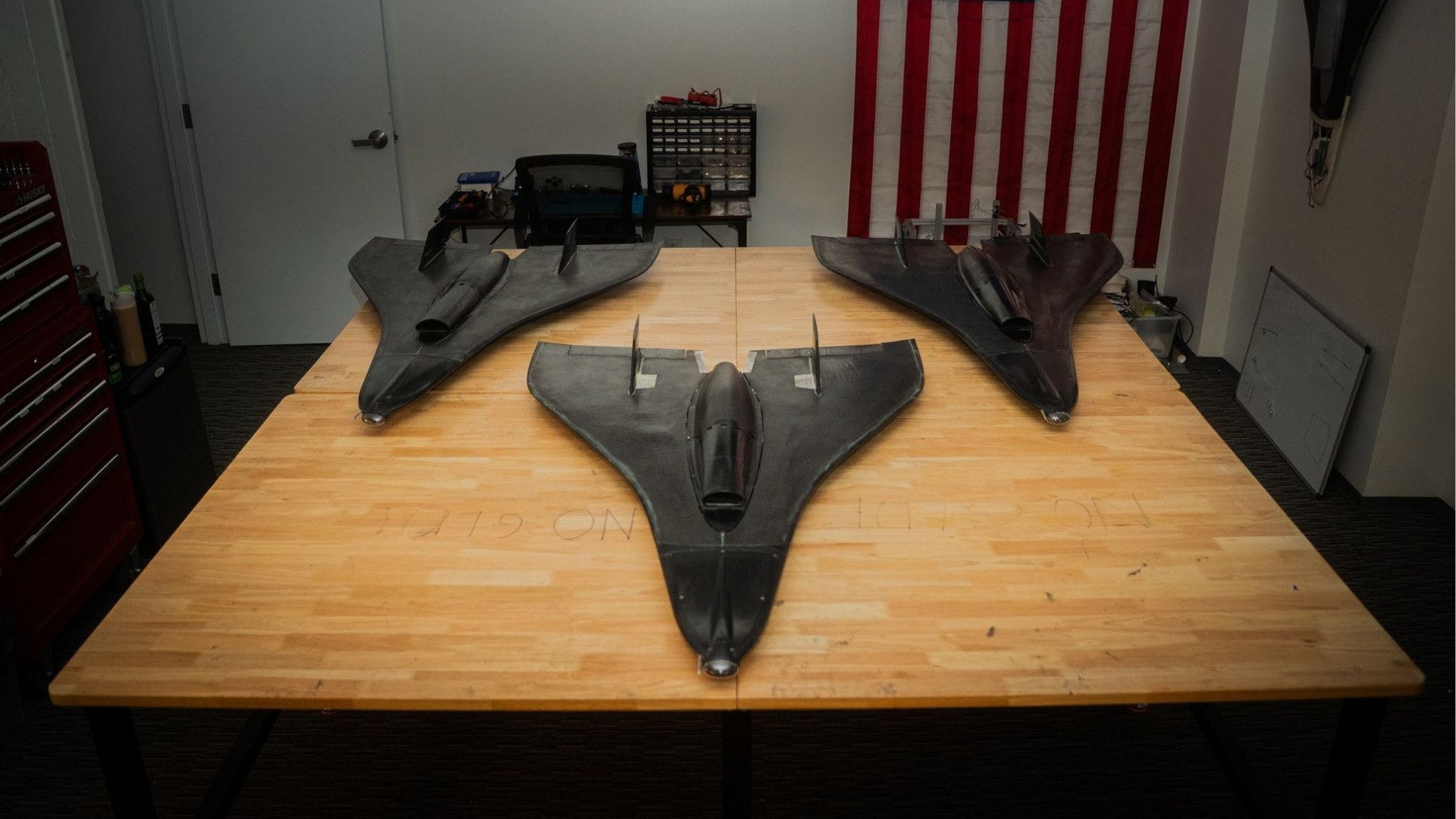
Georgia Tech student Tomas Salvo says the jet drone he built in his dorm room hit 491 mph carrying a 2.6-pound payload, beating the 465 mph mark, and now he wants Boom Supersonic’s $800,000 prize for reaching Mach 1
-
Gwangju mayor Park Gwan-yeol inspected three early Joseon white porcelain kilns, two of them more than 22 meters long, the largest ever found in excavations at the South Korean city’s historic kiln sites


In 2016 the specimen went to Brazil’s National Museum in Rio de Janeiro. A fire destroyed much of that museum’s collection in September 2018, but the building holding this fossil was not affected.
The name records that escape. It joins the Tupi words ara, meaning “born”, and atá, meaning “fire”, with the Greek sauros. Together, the authors write, it means “the dinosaur born from the National Museum fire”.

When it was described in 2020, researchers estimated the animal at about 3.12 meters long and around 34 kilograms. Bone growth marks suggested a young individual, roughly four years old, that could still have grown larger.
Round shapes inside the canals of the bone
Grice spotted the structures while studying the hind leg bones under an electron microscope. They are small and round, and they sit in the fine channels where blood vessels once ran.
That location is the first argument for a biological origin. The team writes that the shapes appear exclusively inside these vascular canals, the same place red blood cells occupy in living vertebrates.
The second argument comes from the rock around the bone. The sediment that surrounded the fossil showed none of the structures, which the authors say makes outside contamination less likely.
Two chemical fingerprints of blood
Shape alone would not settle the question, so the researchers also tested the chemistry. They report two chemical “fingerprints” with the structure of heme, the iron-bearing part of hemoglobin, plus its breakdown products.
The contrast between inside and outside was sharp. The surrounding sediment mostly held compounds from plants and bacteria, while the bone showed a distinct signature dominated by heme molecules.
Other methods confirmed heme-derived molecules and detected iron, carbon and nitrogen. The team also found amino acids associated with collagen, the main protein of connective tissue.
“We are convinced these are fossilised red blood cell structures containing traces of heme molecules,” the authors wrote in an article for The Conversation, citing microscopy, mineralogy, spectroscopy and molecular geochemistry.

Why the cells did not simply vanish
Soft tissue usually breaks down fast. According to the team, this dinosaur was buried quickly in a low-oxygen setting, which slowed decay, and the cells turned into minerals during fossilization.
A manganese mineral called hausmannite may have helped. It formed in and around the cell-like structures, and Grice said it may have stabilized them before fossilization, acting a little like an antioxidant.
The fossil also came from an unusual place. The Romualdo Formation is known for finely preserved fish, turtles and pterosaurs, and the authors credit its geochemistry for detail rarely seen elsewhere.
Slightly larger than the cells of birds
The structures are a bit larger and more rounded than red blood cells in modern birds and crocodilians, the closest living relatives of dinosaurs, according to the research team.
The authors offer two readings. The cells may have been deformed as the bone fossilized, or red blood cells of dinosaurs outside the bird lineage may simply have been shaped differently.
They say more work is needed to decide between the two, and that the answer could open a new way to study dinosaur bodies at the level of single cells.
The scientist who is not convinced
Not everyone agrees. Mary Schweitzer of North Carolina State University, who has reported blood vessel and soft tissue remnants in dinosaur fossils, told The Guardian she doubts these are red blood cells.
Her objection is anatomical. Dinosaur red blood cells should carry a nuclear bulge that makes them dome-shaped on both sides, she said, while the structures in this bone are concave.
Schweitzer was more persuaded by the heme and collagen amino acids. She said the old view that all original organic material disappears within a million years “is being routinely challenged”.
“Not Jurassic Park DNA”
Grice is careful about what the result does not show. She said the work does not imply that large molecules such as proteins or DNA survive in ancient fossils.
“Any extraordinary claim needs extraordinary analytical evidence,” she told The Guardian. “The aim isn’t to find Jurassic Park DNA, it’s to determine how much genuine molecular information deep time can preserve.”
Teams on three continents
The fossil was collected and curated by Renan Bantim and Antônio Saraiva of the Regional University of Cariri, with Juliana Sayão and Alexander Kellner of Brazil’s National Museum and the Federal University of Rio de Janeiro.
Japanese researchers from the Japan Agency for Marine-Earth Science and Technology joined the analysis, along with Jasmina Wiemann of Johns Hopkins University in the United States.
Grice’s own work is funded by an Australian Research Council Laureate Fellowship, according to her disclosure. The fossil is now held at a paleontology museum in northeast Brazil.
What may already sit in museum drawers
For the authors, the biggest implication lies in old collections. Many fossils are not display pieces, they write, yet they may keep molecular and chemical information that modern instruments can now read.
“The really exciting implication is that extraordinary molecular information may already be sitting in museum collections around the world,” Grice said, “waiting for us to ask new questions of old fossils.”
Old museum bones have surprised researchers before. In October, a dinosaur that sat in London’s Natural History Museum for more than 25 years was finally named as a new species.
If blood chemistry can survive more than 110 million years in a small leg bone, how many other dinosaurs on museum shelves are still waiting for someone to look inside their bones?