





 Portuguese
  English
  Spanish
  5 min of reading
  0 comments


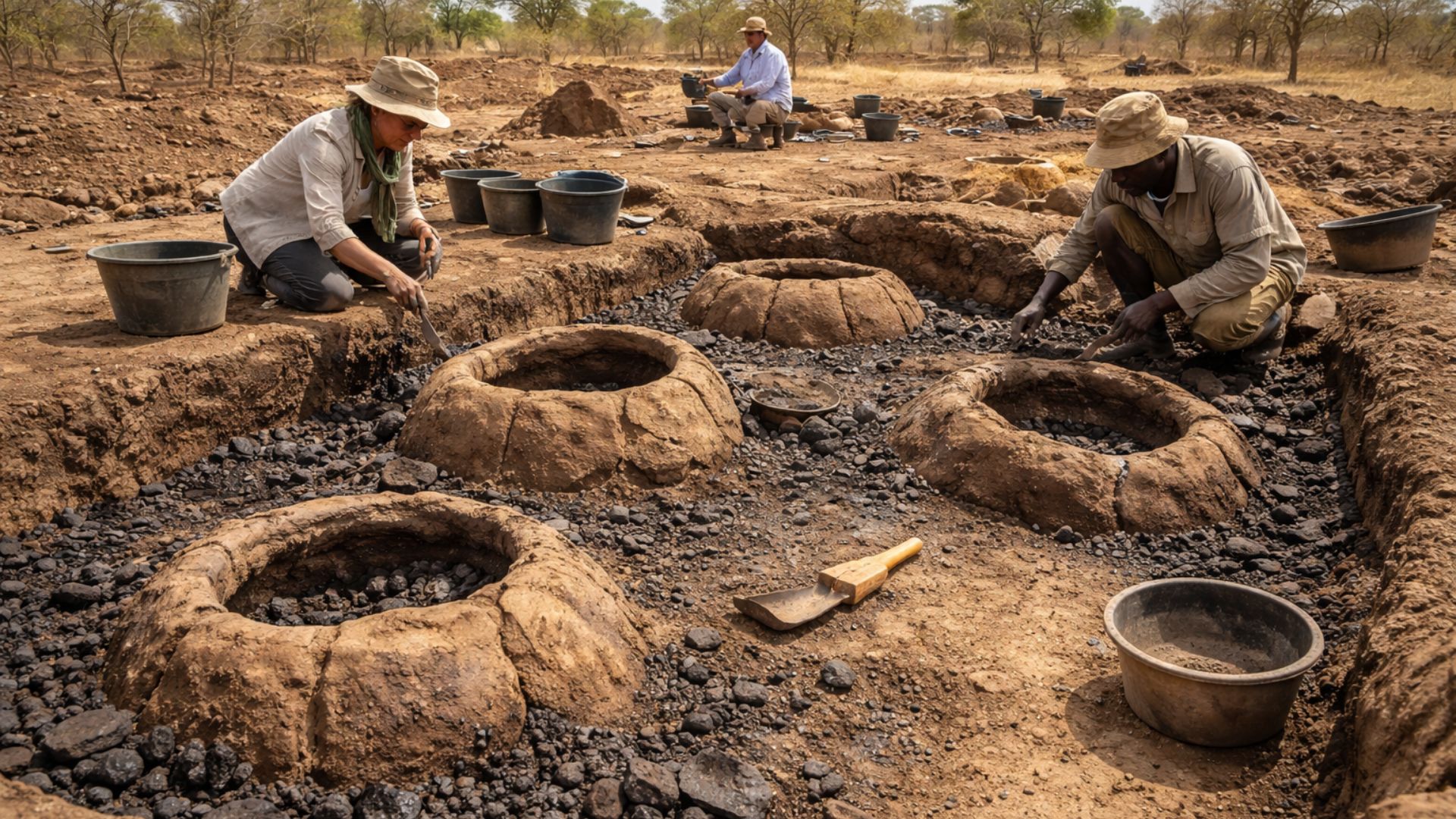
Archaeological finding in Senegal exposes millennial metallurgical tradition, with rare technical continuity, large volume of iron waste, and evidence of sophisticated operational dominance, helping to reassess technological development in ancient West Africa without relying on linear narratives of progress.
A workshop for iron production identified in eastern Senegal has opened a new front of debate about the history of metallurgy in West Africa.
Excavations at the Didé West 1 site, in the Falémé River valley region, showed that the location was used for nearly eight centuries, between the 4th century B.C. and the 4th century A.D., with strong technical continuity and only minor adjustments over time.
The study was published in March 2026 in the African Archaeological Review.
-
The impressive 180-kilometer highway that seems to float over the sea connects 44 islands and allows you to cross the ocean by car on one of the most incredible routes on the planet.

-
The dark underground world that exists beneath the Twin Cities of Minnesota.
-
Argentina enters the phase of the receiver network in Patagonia and Antarctica to monitor the far south, while Brazil keeps an eye on the South Atlantic and spreads sensors over 5.7 million km² of the Blue Amazon and reinforces its maritime sovereignty.

-
Goodbye disposable batteries: an item still consumed in 1.2 billion units per year in Brazil has a rechargeable alternative that can be used up to 1,000 times and reduces household expenses.
The discovery gained prominence because the archaeological set is exceptionally preserved and allows for rare precision in observing how a metallurgical tradition remained stable over many generations.
Instead of suggesting stagnation, the authors argue that the case helps to understand the weight of technical choices in ancient societies, especially when the method already met local production needs.

The finding also corrects part of the narrative that usually circulates on the subject.
The research does not address an active structure since the 12th century, nor an operation that lasted until the 20th century.
The datings presented by the team place the use of the site between Antiquity and the early centuries of the Christian era, long before the chronological cut described in versions circulated on social networks and republished without verification.
Archaeological remains reveal scale and functioning of metallurgy
At the center of the investigation is a large concentration of smelting waste, composed of about 100 tons of slag.
Around it, researchers located approximately 30 used tuyères, which are clay pieces responsible for conducting air into the furnace, as well as 35 circular furnace bases coated with clay.
Each of these bases has a depth of about 30 centimeters.
These remains allowed for the reconstruction of the logic of the workshop’s functioning and its permanence over centuries.
The stratigraphic analysis showed successive phases of space use, while the distribution of the furnaces indicated a gradual reorganization of the work area towards the north.
Still, the morphology of the equipment, the type of waste, and the principles of the process remained remarkably consistent.
Another point considered relevant is the state of preservation of the tuyères and the bases of the furnaces.
According to the team, this material helps to observe a specific tradition of iron ore reduction identified in the region and known as FAL02.
In this tradition, small circular furnaces appear, associated with a removable chimney and large clay tuyères.
Technical stability does not mean absence of innovation

The formulation that technology would have remained “unchanged” for 800 years oversimplifies what the study effectively demonstrated.
The authors record a notably stable tradition, but with minor technical adjustments over time.
The relevance of the site lies precisely in this combination of permanence and adaptation. This detail is important because it distances exaggerated interpretations.
The Didé West 1 workshop does not appear as an “industrial factory” in the modern sense. Nor does it emerge as proof of rejection of innovation by local communities.
Quantitative estimates suggest small-scale, seasonal production, primarily aimed at meeting local needs.
The manufacture of agricultural tools appears as the main purpose of production.
In other words, the technical continuity observed in Senegal does not point to a lack of knowledge.
It indicates, in fact, an efficient operational choice within that historical and environmental context.
When raw material, fuel, and social demand converge, the permanence of a method may be more relevant than the constant search for change.
African metallurgy gains new historical framing
The authors place the site within a broader question about the origins of iron metallurgy in sub-Saharan Africa.
According to the study, this process is still not fully understood, despite decades of research.
The West African region remains underdocumented compared to other areas of the world.
This makes well-preserved finds like Didé West 1 especially valuable for archaeology.
This point shifts the axis of historical discussion.
Instead of hierarchical comparisons with European experience, the study highlights long-lasting local traditions.
The Senegalese workshop emerges as evidence of a structured metallurgical culture.
There is consistent transmission of knowledge and operational mastery of the smelting process.
Researcher Mélissa Morel, the lead author of the article, stated that the site offers a rare opportunity to study the continuity and adaptation of an iron smelting technique over the long term.
Archaeological dating redefines the chronology of the discovery
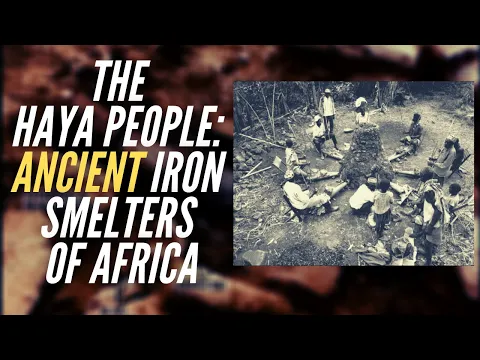

The excavations that underpin the article took place in 2018 and 2022. The scientific publication was made in 2026.
The chronology was established based on stratigraphic analyses and dating methods applied to samples of charcoal and other materials.
The researchers placed the activity between the 4th century B.C. and the 4th century A.D., totaling about 800 years of use.
There was also a relevant geographical correction regarding inaccurate reports. The site is located in eastern Senegal, in West Africa, near the Falémé River valley.
The description of the furnaces as advanced should be understood within the observed technical context.
There is evidence of refined knowledge, control of the ore reduction process, and use of specialized clay components.
Still, the study presents the finding as a relevant contribution, and not as an absolute break with existing historical knowledge.
Continuous record reinforces the importance of the Senegalese site
The main contribution of the finding is to offer a continuous and well-preserved archaeological record of an iron workshop in operation for centuries.
This allows for observation of how tradition, organization of work, and production techniques have been maintained over time.
The case reinforces the need for caution in the face of exaggerated interpretations. The site represents solid evidence of technical continuity in ancient West Africa.
This set of data contributes to expanding the understanding of enduring productive practices in ancient societies.






Seja o primeiro a reagir!