





 Portuguese
  English
  Spanish
  6 min of reading
  1 comment


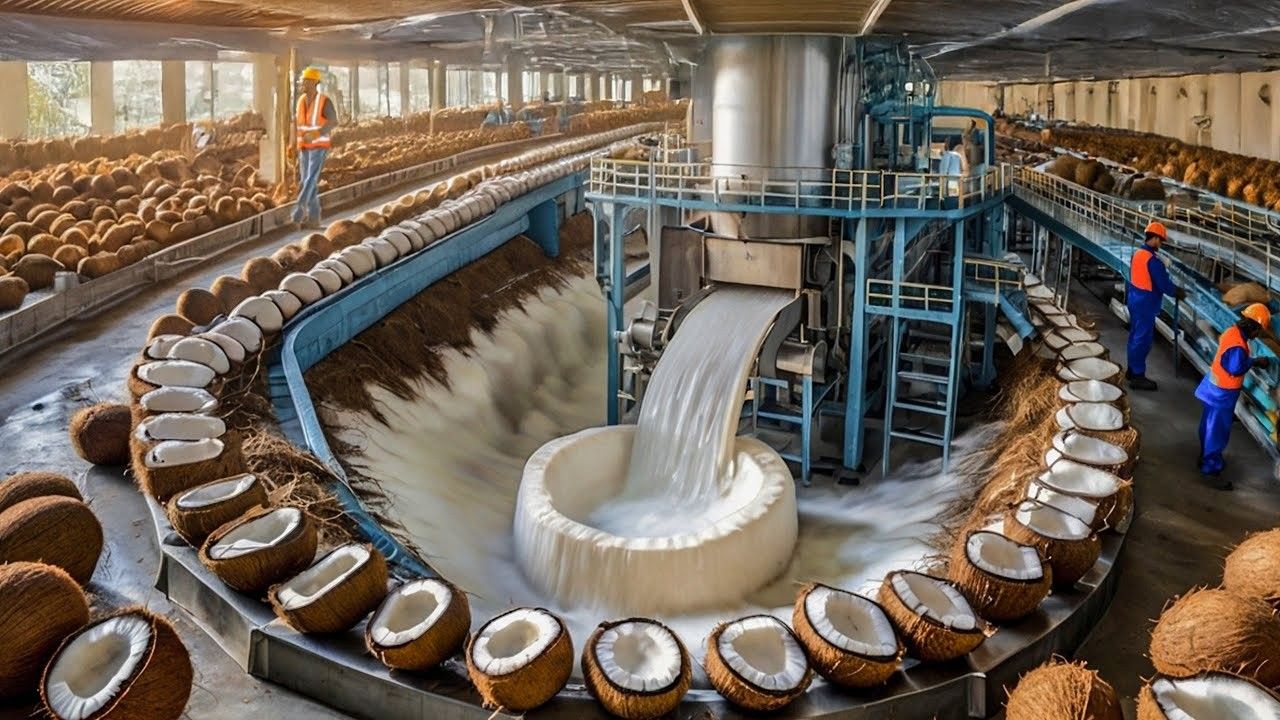


The Backstage Of The Risky Harvest That Takes Millions Of King Coconuts From The Palm To Oil, Milk, Fiber, And Coconut Water In Dozens Of Industrial Products
Producing millions of king coconuts each year is much more than harvesting a tasty tropical fruit. Behind this risky harvest lies an intense routine on farms in Sri Lanka, where experienced workers climb towering coconut trees to ensure that each coconut is picked at just the right moment, without waste and without compromising the quality of the water and flesh. Every detail matters, from the moment the fruit changes color to the sound the shell makes when tapped lightly.
From there, a real industrial transformation begins. In a factory where more than 23 products are processed, king coconuts undergo rigorous selection, precise industrial peeling, and processes that separate water, flesh, oil, milk, and fiber. Everything is utilized strategically, from the outer shell that becomes rope to the flesh that turns into virgin coconut oil and creamy coconut milk, showing how this production chain is complete and highly skilled.
From Tropical Paradise To Loaded Coconut Trees
In Sri Lanka, this special coconut grows in an environment that seems tailor-made for it. In a tropical corner where the sun is intense and the rains nourish the fertile land, the sandy, well-drained soil, along with the humid and rainy climate, creates the ideal conditions for coconut development.
-
Iceberg A23a, one of the largest in the world, is undergoing accelerated collapse and may disappear: what explains the end of the ice giant?

-
The simplest swap at home can reduce energy consumption by up to 90% without changing habits, using a technology that lasts up to 25 times longer and consumes only a fraction of the electricity.

-
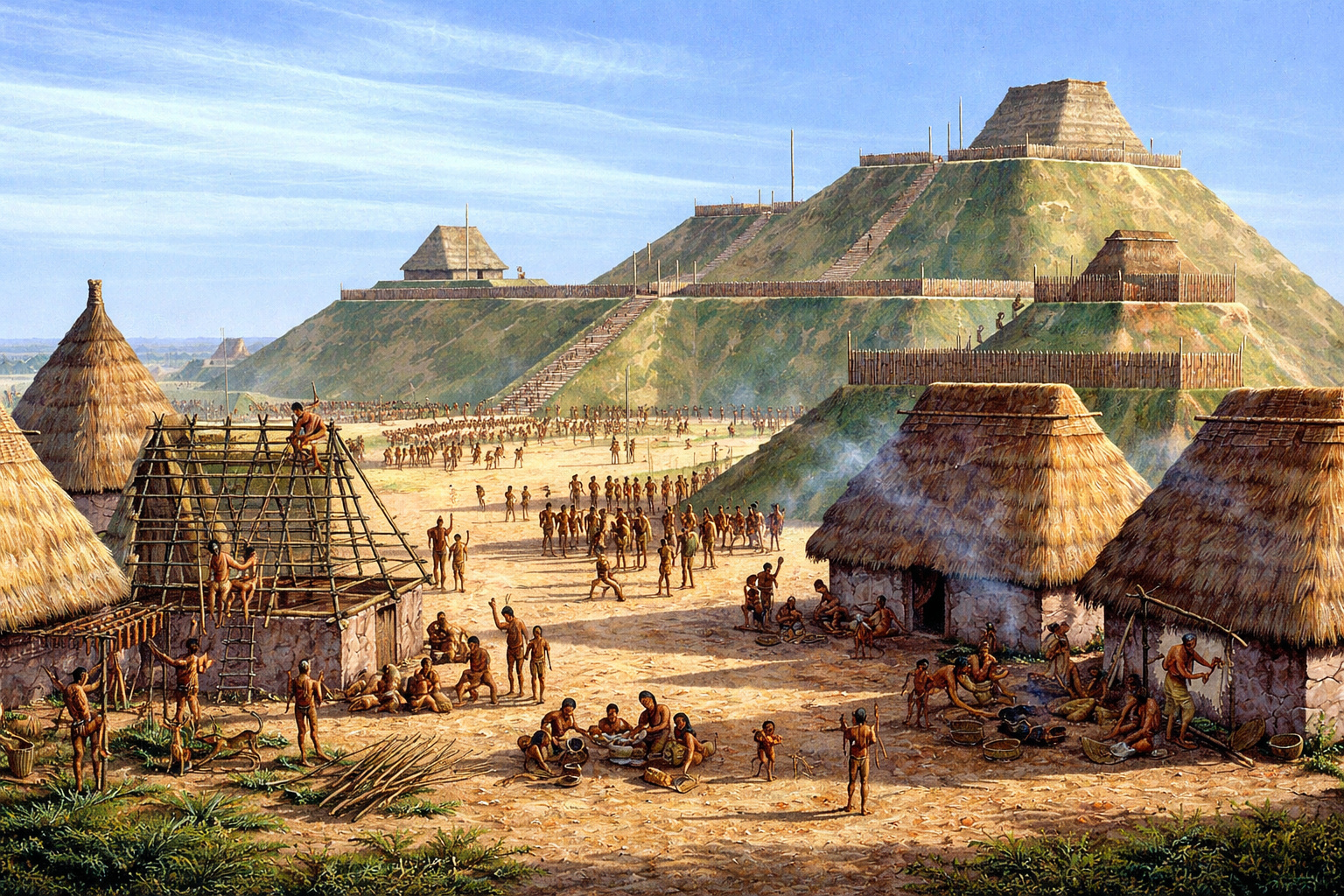
With over 14 million baskets of earth moved, an ancient North American metropolis built a monumental pyramid of 30 meters and established a city with 20,000 inhabitants nearly a thousand years ago.
-
A 1,900-year-old treasure emerges from a Roman house destroyed by fire and sealed since antiquity in Romania, with coins and metals fused among the ashes.

It’s no coincidence that king coconut has become a symbol of local culture, recognized for its vibrant orange color and sweet, refreshing water.
Farmers carefully select the strongest seeds, germinate them in nurseries, and monitor the growth of the seedlings until they are ready to go to the farms.
The trees take between five and seven years to start producing quality fruit, during which they receive almost artisan attention, with the application of organic fertilizers, manual pest control, and careful irrigation management.
When the coconut tree reaches productive maturity, the first bunches appear, containing between five and fifteen coconuts, which slowly develop until they reach the perfect stage for harvesting.
Risky Harvest At The Top Of Coconut Trees Up To 30 Meters

It is at this point that the risky harvest comes into play. Unlike other types of coconut, king coconut is not harvested fully dry. It is picked at an intermediate stage, when the water content is at its maximum and the flavor is in perfect balance between sweetness and freshness.
During development, the fruit changes from green to bright orange, a visual signal that the right moment for harvesting is approaching.
Harvesters need to master both technique and courage. Coconut trees can reach heights of up to 30 meters, and climbing the trunks in intense heat requires strength, balance, and experience.
The worker evaluates color, size, shape, shine of the shell, and even the sound of the coconut when tapped lightly. If picked too early, it loses flavor. If it stays on the tree too long, it may lose some of its properties. Thus, the harvester’s eye is crucial for the success of this risky harvest.
After being cut with machetes or curved blades, the bunches are carefully lowered, avoiding sudden drops that could crack the shell or damage the water. Next, the coconuts are grouped in fresh piles, in the shade, ready to head to the processing plant.
From Rigorous Selection To Precise Industrial Peeling
Upon arrival at the factory, the king coconuts undergo a strict sorting process. Each unit is visually inspected, and those with cracks, damage, or signs of fermentation are discarded to maintain quality standards. Only the perfect fruits proceed to the machines that will remove the fibrous outer shell, the mesocarp, a thick and durable layer made up of plant fibers that surround the hard shell.
This peeling is done by rotating equipment that spins at high speed, removing fibers without damaging the interior. After this stage, the coconut retains its brown shell, the endocarp, which still protects the water and edible flesh.
With stainless steel blades, curved and very sharp, a precise industrial peeling begins, removing the entire brown layer to expose the white endosperm.
When the coconut is fully peeled, its white, smooth surface appears, and with precise machete cuts at the top, a wide mouth is opened to allow the water to drain easily. This water is collected in stainless steel containers, maintaining hygiene and preserving the natural flavor.
From Flesh To High Purity Virgin Coconut Oil
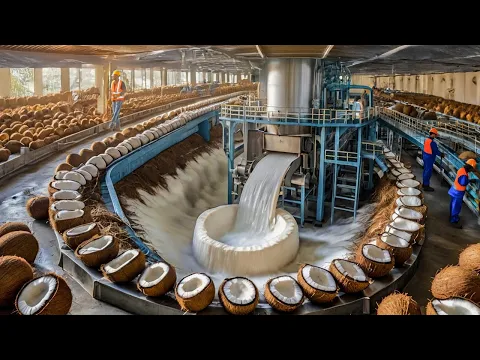

After the water is extracted, the soft white flesh of the king coconut comes into play as raw material for one of the most valued products in the natural and cosmetic industry. The flesh is finer and more gelatinous than other varieties, which requires extra care during handling.
First, it is carefully washed to remove any residue from the shell. Then, it enters an endless screw, which transports the flesh to the crushing machine.
There, the flesh is ground and transformed into a creamy paste. This paste is mechanically pressed at low temperature, without additional heating, in a process designed to preserve as much as possible the nutrients, aroma, and natural antioxidants of virgin coconut oil.
The extracted liquid is left to rest to allow the oil to separate from the water and solids. It then goes through filtration and is bottled as high-quality and pure virgin coconut oil, ready for culinary, cosmetic, or therapeutic use, all a direct result of that risky harvest done high up among the coconut trees.
Creamy Coconut Milk And Fibers That Turn Into Resistant Ropes

From the same interior of the fruit comes another key player in this production chain, coconut milk. The white flesh is once again shredded until it becomes a fine, homogeneous paste.
This paste is mixed with hot water in controlled proportions, releasing flavor, natural oils, and essential nutrients. The mixture goes through a hydraulic press that separates the thick white liquid from the solids, resulting in a soft, aromatic, and naturally sweet coconut milk, perfect for recipes and industrial products.
To ensure quality and safety, the milk is filtered, homogenized, and pasteurized, preserving its sensory characteristics. The bottling machines then measure the exact amount of product into each package, maintaining standards and avoiding waste.
After bottling, the packages are sealed and go through sterilization in autoclaves, where they are exposed to steam under high pressure to eliminate microorganisms. This way, the coconut milk reaches the consumer safely and with stability.
Meanwhile, nothing from the thick shell goes to waste. The fibrous outer part serves as the basis for producing ropes and cords. The shells are placed in freshwater lagoons for weeks, during which the water ferments the substances that hold the fibers together.
After this period, shredding machines separate and tear the material, producing a mass of long, strong fibers. These fibers are washed, sun-dried, and combed for alignment and cleaning.
They can then be braided in specific machines, forming ropes of different thicknesses, which are then cut and packaged for distribution, proving that the same fruit that yields water, oil, and milk also generates a valuable input for other sectors.
At the end of this complete journey, from the risky harvest at the top of the coconut trees in Sri Lanka to the factory that transforms each fruit into multiple products, it is clear how the king coconut is a true economic and natural powerhouse. After learning about this entire process, which king coconut product sparks your curiosity the most: the water, the oil, the milk, or the fibers that become ropes, and why?




Nossa!!! Que Deus fez com esse alimento pra gente!!!Quem diria que de um cocô põe se extrair essas maravilhas.Eu acho que o leite e o mais interessantes, porque ele está em terceiro na extração e mesmo assim sai um alimento muito saboroso consumido por milhões de pessoas!!! Show..