





 Portuguese
  English
  Spanish
  9 min of reading
  0 comments


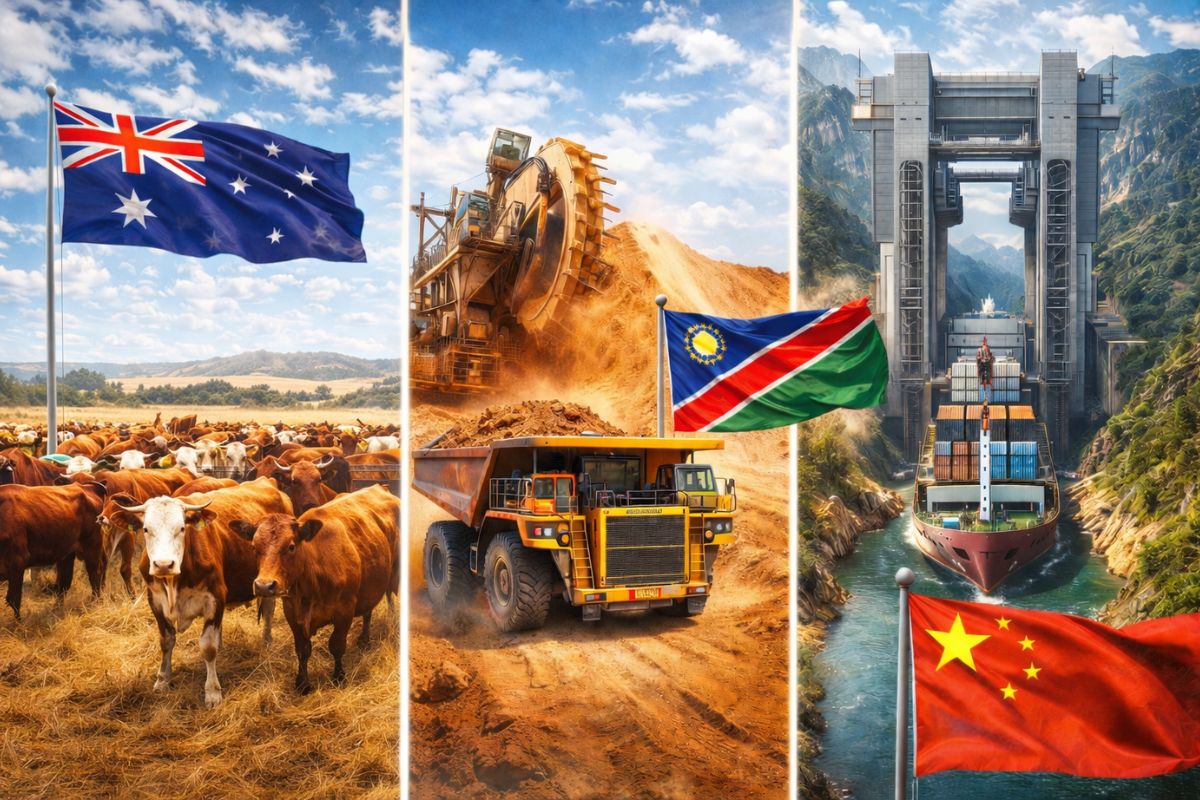
Australia Operates The Largest Farm In The World And Bets On Desert Agriculture, Namibia Uses Giant Algae And China Builds A Ship Elevator To Prove How Engineering Feeds The World.
To understand how Australia became an agricultural superpower, one must face the enemy it confronts every day: its very territory. About 70% of the country is made up of arid and semi-arid zones. The soil is ancient, worn down by millions of years, poor in nutrients, and fresh water is scarce, concentrated mainly along the coastal edges. At the heart of the continent, what predominates is a nutritional desert, dry and hostile.
Australia: When Industrial Scale Becomes A Weapon In Desert Agriculture

Any engineer looking at this map would say that farming here is irrational. The Australian response was not to try to tame nature but to build a gigantic industrial machine on top of it.
-
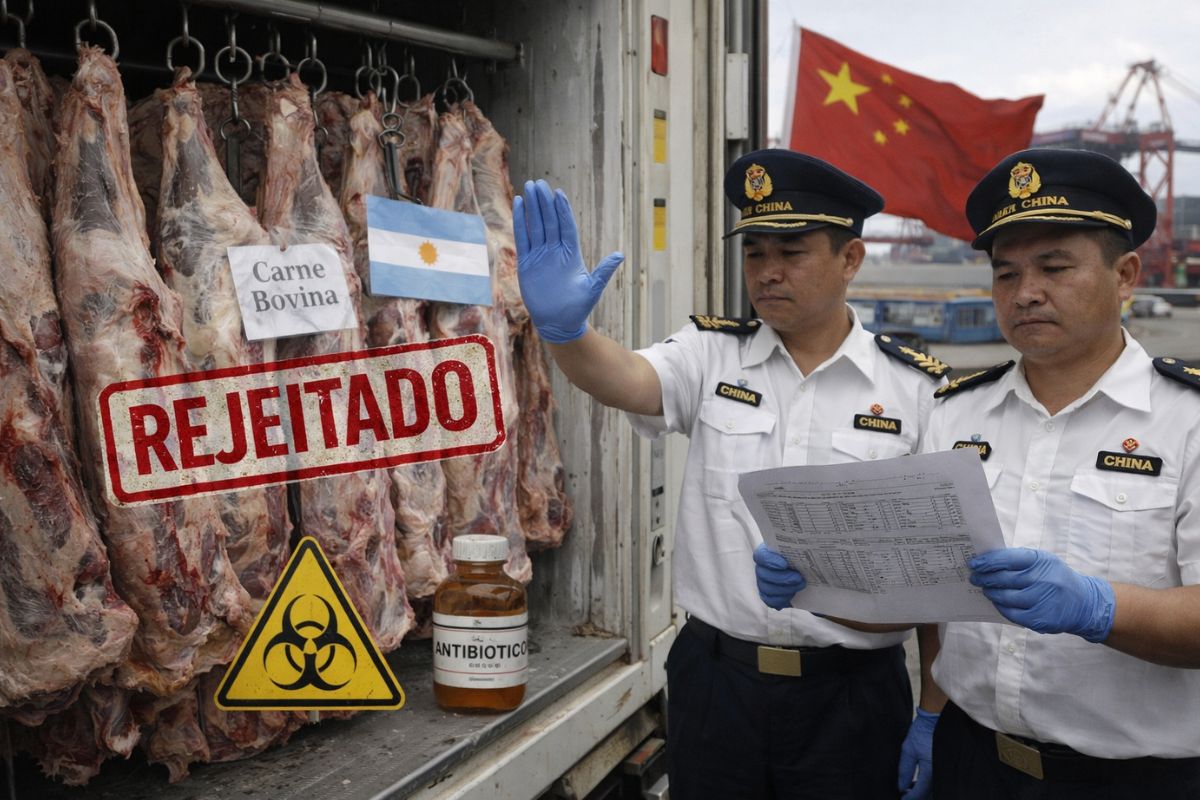
China rejected an entire shipment of beef from Argentina after detecting an antibiotic so dangerous that it has been banned for human consumption for over 30 years, and now the export sector is facing a crisis of international trust.
-
With nearly 500 thousand tons per year, barley production is growing in Brazil, while a decline in beer consumption among Generation Z raises alarms in the sector.

-
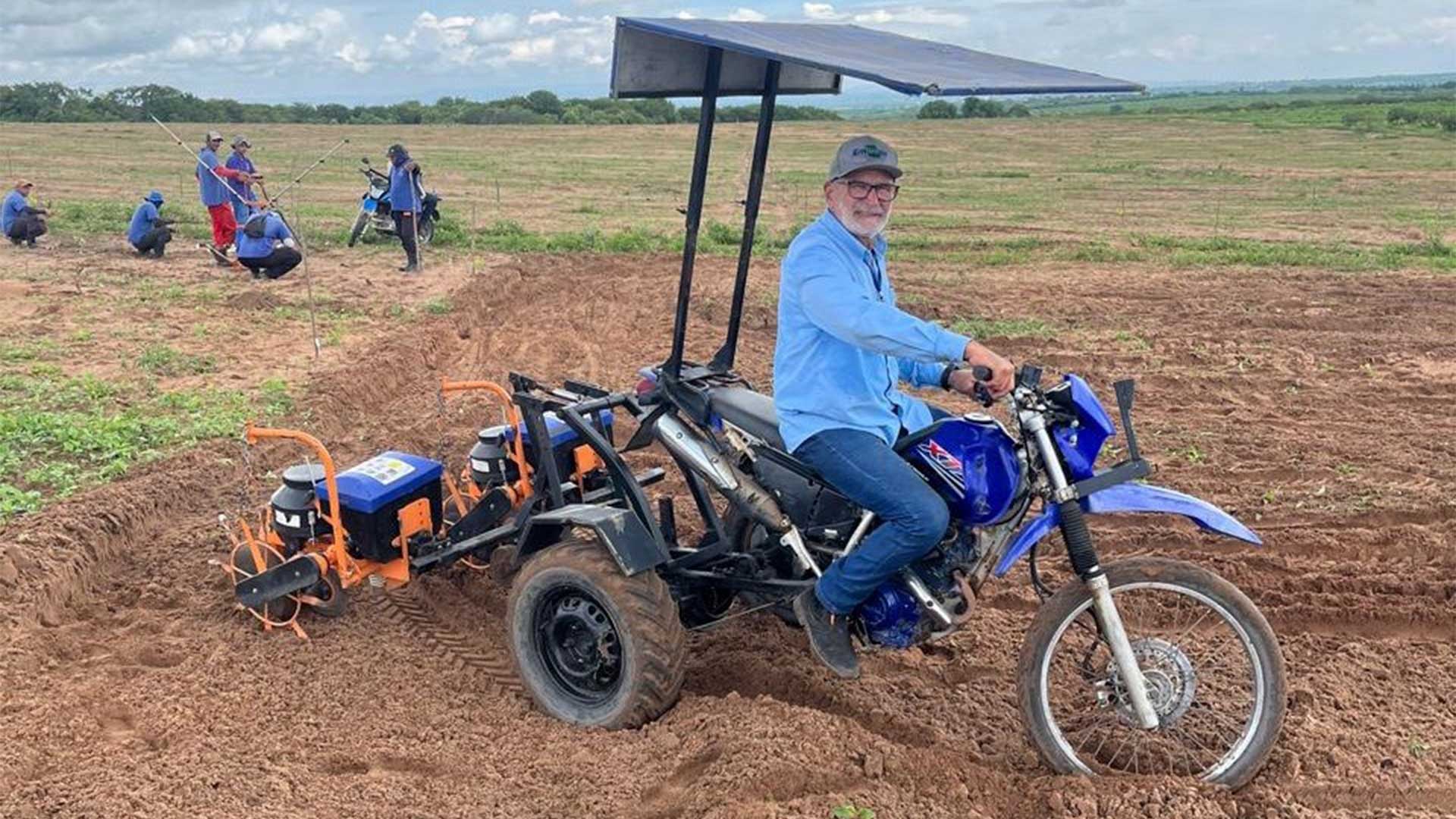
With tractors out of reach for small producers, a tricycle created by Embrapa Algodão becomes a cheap and efficient solution and gains national prominence.
-
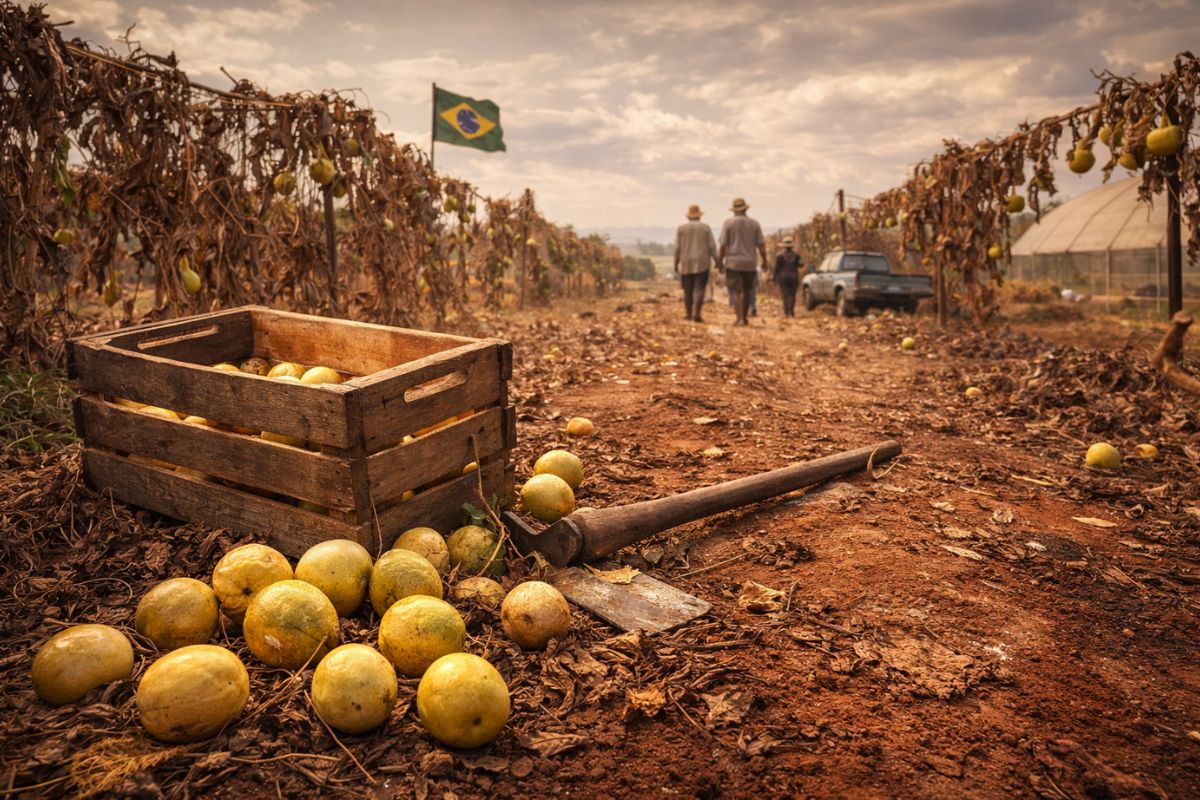
From 130 producers in the year 2000 to just 15 today: the dramatic decline of passion fruit in Araguari shows how the lack of labor in the Brazilian countryside is killing a decades-old agricultural tradition, even with Brazil being the largest producer in the world.

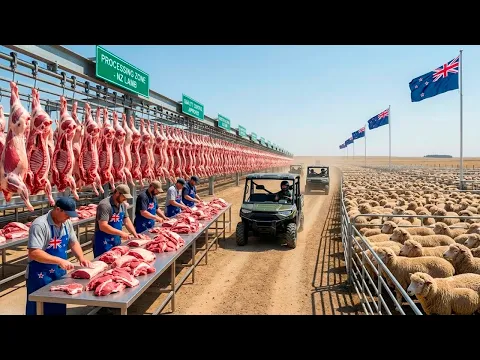
Instead of small properties, “cattle stations” of up to 1 million hectares arose, true private countries dedicated to meat production.
Australia is home to more than 24 million cattle, ranking among the largest beef exporters on the planet. But not just any animal survives in this environment.
The chosen breeds, like Brahman, are biological tanks capable of walking dozens of kilometers under 40 ºC heat, transforming dry grass into high-quality protein.
In these areas, even herd management has turned into an aerial operation. Satellites monitor pasture biomass in real time, indicating where there is still food.
When it’s time to gather thousands of animals spread over a sea of red earth, helicopters do in hours what would take weeks on horseback.
While the dry north becomes a stage for large-scale livestock farming, the south and southeast of the country house another gear of this machine: wool.
With more than 24,000 farms focused on sheep farming, Australia accounts for about 80% of the world’s fine wool production.
The dry climate, which would be a disaster for many crops, here is a technical advantage, as it reduces mold and bacteria and protects merino wool.
During shearing season, the work takes on a production line rhythm. A professional shearer using electric machines can process more than 200 sheep a day, removing up to 5 kg of premium wool in less than two minutes per animal. It is the combination of human skill with high-speed electric tools that transforms each sheep into a small mobile factory of high-performance fiber.
The logic is always the same: take an environment that seems unproductive and use scale, mechanization, and precision to transform it into part of the machinery that feeds the world.
Almonds, Wines, and Grains: The Desert Working For Free

If wool represents tradition, almonds symbolize a modern race for added value. On a small fraction of Australian farmland, almond orchards produce over 100,000 tons per year and generate revenues that exceed even livestock in some scenarios.
From February to April, when the heat begins to drop, the shells open and harvesting begins. There are no pickers hanging from branches.
Enter the shakers, self-propelled machines with hydraulic arms that grab the trunk and vibrate the tree with calculated frequency. In seconds, almonds rain down onto the leveled ground.
The sun, once an enemy, becomes an ally. The intense heat dries the almonds right on the ground, reducing moisture from about 25% to 6% in approximately ten days, without spending electrical energy.
Then giant sweepers and harvesters suck everything up, separating wood chips, stones, and impurities with centrifuges, and send the almonds for processing. It is a system designed to use the extreme climate as part of the production line, not as an obstacle.
In vineyards, adaptation goes beyond the soil. Delicate European grapes could not withstand Australian heat, so the country bets on robust varieties, like Shiraz, capable of delivering powerful full-bodied wines. Harvesting occurs at night, with colossal machines of over 170 horsepower.
During the early morning hours, these machines shake the vines with high-frequency rods, dropping only the ripe grapes and using fans to blow away leaves and branches.
A single machine processes about 20 tons of grapes per hour, replacing dozens of workers and ensuring that the juice arrives cold and preserved at the winery.
In the grain belt, wheat becomes another symbol of radical adaptation. Roots descend meters in search of almost invisible moisture, while the brutal heat does on the field what other countries must pay to do in ovens: drying the grain to about 12% moisture.
GPS-guided harvesters operate 24 hours a day, accompanied by trucks that receive grains in motion. Laser sensors measure protein content in real time and separate premium wheat from that intended for feed.
The combination of livestock, wool, almonds, wines, and grains shows that Australia not only survives the desert. It has transformed this desert into an open-air factory that helps feed the world year-round.
Namibia: When The Ocean Becomes The Last Chance For Agriculture In The Desert

From the extreme Australian landscape, the narrative crosses the map to the southwest of Africa. Namibia is a country sitting on uranium and diamonds but incapable of producing food at scale.
Only about 2% of the land is suitable for farming, while the rest is dominated by the Namib Desert, one of the oldest and driest in the world.
In this scenario, agriculture can only feed a fraction of the population. Most rivers are seasonal, the soil is dry, and rainfall is minimal, between 2 and 10 mm per year in many areas. Each year, the population grows, and the productive area seems to shrink.
The solution did not come from the interior but from the sea. Along the coast, the cold Benguela current acts like a giant conveyor belt, bringing nutrients from the bottom to the surface. In these waters lives the giant algae, known for forming underwater forests of up to 50 or 60 meters high.
This algae grows up to 60 centimeters per day, absorbs more than 60 types of minerals, and concentrates potassium, calcium, and other rare elements that Namibian soil lacks. Instead of trying to find fertility in the dry land, Namibia decided to “grow fertilizer” in the ocean.
Giant Algae: Natural Factory That Resurrects The Soil

Near the city of Lüderitz, a pioneering operation for algae cultivation has set up in open water. Instead of simple boats and nets, the production uses anchors and underwater lines that form stable grids underwater, allowing the giant algae to grow vertically without being uprooted by the waves.
Harvesting is done with surgical precision. Divers cut only the “crown” of the algae, preserving the “trunk” to keep the forest alive.
As the plant begins to decompose rapidly outside the cold water, the logistics must bring the material to land the same day.
In the factory, the algae is washed, crushed, and fermented. The final result is a concentrated liquid that acts as a bio-stimulant for plants and a soil regenerator. When this “ocean extract” touches Namibia’s cracked soil, the effect is profound.
The soil, previously light and hard as stone, darkens, loosens up, and begins to retain water like a sponge. In just a few harvests, yields of crops like corn and millet increase between 25% and over 60%, even in years with almost no rain. Earthworms return, microbial activity skyrockets, and life returns to the soil.
At the same time, producers reduce reliance on imported chemical fertilizers, cutting production costs by up to half. What started as an attempt to save crops turned into a strategy for economic and food independence.
Meanwhile, in other African countries like Kenya and Tanzania, the same algae generates income for tens of thousands of small producers, mostly women.
Without relying on fertile soil or fresh water, these communities have found in the sea a way to produce food, cosmetics, and even alternative materials to plastic.
Giant algae, therefore, is not just a curious resource. It is a real component of a new agriculture in the desert and is part of the answer to how, in the 21st century, an arid coastline can help feed the world.
China: The Ship Elevator That Makes Boats Go Up Mountains

If Australia and Namibia show how the desert can generate food, China shows how extreme engineering keeps that production circulating.
In mountainous provinces like Guizhou, the topography is so rugged that over 90% of the territory consists of steep mountains and hills. Building roads and railways here is expensive and complicated.
At the same time, rivers like the Wu and the Yangtze concentrate tremendous hydroelectric potential. Colossal dams have been erected to generate energy, but each dam creates a problem: it blocks navigation. Where there was once a continuous waterway, there is now a concrete wall.
Traditional locks, which function like stairways of water, cannot handle such extreme differences in elevation. The Chinese response was to build a ship elevator capable of lifting vessels and literally making them “climb mountains.”
In the Guizhou system, the ship enters a chamber filled with water inside a concrete tower. Steel cables, giant drums, and gearboxes coordinate the movement. In a few minutes, a vessel weighing hundreds of tons is lifted dozens of meters above the original river level.
In some dams, such as the Three Gorges, the principle is even more impressive. A single chamber holds water equivalent to several Olympic-sized swimming pools and lifts boats of up to 3,000 tons more than 100 meters high in one movement. What once took hours in multi-stage locks is now done in about 40 minutes, multiplying the logistical efficiency of the entire river.
Among the elevators, the solution was not to go around the mountain but to cross it. Elevated aqueducts carry ships over gorges, like “suspended rivers” in the sky. When the mountain gets too high for that, navigable tunnels are opened in the rock with giant tunnel boring machines.
The result is a continuous route where boats ascend, cross valleys dozens or hundreds of meters high, traverse mountains, and descend the other side to continue their journeys.
Each barge using this system replaces dozens of trucks on dangerous roads, saves fuel, reduces accidents, and keeps goods circulating in regions where geography seems to say no.
This network of ship elevators does not produce a grain of food, but it sustains the flow of fertilizers, machinery, grains, and products that connect the interior to the coast. It is the invisible part of the machinery that, in the end, also helps to feed the world.
What These Extreme Machines Reveal About The Future Of Those Who Feed The World
When we look together at Australia, Namibia, and China, the message is clear. It is not the kindness of the climate that decides who feeds the world, but the combination of technology, engineering, and the courage to invest in solutions that seem excessive at first glance.
In Australia, helicopters, satellites, giant harvesters, and animal genetics transform the driest continent inhabited by humans into an exporter of meat, wool, almonds, wines, and grains.
In Namibia, a giant algae cultivated in the ocean brings life back to the soil and ensures food where rain barely falls.
In China, ship elevators and suspended rivers in aqueducts and tunnels rewrite the logistics geography in mountainous regions.
The desert has ceased to be merely a geographic limit and has become a laboratory of radical solutions that redefine how the planet feeds itself.
Where once there was only scarcity, there are now integrated systems of machines, biology, and infrastructure capable of generating food, income, and energy.
In the end, the question is simple: do you believe that the future of those who feed the world depends on adapting nature to humans or adapting technology to the limits of nature, as Australia, Namibia, and China are doing?







-

Uma pessoa reagiu a isso.