





 Portuguese
  English
  Spanish
  4 min of reading
  2 comments


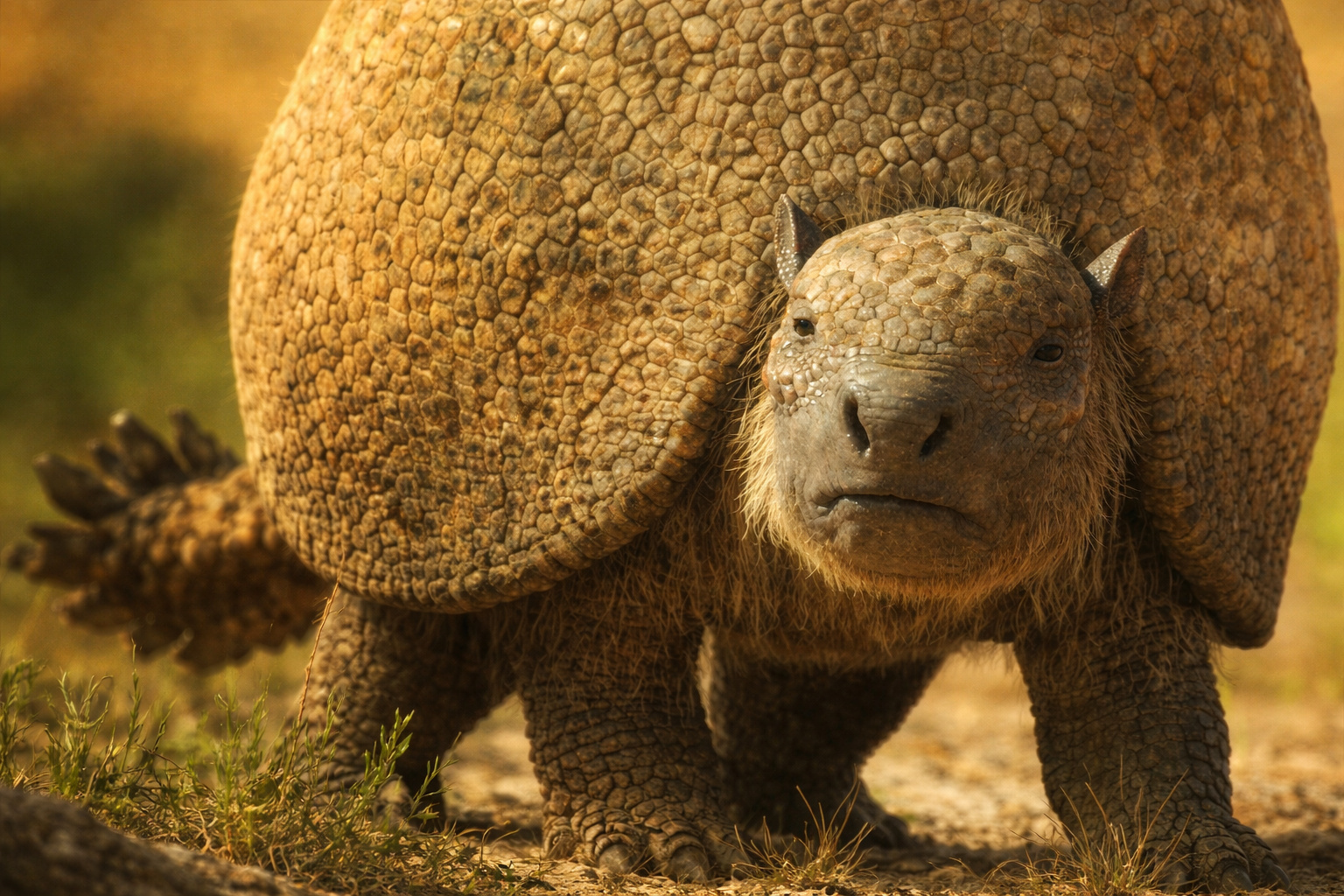


Larger Than a Compact Car and Armed with a Club-Shaped Tail, the Doedicurus Was a Giant Prehistoric Armadillo That Used Bony Armour and Extreme Strength to Face Pleistocene Predators.
The Doedicurus was not just a large armadillo. It represented the absolute peak of defensive evolution among terrestrial mammals in South America during the Pleistocene, a period marked by giant predators, unstable climates, and intense ecological competition. Belonging to the glyptodont group, the Doedicurus stood out as one of the most specialized, robust, and militarized forms that nature has ever produced.
Living alongside predators like Smilodon (the saber-toothed tiger), large South American bears, and giant predatory birds required more than just size. It required armor, strategy, and an efficient weapon, and the Doedicurus had all three.
An Armadillo the Size of a Car
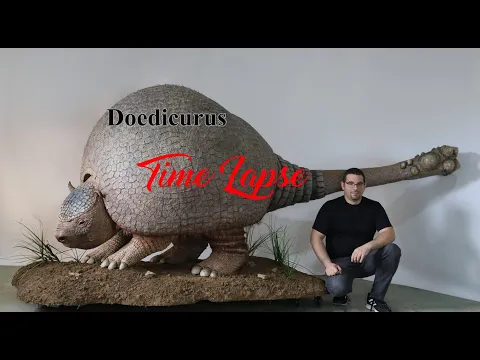
The most accepted estimates indicate that the Doedicurus could exceed 4 meters in total length, considering its body and tail, and weigh between 1,400 and 2,000 kg, comparable to that of a medium-sized modern rhinoceros.
-
New German Zeiss lenses arrive in Brazil promising to reduce mental effort by up to 90% and revolutionize the way we see amidst the excess of screens.

-
Scientific study identifies unique blood patterns that reveal the secret of individuals who surpass 100 years of age.

-
Princeton engineers create a flexible 3D-printed robot that eliminates motors and uses heat to perform complex movements.
-
Security alert: The proliferation of fake QR codes in public places facilitates financial scams and personal data theft.



Its height at the back was relatively low, but its body volume was impressive. In terms of proportion, it was larger and heavier than most current compact cars, with a wide, low, and extremely rigid body.
This scale made the Doedicurus the largest armadillo ever recorded with an armored tail, surpassing even famous relatives like the Glyptodon in offensive specialization.
Bony Armour: A Living Tank
The body of the Doedicurus was protected by an armor formed by thousands of osteoderms — interlinked bony plates that created a continuous, rigid, and practically impenetrable structure.
Unlike modern armadillos, which have some flexibility to curl up, the Doedicurus did not bend its body. Its armor functioned like a fixed shell, similar to that of a tank, covering its back, flanks, and part of its head.
Biomechanical studies suggest that this armor could withstand bites from large carnivores, including predators with extreme bite forces, making direct attacks practically useless.
The Tail That Changed Everything
The most iconic and feared feature of the Doedicurus was its club-shaped bony tail. Unlike the Glyptodon, whose tail was rigid but less specialized, the Doedicurus had an expanded, heavy, and reinforced end, made up of fused dense bones.
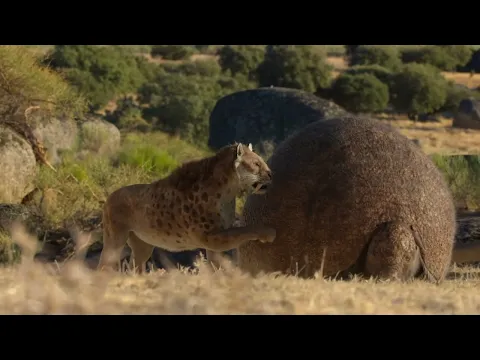
This structure was not decorative. Anatomical evidence and functional comparisons indicate that the tail could be used as an active weapon, capable of generating devastating impacts. A single well-aimed strike could break bones, fracture limbs, or incapacitate a predator.
In practice, the Doedicurus did not simply defend itself — it counterattacked.
Direct Comparison with the Glyptodon
Although both belong to the glyptodont group, the Doedicurus represents a more advanced stage of defensive specialization.
While the Glyptodon was larger in overall body volume, the Doedicurus excelled in weapon sophistication. Its club tail is considered one of the most efficient biological weapons ever developed by a herbivorous mammal.
In simple terms:
– Glyptodon: Maximum Passive Armoring
– Doedicurus: Extreme Armoring + Active Offensive Weapon
This difference suggests distinct evolutionary pressures, possibly linked to environments with a higher presence of large predators or more intense territorial disputes.
Where and When This Colossus Lived
The Doedicurus inhabited South America, with fossil records primarily in the region of present-day Argentina, Uruguay, and southern Brazil. Its peak occurred during the Pleistocene, approximately between 2 million and 11 thousand years ago.
The environment consisted of open fields, cool savannas, and semi-arid regions, ideal for large grazing herbivores. In these landscapes, the Doedicurus likely fed on grasses, low vegetation, and resilient shrubs.
Its size and armor indicate that it was a relatively slow animal, but extremely difficult to bring down.
Evolutionary Strategy: Survive Without Running
Unlike many modern herbivores that rely on speed to escape, the Doedicurus adopted an opposite strategy: to become impossible to attack successfully.
The combination of:
– Low and Stable Body
– Continuous Bony Armour
– Center of Gravity Close to the Ground
– Tail Capable of Inflicting Severe Damage
transformed the Doedicurus into an adversary that predators would learn to avoid. Attacking an adult individual meant a high risk of serious injury or death.
This strategy explains why such animals were able to thrive for hundreds of thousands of years in hostile environments.
Extinction: Strength Was Not Enough Against Rapid Changes
Despite all this protection, the Doedicurus disappeared at the end of the Pleistocene, likely around 11,000 years ago. The main hypotheses point to a combination of abrupt climate changes and human pressure.
With the end of the Ice Age, changes in vegetation reduced the availability of suitable food for large specialized herbivores. At the same time, the arrival of humans in South America brought a new type of predator that was intelligent, organized, and able to exploit vulnerabilities that evolution did not foresee.
Weapons, fire, and cooperative hunting made even the thickest armours irrelevant.
One of the Peaks of Defensive Evolution
The Doedicurus was not just “a giant armadillo.” It was an extreme evolutionary response to a world dominated by giant predators. Its anatomy represents one of the highest points ever reached by a herbivorous mammal in terms of physical defense and counterattack capability.
Alongside giants like Glyptodon, Titanoboa, Argentavis, and the great mammals of the Pleistocene, the Doedicurus occupies a special place: that of a true biological tank, designed not to run, but to withstand and win confrontations.
Even though extinct, it remains an impressive reminder of how far nature can go when survival demands extremes.





Qual é o nome desse ****
Joaquim