





 Portuguese
  English
  Spanish
  4 min of reading
  0 comments


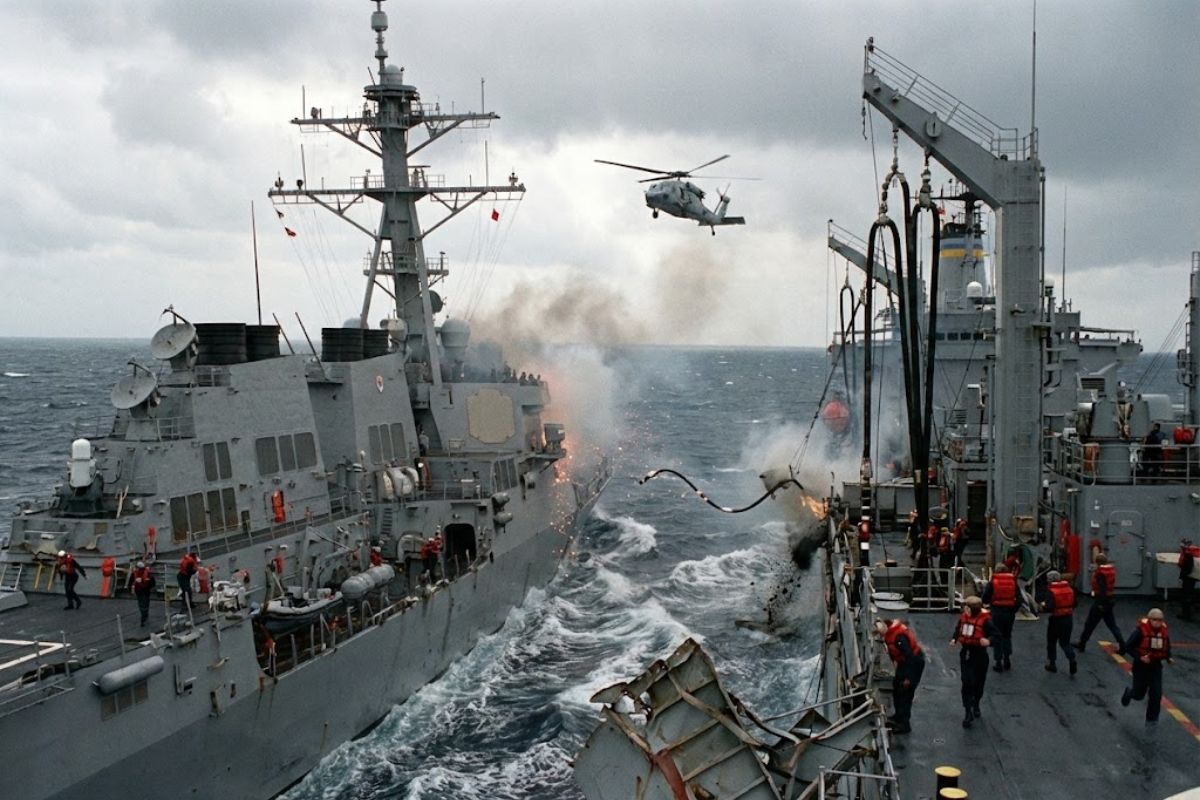
After a Collision During Refueling, US Navy Ships in Southern Command Continued Navigating and Left Two Crew Members with Minor Injuries. The Incident, Still Without an Exact Point Revealed, Reignites Debate on Operational Safety and the Strategic Weight of Secrecy in Waters Near South America Today.
When two US Navy ships collide during a refueling operation at sea, the most sensitive fact is not always the visible damage, but rather the operational context. In this collision, authorities confirmed minor injuries to two military personnel and reported that the vessels continued navigating but left the exact location of the incident in the Southern Command open.
The choice not to detail the position transforms the collision into a case larger than a technical incident. In a region spanning the Caribbean, Central America, and South America, the absence of coordinates changes the reading of risk, exposure, and strategic messaging, while the investigation seeks to reconstruct decisions and minute-by-minute procedures.
What Is Known About the Collision and Why the Location Matters
The collision occurred on Wednesday, the 11th, during a refueling operation at sea, when ships sail side by side to transfer fuel and supplies.
-
Home environment can influence the brain, mood, and well-being: studies indicate an increase of up to 15% in productivity, a reduction of 12% in stress with plants, and a direct impact of the circadian rhythm on the 24 hours of the day.

-
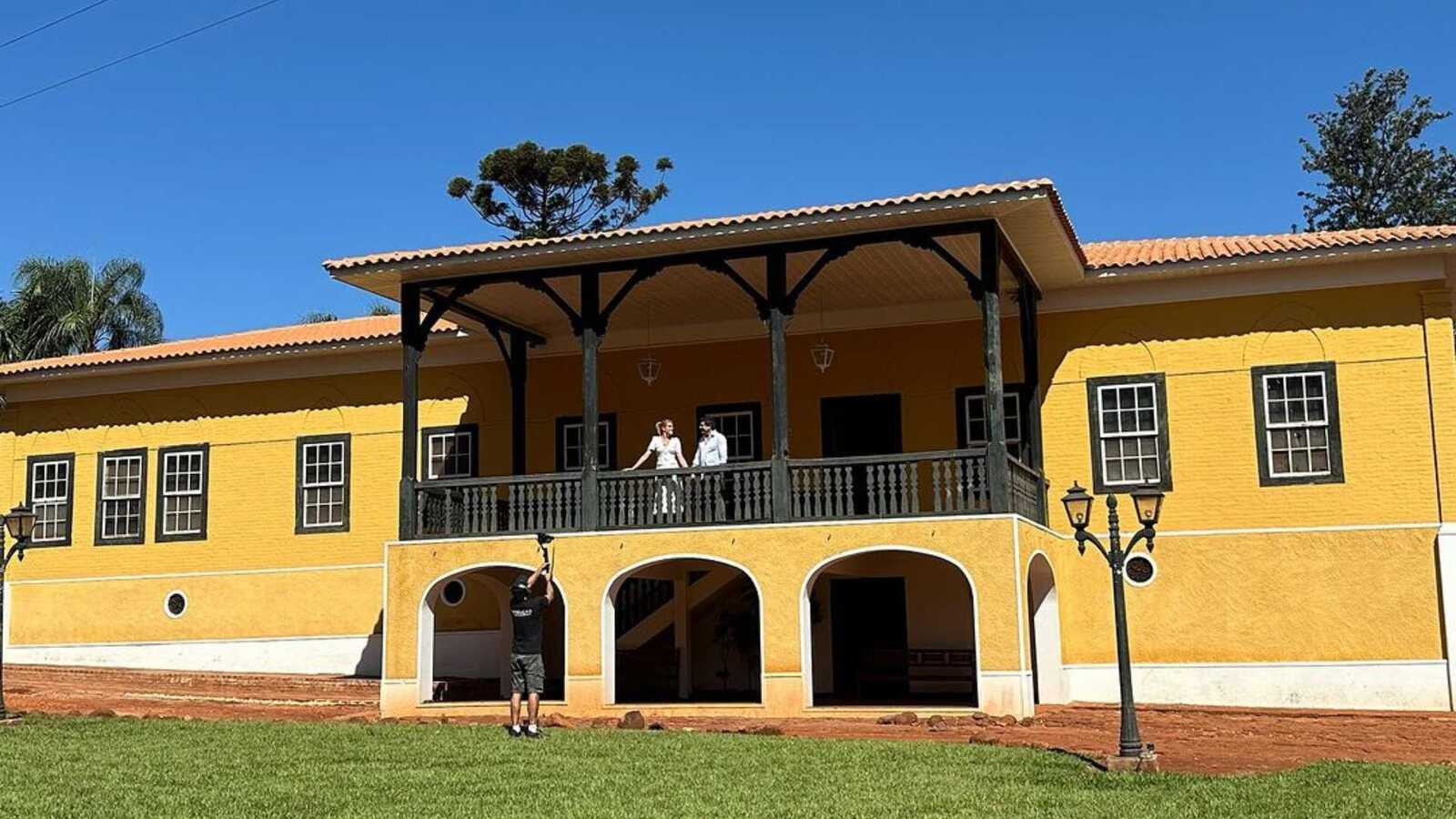
A Brazilian millionaire couple restores a farm over 150 years old in the interior of São Paulo and transforms the historic property with Portuguese tiles, antique furniture, and new spaces into a refuge that blends tradition, comfort, and sophistication.
-
Submerged city in a lake in Minas reveals intact streets, preserved vehicles, and houses after more than 60 years, impressing divers.

-
Yellowstone has started to rise again in an area of the caldera, and the movement rekindles fears surrounding the U.S. supervolcano, as scientists monitor the deformation and try to understand what is happening underground.


The impact involved the guided-missile destroyer USS Truxtun and the logistics support ship USNS Supply, both mentioned in a statement associated with the Southern Command.
According to the official description available, two crew members suffered minor injuries and are in stable condition, and both hulls managed to maintain navigation after the collision.
The element that remains absent is the exact point of the refueling: the lack of this information prevents comparing traffic, weather, and route restrictions, which limits the public evaluation of the actual risk.
Side-by-Side Refueling and How the Error Turns Into Sequence
In refueling, the maneuver requires fine control of speed, distance, and alignment because the vessels operate closely for an extended period.
Small variations, such as late rudder corrections or changes in rhythm during the transfer, can accumulate to create a window for physical contact, making a collision plausible even without prior structural failure.
This type of procedure is also vulnerable to human factors, especially when the operation occurs in open water, with a high workload and intense communication among bridges.
Therefore, refueling is not only logistics, it is navigation discipline, and the investigation tends to trace the chain of command, communication, and adherence to standards.
Southern Command, Secrecy, and Strategic Reading in the Region
The Southern Command is the area of responsibility covering Central America, South America, and the Caribbean, and the incident occurs during a period of significant naval presence in the region.
There are reports that Washington has increased the deployment of ships, mentioning 12 American vessels, including the aircraft carrier USS Gerald R. Ford and its strike group.
In this scenario, not informing the exact location of the collision changes the perception of the event.
The secrecy may be merely investigatory caution, but it can also prevent exposing routes, windows of operation, and patrol patterns, which are crucial when US Navy ships act as deterrent assets and gather information.
USS Truxtun and USNS Supply and the Risk That Cuts Across Functions
The USS Truxtun, described as a guided-missile destroyer of the Arleigh Burke class, operates with a combat and defense profile, while the USNS Supply, identified as a logistics support ship of the Supply class, sustains seagoing presence.
In practice, this combination makes refueling a critical point: the ability to keep the group operational depends on the precision of the transfer.
When a collision occurs between an escort and a support ship, the impact goes beyond the hull.
A disruption in refueling affects availability and operational pace, and thus the case tends to be treated with technical rigor, even though the injuries were minor and both vessels continued navigating.
Recent History and Why the Pressure for Answers Increases
The US Navy has experienced serious collisions in 2017 in the Pacific, resulting in 17 sailors’ deaths, and investigations at the time pointed to operational failures as determining factors.
The memory of these episodes raises the demand for transparency regarding what failed and which safety barriers were breached before the current collision.
In the recent case, the cause remains unclear, and the investigation is ongoing.
Until there is a conclusion, the debate will remain tied to two practical questions: why did the collision occur during refueling and why did the Southern Command not detail where this happened, despite the regional repercussions.
What exists so far is a set of minimal data: collision, refueling, two minor injuries, USS Truxtun, USNS Supply, investigation, and location secrecy in the Southern Command.
From there, the significance of the episode depends less on immediate damage and more on how much the investigation can explain decisions, standardization, and operational control in open water.
If you had to choose a priority after this collision, what would it be: to disclose the location accurately to reinforce transparency, or to maintain secrecy to protect operational standards? And have you ever seen a naval refueling up close, even on video, and changed your perception of risk afterward?







-

-

-

4 pessoas reagiram a isso.