





 Portuguese
  English
  Spanish
  4 min of reading
  6 comments





The Limits Of Donation In 2025 Allow The Transfer Of Up To 50% Of The Wealth Without Affecting The Legitimacy Of The Necessary Heirs, According To The Decision Of The STJ And The Civil Code.
The discussion about the limits of donation gained relevance in 2025 in the context of succession planning. According to Legal Governance, the Civil Code and the Superior Court of Justice (STJ) make it clear that only half of the wealth can be freely donated, while the other half belongs mandatorily to necessary heirs.
This means that if the donor exceeds this limit, the excess will be regarded as an infringing donation and may be judicially annulled. The purpose of the rule is to protect children, parents, spouses, or partners from asset losses caused by excessive donations made during their lifetime.
Who Are The Heirs Protected By The Law
The necessary heirs are defined in Article 1,845 of the Civil Code: descendants (children, grandchildren, and great-grandchildren), ascendants (parents and grandparents), and the spouse or partner in a stable union.
-
The noise law will no longer be in effect at 10 PM starting in June with a new rule valid during the 2026 World Cup.

-
The Chamber opens a debate on driver’s licenses at 16 years old as part of a reform that includes around 270 proposals to change the Brazilian Traffic Code and may redesign rules for licensing, enforcement, and circulation in the country.

-
The new Civil Code could revolutionize marriages in Brazil with “express divorce” and changes that could exclude spouses from inheritance.
-
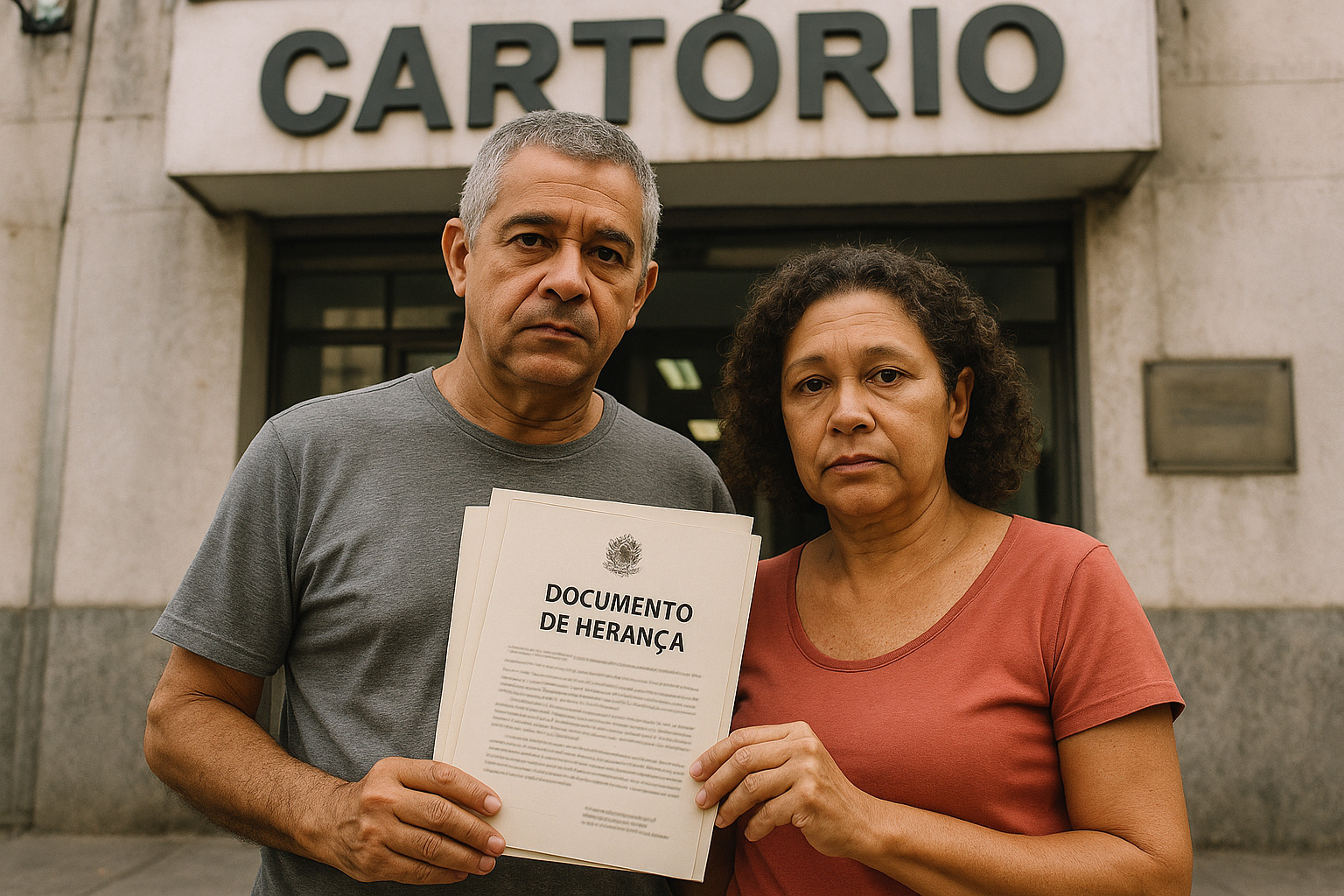
Banco do Brasil sues famous influencer for million-dollar debt and intensifies debate on delinquency, risks of seizure, and direct impact on Gkay’s credibility.

None of them can be deprived of their minimum share, which is 50% of the total wealth.
In practice, the calculation should be based on the value of the wealth at the time of the donation.
According to Legal Governance, the notaries responsible for the public deed have the obligation to verify whether the act respects this legal limit, under the penalty of future challenges.
How Much Can Be Donated Without Risk Of Annulment
The permitted percentage is 50% of the total wealth.
This means that if a donor has R$ 2 million in assets, they can transfer up to R$ 1 million freely.
If this value is exceeded, the excess may be judicially reversed by the heirs.
The STJ consolidated this understanding in 2023, in the judgment of Special Appeal No. 2,026,288, reinforcing Article 549 of the Civil Code.
The decision established that verification must be done at the time of the donation, and not at the opening of succession, bringing more security to the process.
Why The Law Imposes Limits On Donations
The legislation seeks to ensure the social function of inheritance.
Even if the donor wishes to benefit third parties or favor only one heir, the law prevents this from occurring to the detriment of others.
This rule avoids family disputes, protects asset stability, and ensures that succession is fair.
According to experts, the mechanism acts as a “brake” against abuses, strengthening predictability for heirs and lawyers involved in succession processes.
Risks And Gaps In The Application Of The Rule
Despite the security provided by the 50% limit, there are still risks.
Donations made without regard to the rule can be annulled years later, even after the donor’s death.
The lack of clear calculations in the deed is a common mistake that facilitates judicial challenges.
There are also gaps, such as the lack of criteria regarding the subsequent appreciation of the donated assets.
If a donated property appreciates after the gift, this difference is not considered, which can lead to judicial disputes.
Another issue is the impact of debts assumed by the donor after the donation, still without clear regulation.
The 3 Crucial Rules To Avoid Mistakes In 2025

According to Legal Governance, three points are indispensable:
Respect the limit of 50% of the total wealth, ensuring the legitimacy of the necessary heirs.
Calculate the value at the time of the donation, following the STJ’s guidance, avoiding reliance solely on future values.
Formally register the donation in a public deed, detailing the calculation methodology to reduce risks of annulment.
The failure to comply with any of these rules may call into question the validity of the donation.
The limits of donation in 2025 are clear: up to half of the wealth can be transferred freely, provided that the legitimacy of the heirs is respected.
This rule brings security, but it also requires attention to technical details to avoid future nullities.
And you, have you considered making a donation during your lifetime or faced family disputes over inheritance? Do you believe that the 50% limit is fair or should it be relaxed? Share your opinion in the comments — we want to hear real experiences on this topic that affects thousands of Brazilian families.








E quanto ao imposto sobre herança?
Continua a ser cobrado sobre a doação?
Quando a pessoa falecida não tem ascendente, descendentes, tios. Só tem um primo. Ela mesmo assim só pode doar 50%?
Meu nome e Ronise estou vivendo esse problema.moro com o meu marido quando fui morar com ele si encontrava divorciado nós lutamos e construimos nossa casa que a mesma si encontra no nome dele.pois ele tem 3 filhas 2 do divórcio e uma com outra mulher.eu tenho um filho com ele .todas as filhas dele são de maior e casadas tem filhos tem casa própria só eu que não tenho . ainda tenho que dividir a única casa que nós temos.e justo isso
Você não precisa dividir a sua parte na casa. Apesar de estar no nome do seu marido o imóvel você tem direito a parte desse imóvel pelo que foi descrito no seu relato. Para avaliar certinho o caso é preciso maiores informações.