





 Portuguese
  English
  Spanish
  3 min of reading
  0 comments


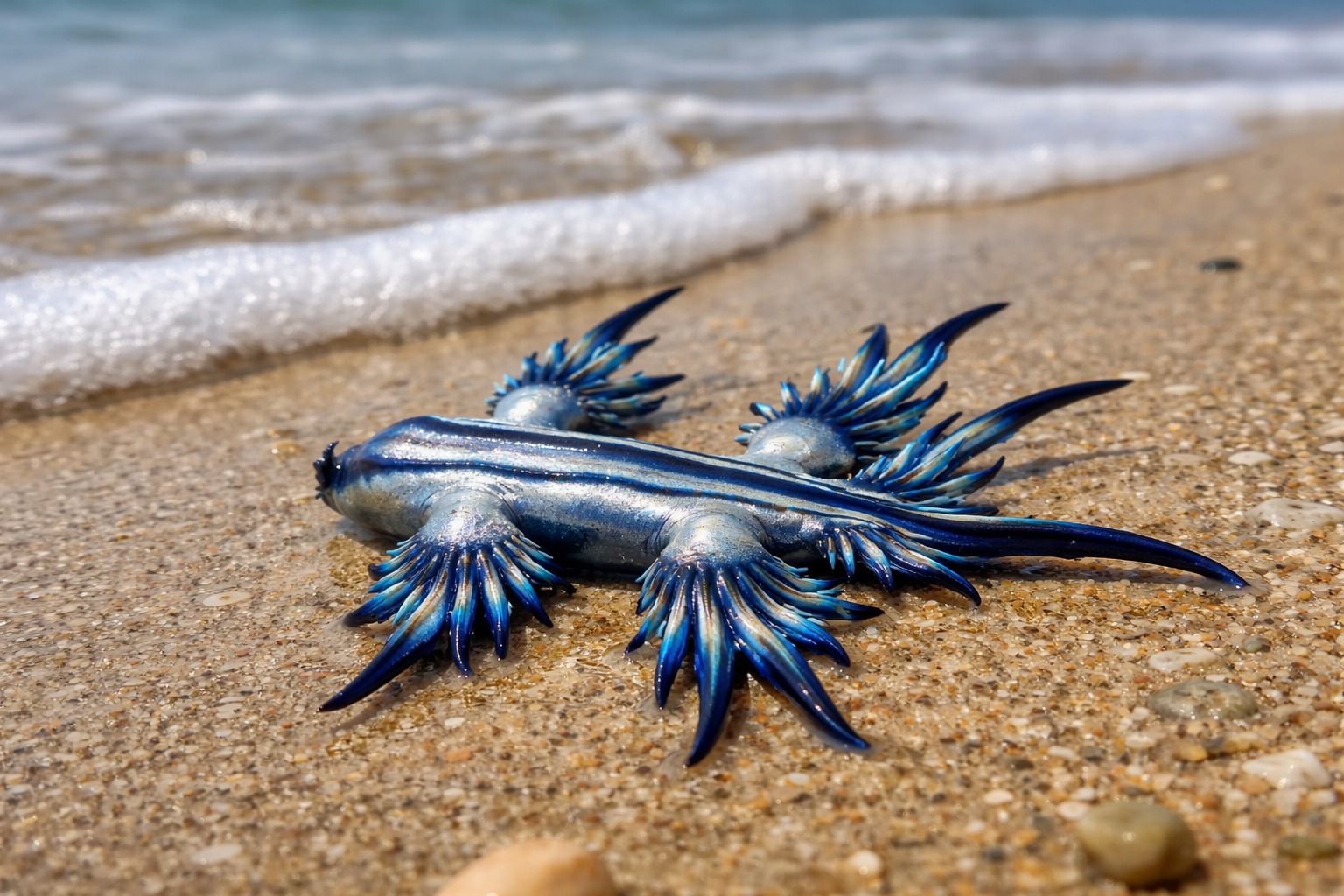
Increase In Blue Dragon Sightings On Beaches In Spain Alerts Bathers To Risk Of Burns Caused By The Small Poisonous Sea Slug Drifting In The Currents
Bathers on tourist beaches in Spain have increasingly encountered the blue dragon, a small sea slug scientifically known as Glaucus atlanticus. The rise in sightings raises alerts about painful burns and draws attention to recent changes in the oceans.
What Is The Blue Dragon Observed On The Beaches
The blue dragon is a gastropod mollusk belonging to the group of sea slugs. Unlike many marine animals, it does not stay on the bottom. It mainly lives in open water, floating near the ocean’s surface.
To maintain this position, the animal has a small internal sac filled with gas. This mechanism allows it to be upside down in the water, drifting with the currents and staying where its prey also tends to appear.
-
Neuralink, the company specialized in brain chips founded by Elon Musk, announced that it intends to implant thousands of brain chips thanks to large-scale production.

-
Hummer H1X3: The 60-ton car, 14 meters long, and $25,000 tires – all for a single owner in the United Arab Emirates.

-
A city in the United States has a secret to handle peak electricity demand and can supply power to about 300,000 homes for up to 4 hours.

-
In the desert, at an altitude of 5,000 meters, there is a radio telescope that consumes as much energy as a city and relies on artificial oxygen to operate.


Even though it has a striking appearance, with metallic shades of blue and silver, the animal should not be touched. Despite its small size, contact with human skin can cause painful reactions.
How Coloration Helps The Blue Dragon Survive
The side of the body facing upwards has a silver coloration. This hue blends with the shimmer of the water when viewed from above, making it hard for potential marine predators to identify.
The underside features a deep blue. When viewed from below, this color helps the animal blend in with the sunlight filtering through the water.
This mechanism is known as counter-shading. The body also has elongated projections called cerata, structures that play an important role in both the defense and offense of the animal.
Why The Blue Dragon Can Cause Burns
Glaucus atlanticus does not produce its own venom. However, it feeds on venomous organisms, including the Portuguese man o’ war and other cnidarians found in the ocean currents.
During the digestion of these prey, the animal selects and stores stinging cells called nematocysts in its cerata. These mechanisms remain active and serve as a type of chemical arsenal.
When it comes into contact with human skin, these structures release toxins. The most common effects include intense pain, a burning sensation, redness, and swelling.
In sensitive individuals, nausea, vomiting, difficulty breathing, and significant allergic reactions may also occur.
Precautions In Case Of Contact With The Animal
In suspected cases of contact with the blue dragon, experts advise against makeshift solutions.
The initial recommendation is not to touch the animal, even if it appears dead, and to keep children away from the area.
One should also avoid rubbing the skin with sand, towels, or vinegar. It is recommended to wash the area only with seawater.
Cold compresses may help relieve pain. If intense symptoms or systemic signs arise, the guidance is to seek medical attention.
Why Sightings Are Increasing
Sightings of this animal on coasts like Spain were considered rare up until a few decades ago. However, recent reports indicate a growing presence in temperate climate areas.
Researchers associate this advancement with ocean warming and changes in marine currents, factors that also influence the distribution of the animal’s prey.
Coastal monitoring programs encourage bathers to document encounters with photos and location.
This information helps map occurrence areas, guide signage on beaches, and track changes in marine fauna.
With information from O Antagonista.








-

-

-

4 pessoas reagiram a isso.