





 Português
  Inglês
  Espanhol
  4 min de leitura
  118 comentários





Mark Zuckerberg, Founder Of Facebook, Instagram And WhatsApp, Says A New Revolutionary Technology Is About To Replace Smartphones, Marking The End Of An Era And The Beginning Of A New Digital Revolution.
Mark Zuckerberg, one of the biggest names in technology and owner of giants like Facebook, Instagram and WhatsApp, made a surprising statement: smartphones may be counting their days. According to him, a new revolutionary technology is about to replace cell phones as we know them, bringing drastic changes to the way we connect and interact with the world.
But are we really on the brink of the end of the cell phone era? This bold prediction raises a series of questions and promises to change the future of digital communication.
Orion AR
Over the past 20 years, Mark Zuckerberg’s Meta, formerly known as Facebook, has dominated online social connections, shaping the way people interact globally.
-
A gigantic freshwater reservoir appears beneath the Great Salt Lake, between 3 and 4 kilometers deep, surprising scientists with an unexpected flow towards the interior of the lake.

-
At over 8,800 meters above sea level, the summit of Mount Everest is made up of rocks that originated at the bottom of an ocean about 500 million years ago and were pushed to the highest point on Earth by the collision of tectonic plates.

-
Japan targets a remote island in the Pacific measuring only 1.51 square kilometers, located 1,900 kilometers from Tokyo, to store nuclear waste for up to 100,000 years, raising alarms at sea.

-
A 1,900-year-old papyrus found in the Judean Desert reveals a crime of the Roman Empire involving fraud, forgery, and a detailed court hearing.

However, despite its influence in the digital world, the company missed a crucial opportunity: entering the smartphone market.
Now, in a bold move to position itself ahead in hardware technology, Meta is heavily investing in a new frontier — augmented reality glasses that, according to CEO Mark Zuckerberg, could replace cell phones in the next decade.
During the annual event Meta Connect, held in Menlo Park, California, Zuckerberg revealed the latest project from the company: the Orion glasses prototype.
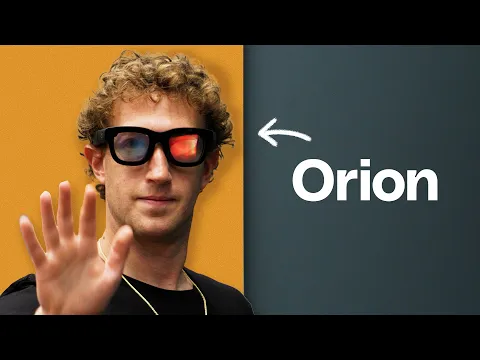

With an advanced holographic display, these glasses promise to revolutionize the way consumers interact with technology.
In development for 10 years, the Orion glasses represent the culmination of a decade of technological and financial investments, with Mark Zuckerberg’s Meta betting that the future of connectivity will no longer be in the hands of smartphones, but directly in the users’ field of vision.
Orion Glasses: More Than Just Smart Glasses

On stage at the event, Zuckerberg emphasized that the Orion glasses are not just another version of smart glasses like those we have already seen on the market, such as the Ray-Ban Meta, which come equipped with cameras and speakers.
He described the technology as one of the most advanced ever developed by Meta, bringing functionalities that go far beyond just receiving notifications or taking photos.
“Building this display is different from any other you have ever used,” said Zuckerberg, referring to the Orion as a revolutionary device.
He presented a series of practical demonstrations during the event, showing how users can project multiple virtual displays in front of them, respond to messages, conduct video conferences, and even play games, all without needing a phone.
The use of these features would be done with voice commands, gestures in the air, and even the simple movement of the eyes.
This intuitive and interactive interface promises a profound change in technology usage habits, putting smartphones in the background and elevating augmented reality glasses to the status of primary means of communication.
The Enormous Challenge For Mark Zuckerberg To Replace Smartphones
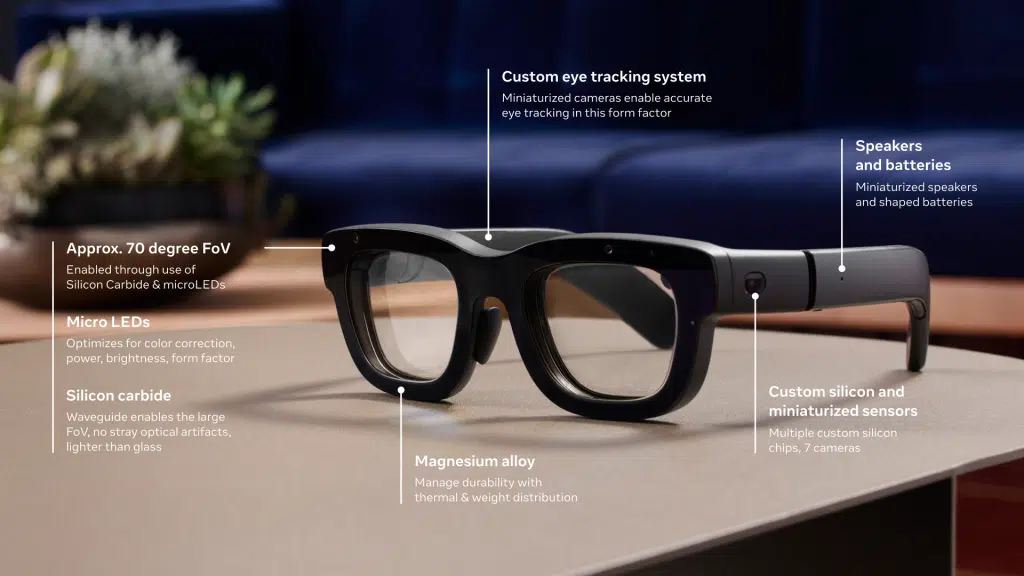
Despite all the promises and enthusiasm demonstrated by Meta, the commercial launch of the Orion glasses is still far off.
Andrew Bosworth, the company’s chief technology officer, admitted that while the technological advances are impressive, the product has not yet reached the level of sophistication required for the mass market. “These things happen slowly and then suddenly all at once,” Bosworth explained, suggesting that the adoption of AR glasses will be gradual, but when consumers see the value, the transition could happen quickly.
The biggest challenge right now is the design. The glasses are still considered bulky and do not have the refined aesthetic that the general public expects.
Moreover, other tech giants, like Google and Microsoft, have faced similar difficulties when trying to introduce augmented reality devices to the market, resulting in commercial failures like Google Glass.
However, Meta is confident that it will be able to overcome these barriers. Rahul Prasad, senior director of product management at Meta, stated that the goal is to bring Orion to market in the coming years, at a price comparable to that of a high-end laptop or smartphone. “Any previous attempt at AR was basically a headset or helmet. We want to get to real glasses,” said Prasad, highlighting Meta’s goal of creating a device that is both powerful and discreet.
The Future Vision Of Meta
Meta has already shown its willingness to invest heavily to achieve this future. Over the past two decades, the company has not only dominated the online social environment but has also consolidated its financial power, allowing it to bet on ambitious projects like Orion.
Although the device is not yet available to the general public, Zuckerberg revealed that hundreds of Meta employees are already testing the glasses internally, and there are plans to expand this testing group soon.
Despite the technical and design challenges, Meta firmly believes that the Orion glasses have the potential to transform the way we interact with technology, replacing smartphones and introducing a new paradigm for digital communications.
If Mark Zuckerberg is right, the future that once seemed distant may be closer than we imagine.







Hi
Informação errada, não foi Mark Zuckerberg que fundou o whatsapp. Quem fundou o whatsapp foram Jan Koum e Brian Acton, que depois foi vendido para o Facebook
Estas invenções tá se tornando chatas e perigosas estão querendo transformar os humanos em humanoides e os robôs e humanos ..vai existir um monte de **** na rua com estes óculos viajam na maionese no meio da rua e nos carros sem contar que a programação cerebral das pessoas irá ficar muito mais fácil…eu quero que acabe tudo ..acabe celular smart tudo. Que as pessoas voltem a se conectar com a criação de Deus (muitos a chamam de natureza) pra que aglomerar pessoas pra que tanta coisa se precisamos somente viver um dia de cada vez e de um roupa um par de tênis e algumas calorias de alimento . .tanta coisa pra se contemplar e ninguém guem nem sequer olha para as estrelas ( até porque a poluição já não deixa) quando foi que tomou a última chuva , mergulhou num lago ou rio ou tomou banho de Cachoeira Oi colheu uma fruta no próprio pé de árvore?