





 Portuguese
  English
  Spanish
  4 min of reading
  0 comments


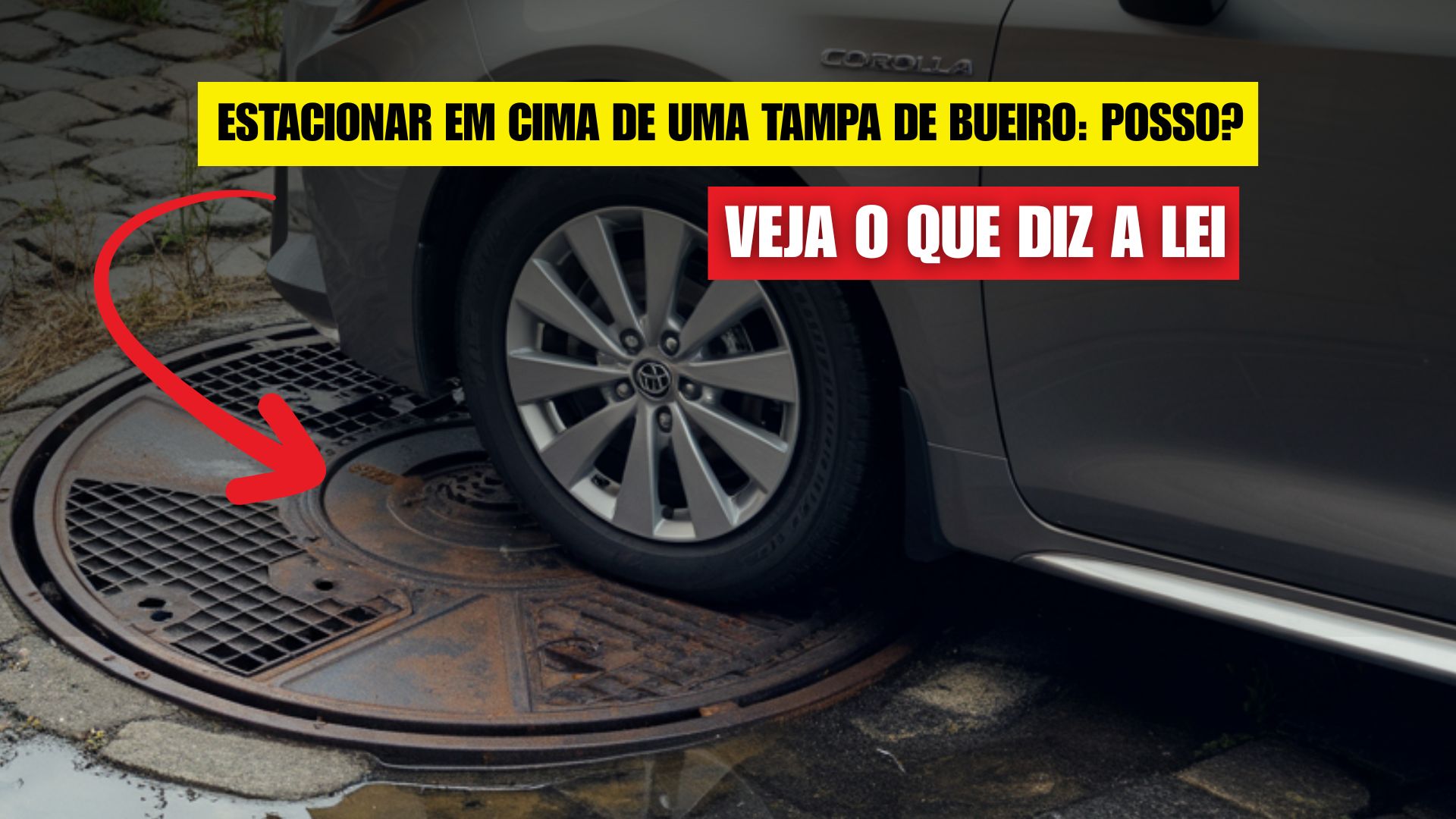
Parking Over Manhole Covers or Fire Hydrants Can Result in Fines, Points on Your License, and Even Vehicle Towing, According to Brazilian Traffic Code; Learn Which Situations Are Foreseen by Law and How to Identify the Correct Signage.
Parking over access covers to underground networks is an offense provided for in the Brazilian Traffic Code (CTB).
The article 181, section VI prohibits stopping the vehicle “next to or over fire hydrants, water valves, or manhole covers of underground galleries”, as long as the location is properly identified according to Contran regulations.
This conduct is classified as medium, with a fine of R$ 130.16, 4 points on your license, and the possibility of vehicle towing.
-
It surpassed the T-Cross, Creta, and Tracker: with nearly 8,000 units sold, the Volkswagen Tera was the best-selling SUV in March 2026.

-
Honda performs miracles in fuel consumption with a hatch that marks 13.2 km/l in the city and 15 km/l on the highway, leaving Polo, HB20, 208, and Onix behind and becoming a reference among compact cars without resorting to turbo or hybrid systems.

-
Six diseases that seem common but can prevent the renewal of the driver’s license for the elderly throughout Brazil and surprise experienced drivers — could any of them affect you without showing clear signs?

-
With 122 hp, fuel consumption of up to 17.7 km/l, and a trunk capacity of 440 liters, this hybrid SUV impresses even though it costs up to R$ 47,000 more than the Yaris — meet the Toyota Corolla Cross.


The question gained traction after a viral video on TikTok.
In response to the repercussions, Contran clarified in a written response that “parking over or next to hydrants, water valves, or manhole covers of underground galleries, when properly signposted according to Contran regulations, constitutes an offense under article 181 of the CTB.”
This understanding is the same as that adopted in the enforcement manuals that guide traffic agencies.
What the Law Says About Covers and Hydrants
The text of section VI covers three elements: hydrants, water valves, and manhole covers (the round covers that provide access to underground galleries for the maintenance of water, sewage, electricity, and telecommunications).
In all these cases, the prohibition applies “next to or over” the area, and provided that the location is signposted according to Contran.
For hydrants and technical accesses, Contran provides specific signage.
The Resolution No. 31/1998 mandates the use of yellow paint and markings indicating prohibition of parking and/or stopping, precisely to ensure quick access for service and emergency teams.
Fine and Points for Offense
As it pertains to a medium offense, the monetary penalty is R$ 130.16 and the agency registers four points on the driver’s record.
The towing of the vehicle can be applied as an administrative measure, as per article 181 itself. These amounts and points follow the current parameters established by federal law.
Manhole Cover vs. Drain Grate
Not every opening on the pavement or near the curb is a “manhole cover”.
Manhole covers are generally metal plates on the roadway or sidewalk that allow technicians to enter underground galleries.
A drain grate (or drainage grate) is a sewer entrance in line with the curb, aimed at draining rainwater, with no access for people.
This means that article 181, VI only mentions manhole covers and does not refer to the “sewer entrance”.
Thus, parking next to a drainage grate does not appear as a specific case in the section.
Still, the driver must respect any and all local signage.
And for safety, the recommendation is to avoid obstructing grates and gutters, especially on days of heavy rain.
Specific Rules for Hydrants
Regarding hydrants, the prohibition is explicit: it is forbidden to park next to or over these devices when properly identified.
The restriction protects the access of firefighters and water service.
In these locations, simply positioning the vehicle already constitutes a medium nature offense, under the terms of art. 181, VI.
Parking in Front of One’s Own House
Even as a resident, it is not allowed to park where there is a lowered curb intended for vehicle entry or exit.
This rule is found in article 181, section IX, of the CTB. The offense is medium, with a fine of R$ 130.16, 4 points on your license, and the possibility of towing.
The prohibition applies regardless of who owns the property, as the goal is to keep access free.
Minimum Distance at Corners
Another common situation involves stopping near intersections.
Article 181, section I prohibits parking at corners and less than five meters from the edge of the alignment of the intersecting road.
The offense is medium, subject to a fine of R$ 130.16, 4 points, and, when necessary, towing of the vehicle.
The rule preserves the field of vision and safe circulation during turns.
How to Identify the Signage
Areas with hydrants, water valves, and manhole covers must have yellow paint and markings on the pavement indicating prohibition of parking or stopping, according to Contran Resolution No. 31/1998.
In cities that adopt additional symbols, it is common to find markings with the letter H or specific inscriptions near the curb.
Although the signage may vary in details, the legal reference is national and ensures minimum standardization.
Practical Guidelines for Drivers
When parking on public roads, the driver should check for yellow markings or prohibition signs.
When encountering round covers on the asphalt or sidewalk, assume it is a manhole and keep your distance.
If a hydrant is visible, treat the area as not suitable for parking. In the case of a lowered curb, even in front of one’s own property, seek another space.
When faced with drain grates near the curb, respect the local signage and avoid positioning the car in a way that obstructs water drainage.
Have you noticed how many of these situations arise on your daily route and how small oversights can lead to fines and vehicle towing?









-

-

-

-

-

9 pessoas reagiram a isso.