





 Portuguese
  English
  Spanish
 3 min of reading
  2 comments


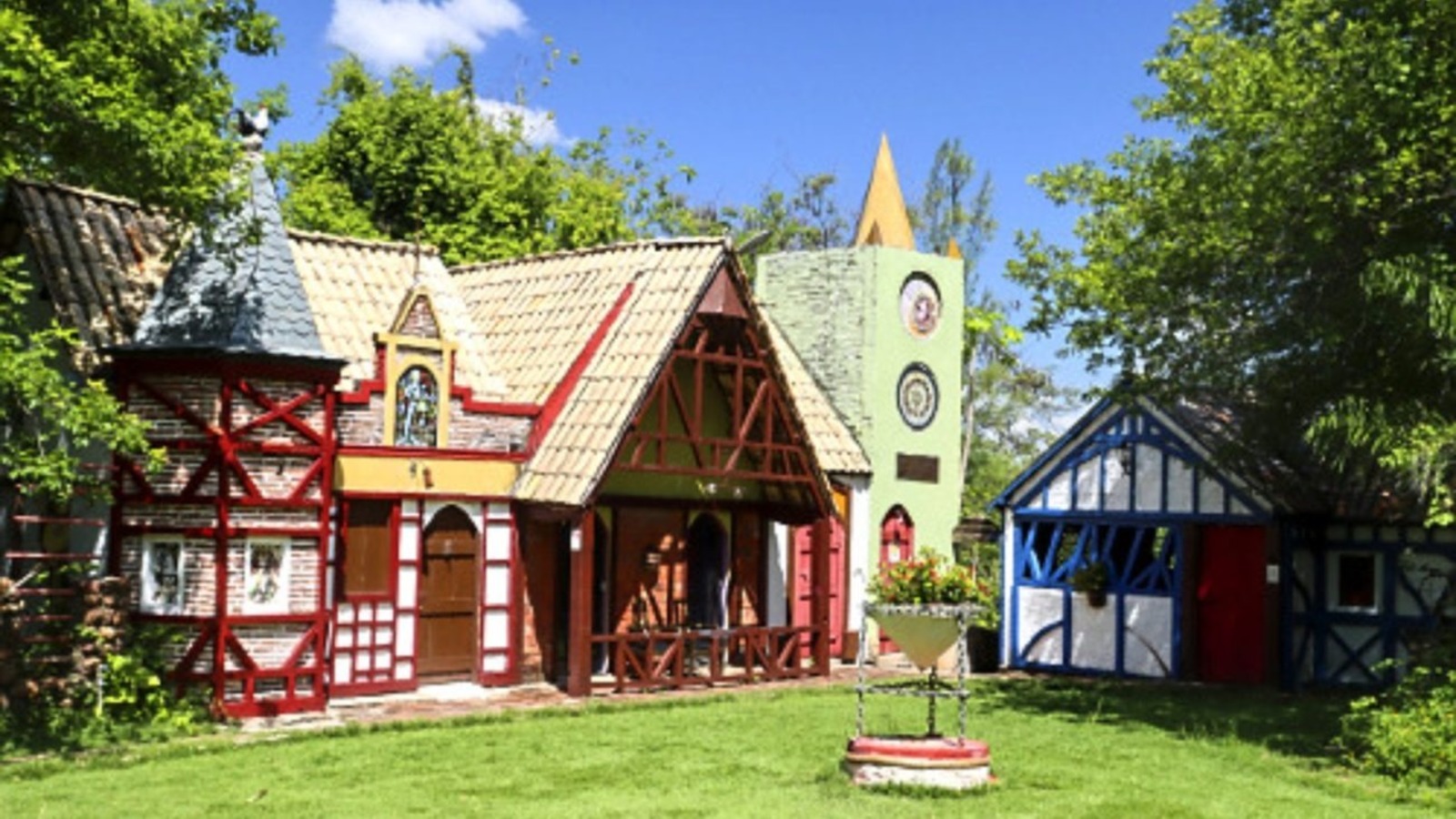


Inspired by Seven European Countries, the Brugge Medieval Village Transforms the Cearense Backcountry into a Scenario Worthy of the Middle Ages, with Castles, Renaissance Gardens, Themed Cabins, and a Restaurant that Mixes Northeast Accent and European Charm
Who would have thought that, amidst the arid landscape of the Cearense backcountry, a village would emerge that transports visitors directly to the Middle Ages? Located in the Araporanga District, about 8 kilometers from the center of Santana do Cariri, the Brugge Medieval Village, also called Euroville Medieval, blends castles, chalets, and renaissance gardens with the atmosphere and accent of the interior of Ceará.
The space impresses with its wealth of details. Inspired by seven European countries — Switzerland, England, Germany, France, Czech Republic, Austria, and Spain — the village was designed to recreate the architecture and environment of ancient Europe, merging medieval history with Northeastern hospitality.
Architecture and Environment
The Brugge Medieval Village offers a true historical immersion. Visitors find stone walls, solid wood doors, drawbridge, and even a dungeon, typical elements of medieval castles.
-
The Mediterranean has become the target of the largest underwater archaeological mission ever coordinated by UNESCO: eight countries have joined forces to map shipwrecks and protect a historic corridor.

-
In France, a group of artisans spends 28 years building a medieval castle with 13th-century tools, without machines, without measuring tapes, and with almost zero carbon footprint, and the rediscovered techniques helped in the reconstruction of Notre-Dame.
-
Tourists on Everest were poisoned by guides who mixed substances in food to provoke false symptoms of altitude sickness while helicopter operators and hospitals charged inflated rescue fees to insurance companies.

-
Few people know this, but Neil Armstrong, one of the most famous NASA astronauts in history, survived the Korean War after jumping from the plane during his seventh combat mission aboard the USS Essex aircraft carrier of the United States.


The scenery is completed with colorful houses, cathedrals in Gothic style, and symmetrical gardens that evoke the Renaissance.
In addition to the symbols of the Middle Ages, the space includes touches from Colonial Brazil, with a university campus, themed restaurant, and lodging spaces.
This blend of references makes the visit even more curious, as it combines European history with local tradition.
The surrounding landscape enhances the contrast. While the strong sun and typical vegetation of the backcountry remind us of the deep Northeast, the architecture transports visitors to a Belgian or German city.
The result is a movie-like setting, ideal for photos, events, and themed photo shoots.

How to Get to the European Village
Access to the village is mainly by car. Just look for “Euroville Medieval” or “Brugge Medieval Village” in map applications.
An alternative route starts from the neighboring city of Nova Olinda, heading towards Sítio Latão.
The journey is short, and the trip itself is part of the experience. As one approaches the location, visitors notice the contrast between the backcountry and the medieval towers appearing on the horizon.
Hours and Tickets at the Medieval Village
The Brugge Medieval Village operates on Saturdays and Sundays, from 8 AM to 5 PM. During the month of July, it operates daily, at the same hours.
Entry is charged at R$ 10, with half-price of R$ 5. Prices may change, so it’s advisable to confirm before visiting.
The complex also offers a restaurant, lodging, and spaces for photo shoots.
The restaurant follows European style, and the themed cabins invite visitors to extend their stay, whether with family or on a romantic trip.
The Meaning of the Name Brugge
The name Brugge comes from the old Dutch “brugga”, meaning “bridge”. It refers to the Belgian city of Bruges, known as the “Venice of the North” for its canals and bridges.
The historic center of the city is a UNESCO world heritage site and preserves Gothic buildings, cobblestone streets, and the famous Belfort Tower.
The choice of name reinforces the location’s proposal: to create a symbolic connection between the Old Continent and the Brazilian backcountry, uniting two seemingly distant cultures, both rich in tradition.
Medieval Village: An Unusual Destination in Ceará
Staying in the village is like living a fairy tale with a Northeastern accent. There are four cabins inspired by European countries, accommodating couples or groups of up to six people.
The chalets reproduce the architectural style of each nation, maintaining the comfort and charm characteristic of the place.
With affordable prices, good cuisine, and a unique setting, the Brugge Medieval Village has transformed Santana do Cariri into an unusual tourist destination.
Visitors find there a fusion of worlds: the European past comes to life in the midst of the backcountry, showing that creativity and love for culture can bridge very different universes — from the dry rock of Cariri to the towers and bridges of old Bruges.
With information from ND Mais.






Santana do Cariri é também um grande centro de paleontologia, comum grande museu ligado ao tema. Ainda tem o turismo religioso com Santa Benigna, o Pontal de Santa Cruz e muitas coisas mais.
Pois é. Gostam tanto do “europeu” que a estátua da “santa” Benigna, que possuía traços negros (traços reais dela cde relatos de vivos q a conheceram), foi rejeitada e refizeram/estão refazendo com traços europeus, nao pertencentes a “menina”.