





 English
  Francês
  Alemão
  Italiano
  Japonês
  Norueguês
  Portuguese
  Spanish
  2 min of reading


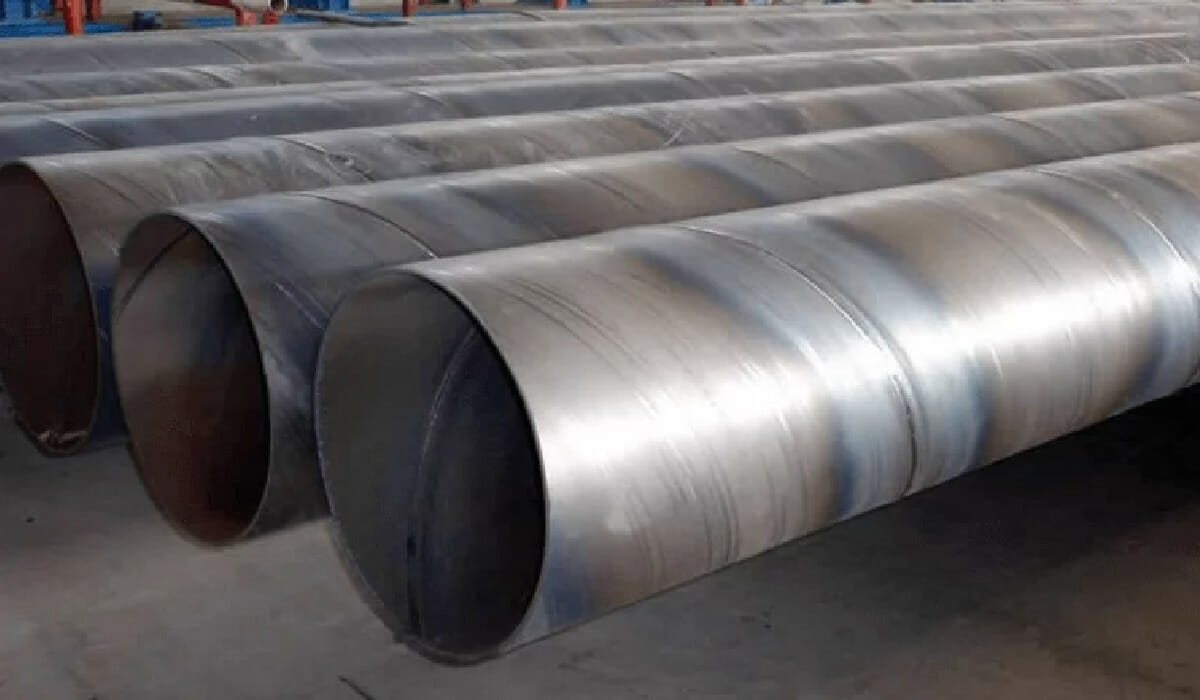
The EBSE Project Is Being Developed in Partnership with UFRJ and USP
A new milestone is being reached by EBSE, the largest private boiler shop in Rio de Janeiro, with the inauguration of Pipewave, a company focused on the manufacturing of helical pipes. These products, made from rolled coils, have crucial applications in sectors such as sanitation, energy, chemistry, and oil & gas.
The decision to explore this new niche for pipes was driven by the Sanitation Framework, which aims for the universalization of water and sewage services by 2033. EBSE, in partnership with the Universidade de São Paulo and the Universidade Federal do Rio de Janeiro, is conducting this innovative project.
Envisioning New Opportunities: The Idea Behind Pipewave
EBSE launched Pipewave as a response to the growing demand for helical pipes. The decision to enter this sector was influenced by the Sanitation Framework, approved in 2020, which provides for the expansion of water and sewage services by 2033. Recognizing the potential of this rising market, EBSE conducted feasibility studies that confirmed the need for significant investments in the sanitation sector. The company decided to leverage its extensive experience and infrastructure to bring this new venture to life.
-
Historic bankruptcy of Centauro shocks the market, and the century-old company puts more than 500,000 products, machines, and complete infrastructure up for online auction.

-
New shoe factory in Ceará is expected to create 400 jobs and strengthen the local economy.

-
No one imagined it, but a mixture of sawdust with a mineral that fights fires surprises scientists with a result that changes the course of fire-resistant construction.

-
From empty land to a high-end house, wooden construction uses a lightweight system, metal structure for the foundation, ventilated ceramic cladding, and special windows to create an efficient and comfortable living space throughout the year.

The assembly of Pipewave’s manufacturing line was carefully planned and executed. EBSE acquired the necessary equipment from abroad after a rigorous validation of suppliers. The assembly of the pipes began three months ago and is already in the final commissioning phase, with inauguration scheduled for mid-August.
The company is also working on accreditation on platforms and registration with companies to promote Pipewave in the market. With several budgets in hand, Pipewave is poised to become a valuable addition to EBSE’s portfolio.
Promising Prospects for the Helical Pipe Industry
Pipewave aims to produce between 4,000 and 5,000 tons of pipes per month, ranging from 500 mm to 3,200 mm in diameter and from 6.35 mm to 25.4 mm in thickness. This innovative process uses steel coils, which are more economical than flat sheets, and operates in an automated manner, providing efficiency and agility. With the automation of the painting process planned for the coming months, Pipewave is set to revolutionize the helical pipe industry.
The sanitation sector is a major focus, but the company is also eyeing opportunities in other segments such as construction, pulp and paper, oil and gas, and mining. EBSE, in partnership with the Universidade de São Paulo and the Universidade Federal do Rio de Janeiro, is redefining the production of helical pipes, laying the groundwork for a more efficient and sustainable future.






Seja o primeiro a reagir!