Portuguese
  Spanish


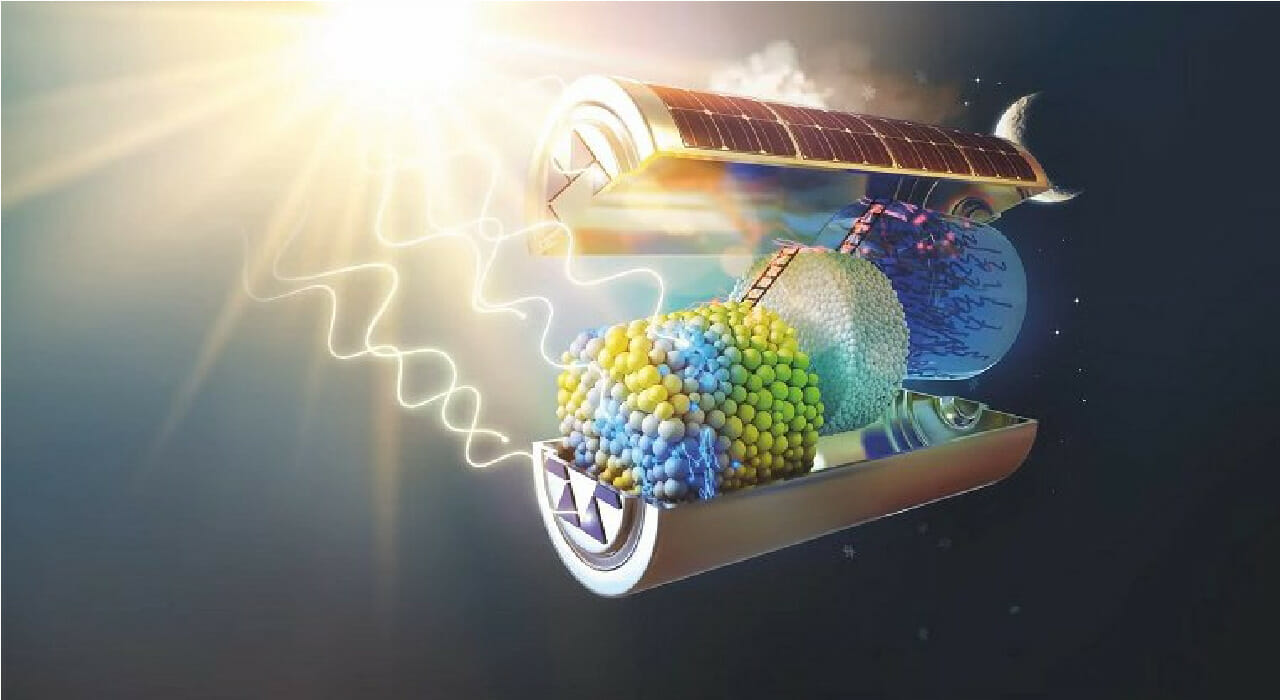

The New Solar Battery Will Allow Sunlight to Be Stored for Use at Specific Times
A collaboration between teams from Spain and Germany has resulted in the creation of the storage process, addressing issues such as the environmental impact associated with the extraction, recycling, and scarcity of materials used in traditional batteries, such as lithium, according to the website Inovação Tecnológica.
Solar batteries combine solar cells, responsible for capturing sunlight, with storage systems, all in a single device. This allows for the use of the captured energy when needed.
The Innovative Development
The team led by Professor Bettina Lotsch from the Max Planck Institute for Solid State Research has created a material that can simultaneously perform the two crucial functions: absorbing light and storing energy for later use. This new material is based on carbon nitride, a substance that can be divided into 2D layers, resembling graphene.
-
Netherlands Builds Giant 240-Meter Inflatable Barrier That Rises to Protect Cities from Storm Surges

-
Brazilian Submarine Robot “FlatFish” Operates Independently at 3,000 Meters Depth to Inspect Seafloor Pipelines Without Support Vessels
-
Eufy Unveils Omni S2: Advanced Robot Vacuum with 30,000 Pa Suction, Self-Cleaning Mop, AI Obstacle Avoidance, 12-in-1 Station, and Built-In Fragrance Dispenser

-
Swiss Glaciers Lose 10% of Volume in Two Years as Europe’s Largest “Water Tower” Dries Up; Scientists Use “Smart Stones” in the Alps to Gauge Remaining Water Supply for 170 Million People




The collaboration of the German team with Spanish colleagues, who were already immersed in battery research, led to the idea of applying the material in a solar battery.
Structure of the Innovative Battery
The first challenge was to deposit a thin layer of carbon nitride, creating a stable structure for the fabrication of a photovoltaic device. Originally found in powder form or as nanoparticles in aqueous suspensions, the material underwent adaptations.
With this step overcome, the team proceeded to the prototyping of the solar battery. Through optical simulations and photoelectrochemical experiments, they managed to create not only a proof-of-concept experiment but also to understand the high-performance characteristics of the device, such as sunlight capture and energy storage.
Project of the Future
The physical structure of the device is a complex composition of layers, including high-transparency glass with transparent conductive coating, along with semitransparent layers with different functions. It is a “sandwich” of multiple layers, optimized to maximize light absorption and storage. Notably, this “sandwich” can capture light from both sides due to its transparency, although backlighting has proven to be more effective.
In addition to the impressive performance, the core material used in the construction of the solar battery is safe, abundantly available, environmentally sustainable (derived from urea), and easy to synthesize. The next step is to test the battery in real-world situations, adapting it to various manufacturing possibilities and demands. This advancement reinforces the commitment to cleaner and more efficient technologies in the energy field, opening new horizons for solar energy generation.