





 Portuguese
  English
  Spanish
  6 min of reading
  0 comments


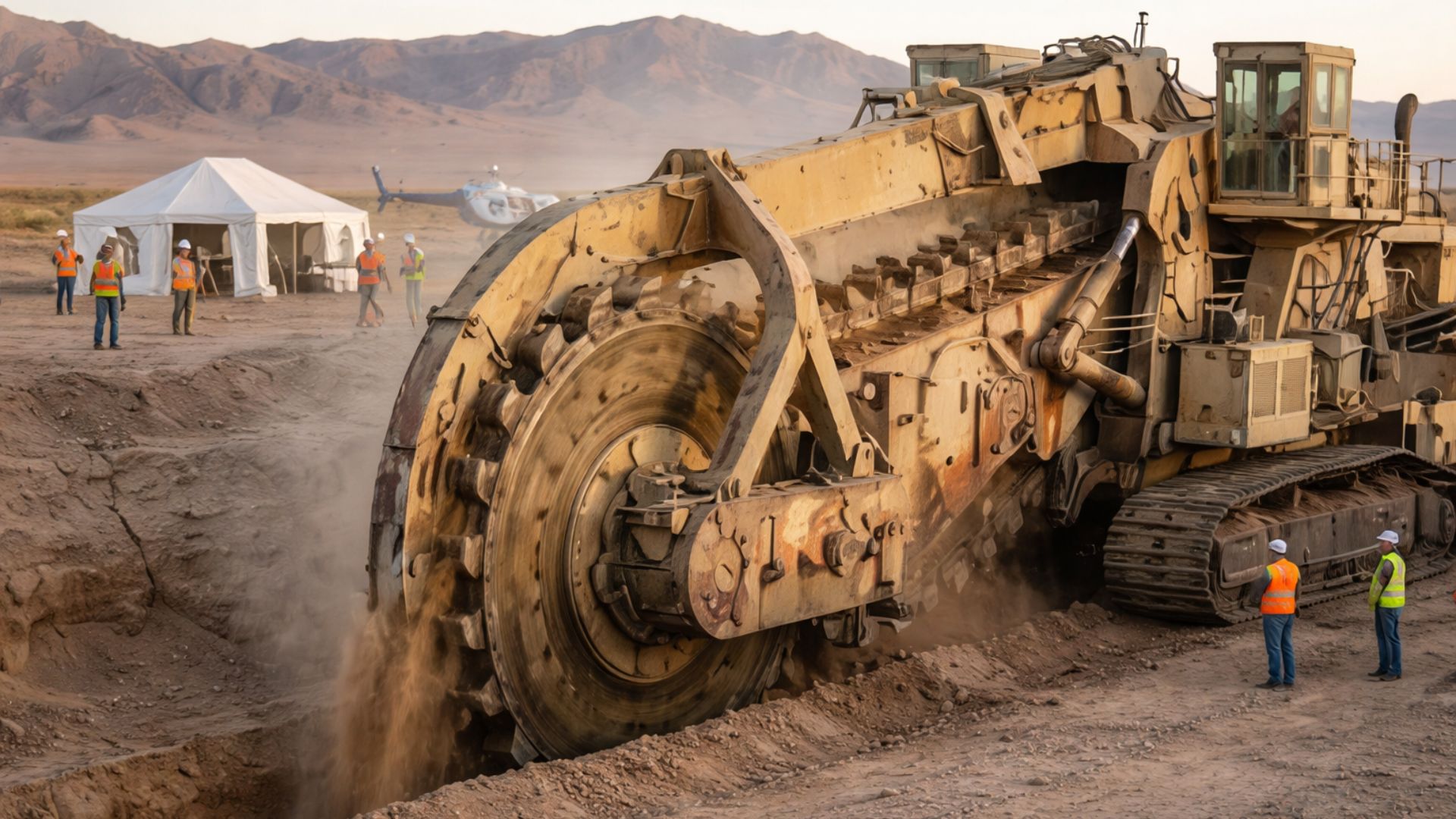
Historical Project Reignites Debate About Energy, Extreme Engineering, and Strategic Use of the Egyptian Desert by Connecting the Mediterranean to the Qattara Depression, Exploring Natural Elevation, Intense Evaporation, and Possible Economic, Environmental, and Geopolitical Impacts.
A project discussed for over a century occasionally resurfaces in the energy debate in Egypt, always surrounded by grand numbers and extraordinary technical challenges.
The proposal consists of channeling water from the Mediterranean Sea to the Qattara Depression in the northwest of the country to generate electricity from a natural elevation that reaches 133 meters below sea level.
Known as the Qattara Project, the plan involves opening a channel or digging a tunnel connecting the coast to the interior of the desert, allowing gravity to guide the water to the lowest point of the depression.
-
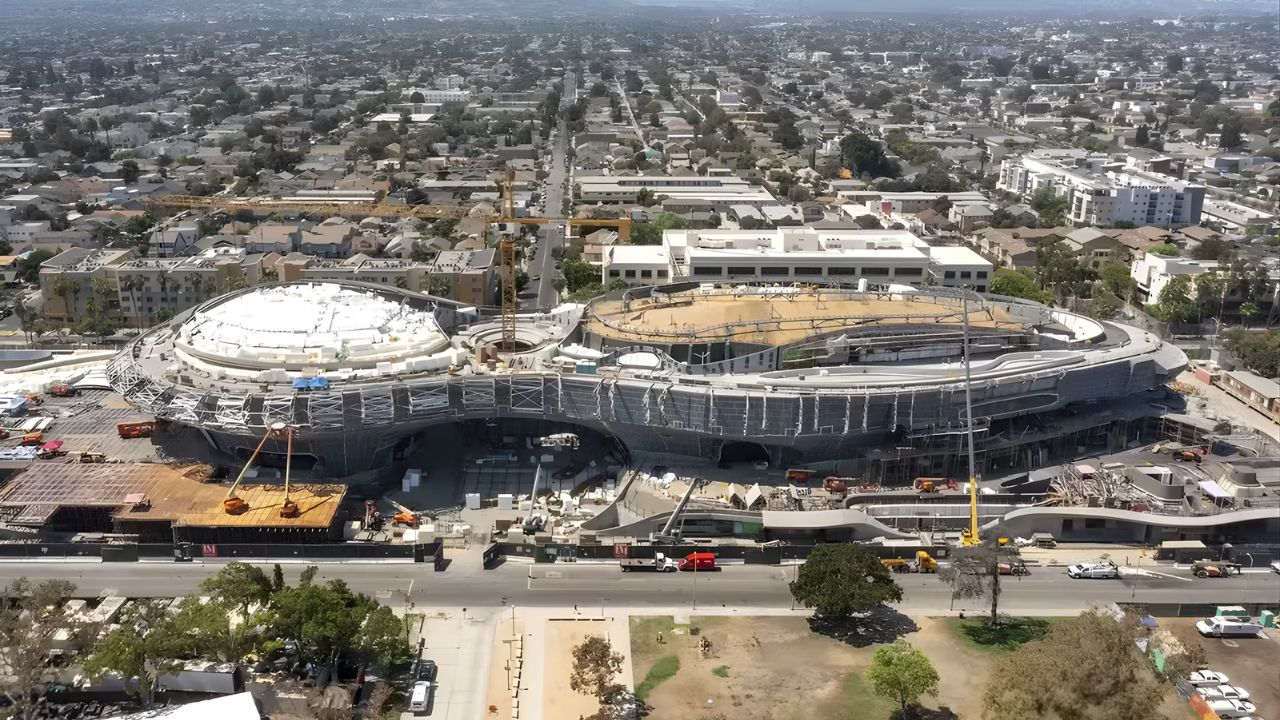
Created by George Lucas with over $1 billion, a futuristic museum in the shape of a spaceship with 1,500 curved panels is about to open in Los Angeles and will house one of the largest private collections of narrative art in the world.
-
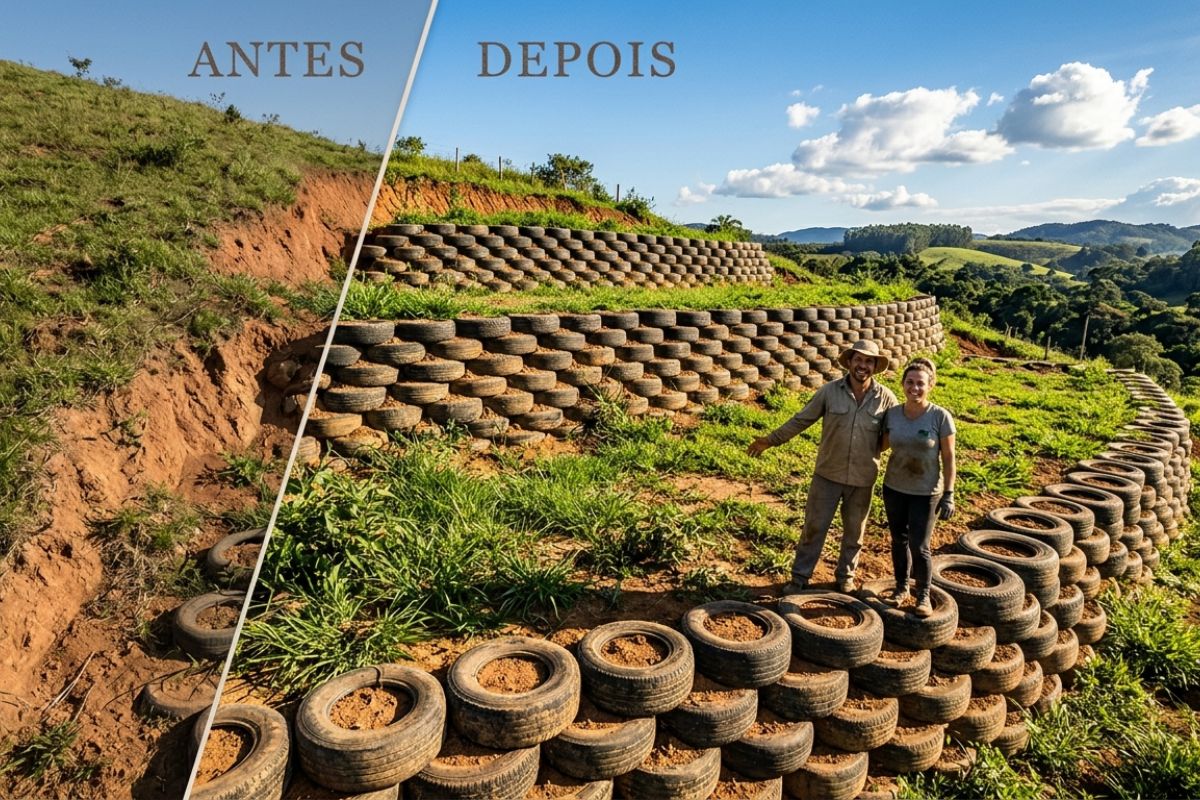
Couple shows how they built a retaining wall on their property using 400 old tires: sloped land turned into plateaus, tires are aligned, filled, and compacted with layers of soil, with grass helping in support and at almost zero cost.
-
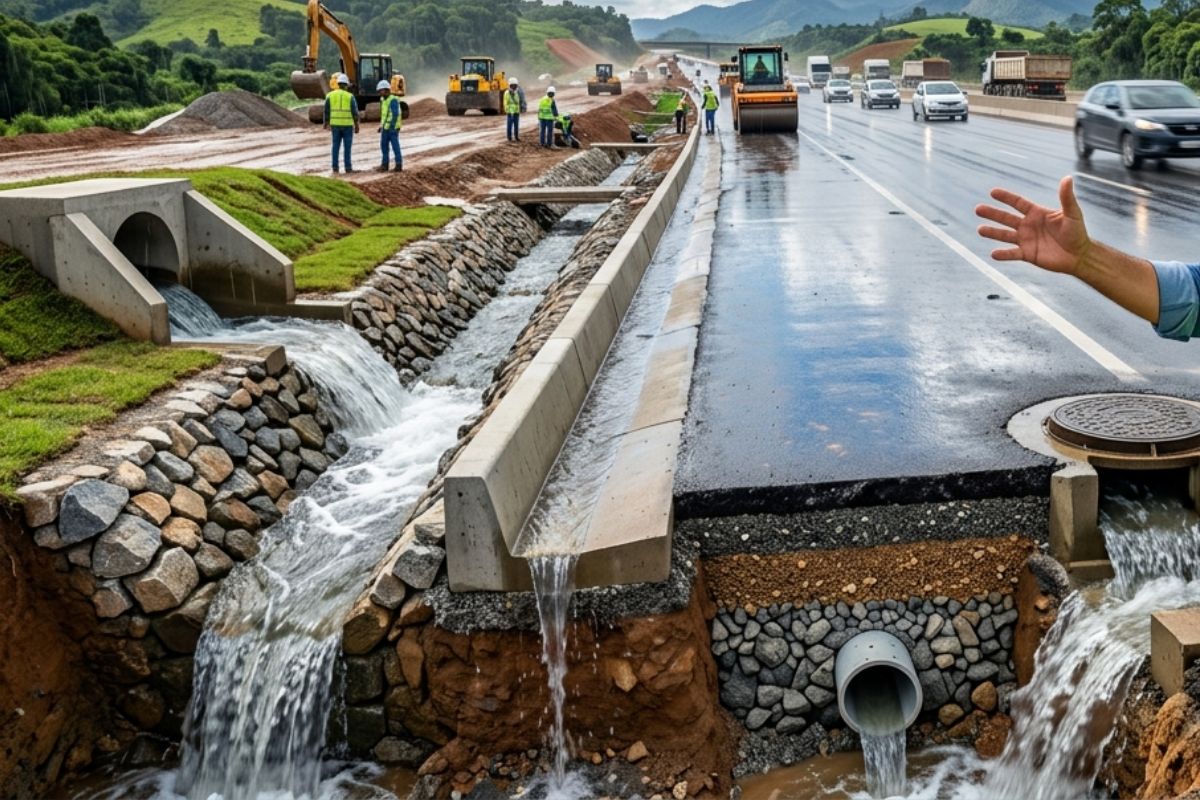
Engineer explains drainage during the rainy season: the difference between surface water and deep water, ditches, gutters, and water outlets on the road, as well as drains and drainage mattresses, to prevent erosion, aquaplaning, and flooding at the construction site today.
-
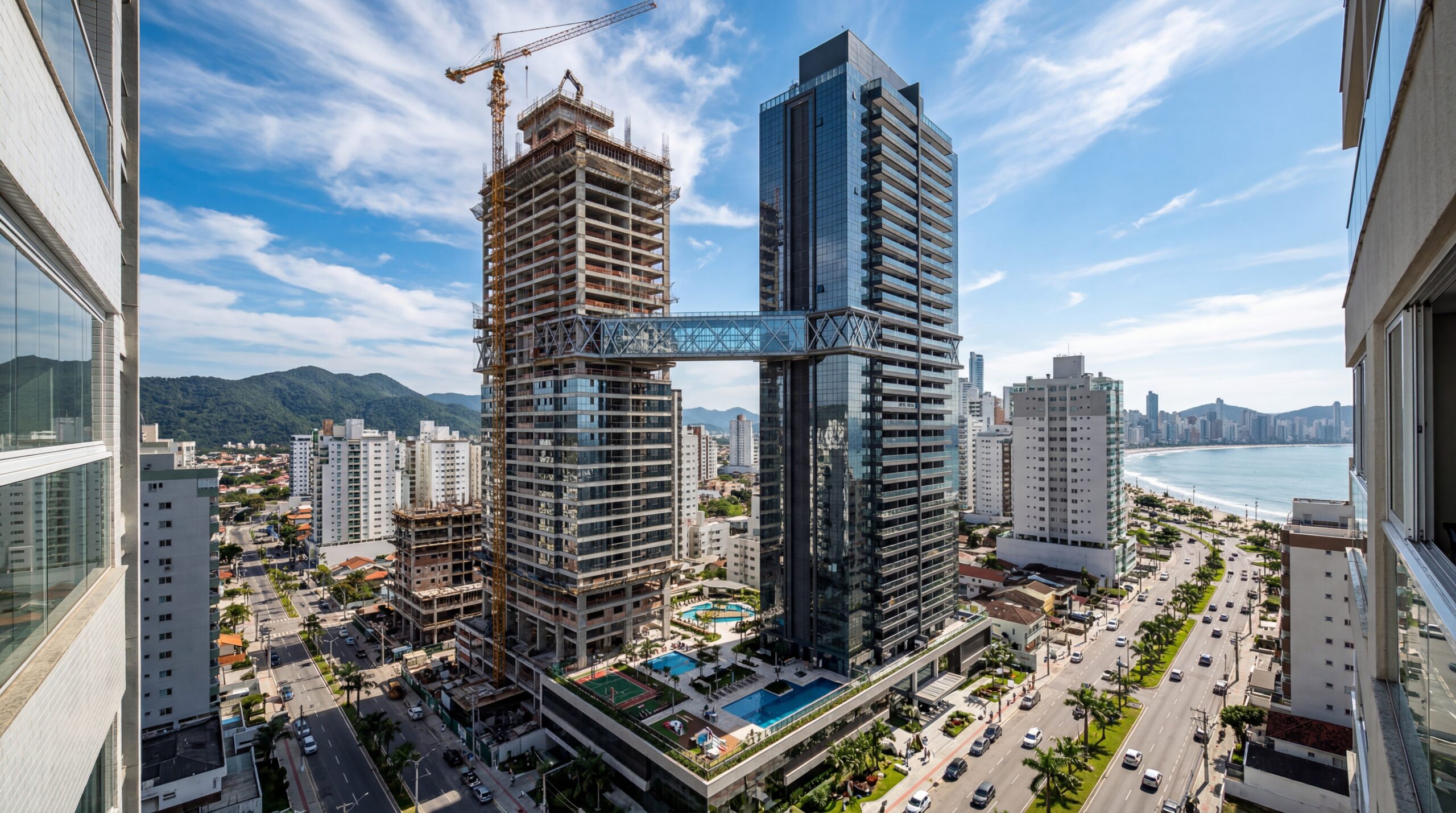
With 55 floors, 177 meters in height, a 15-meter walkway between the twin towers, ventilated facade, and 6,300 m² of leisure space, Ápice Towers already has one tower completed and another nearly at the top.

Along this route, the waterfall would drive turbines, continuously converting the elevation difference into electric energy.
The Qattara Depression is a desert area with sparse habitation that covers about 19,605 km², with average altitudes around 60 meters below sea level and a minimum point reaching 133 meters below.
Being relatively close to the Mediterranean, this region has concentrated, since the early last century, studies on creating an artificial lake fed by seawater.
The main promise has always been continuous hydropower generation, sustained by the intense evaporation typical of the Sahara.


Qattara Depression and the Interest of Energy Engineering
Unlike a fertile valley or a riverbed, Qattara is a large depression in the western Egyptian desert, shaped by geological processes over thousands of years.
The terrain features mobile dunes, salinized areas, and sections of unstable soil, making any engineering intervention particularly complex.
Still, the elevation difference relative to the Mediterranean has always attracted the attention of engineers and energy planners.
Theoretically, seawater could be directed into the desert interior and, as it descends to lower levels, activate turbines of a hydropower plant.
The decisive factor, however, is not just gravity but the region’s extreme climate.
Given that heat and aridity are constants, the evaporation of the eventual lake would be very intense.
In the project’s logic, this continuous loss of water would keep the reservoir level below sea level, ensuring a permanent flow through the channel or tunnel.
Thus, energy generation would not depend on rains or floods, as is the case with conventional hydropower plants.
Historical Origins of the Qattara Project in the 20th Century
The first records of the idea to explore Qattara for energy purposes date back to 1912 and are associated with the German geographer Albrecht Penck.
A few years later, the concept gained more technical contours through the work of engineer and explorer John Ball.
Leading the survey service in Egypt, Ball mapped the region and discussed the energy potential of the depression in articles published in The Geographical Journal.

From that moment on, the project began to circulate among universities and engineering groups over different decades.
Each new analysis proposed variations in route, excavation methods, and power estimates.
In many of these studies, the artificial lake’s level would be stabilized between 60 and 70 meters below sea level.
This balance between water input and evaporation would ensure the necessary flow to keep the turbines continuously operating.
Energy Capacity and Comparisons with Nuclear Power Plants
Estimates of energy generation vary according to the chosen route and final lake level, but some numbers recur in the technical literature.
In general, more structured studies indicate an initial phase with hundreds of megawatts, followed by gradual expansions.
The highlight, however, lies in the association with reversible hydropower systems, aimed at meeting demand peaks.
In this configuration, the combined maximum power can reach about 5,800 MW, adding direct generation and additional storage capacity.
This value is often compared to the installed capacity of several modern nuclear reactors.
The comparison, however, refers only to theoretical capacity and does not substitute analyses on costs, supply stability, or environmental impacts.
The operation of the reversible system would resemble that of a large battery.
During periods of lower consumption, water would be pumped to elevated reservoirs; when demand increased, it would return to the lake, passing again through the turbines.
Geological Challenges, Excavation, and Billion-Dollar Costs

Despite the energy appeal, the feasibility of the Qattara Project has always faced a central obstacle.
Opening a path between the Mediterranean and the edge of the depression requires crossing dozens of kilometers of rocky formations and difficult terrain.
Technical studies compare the required excavation volume to some of the largest engineering works in history.
Not surprisingly, the endeavor is often described as an intervention with extremely high costs.
In addition, operational risks are significant. The region is marked by severe climatic conditions and by historical liabilities that are not immediately visible.
Parts of the western desert still register the presence of unexploded artifacts from World War II.
This factor is cited in technical analyses as an additional complicating element for large infrastructure works.
In recent discussions, the evolution of tunnel drilling machines emerges as a possible facilitator.
Still, these advancements do not eliminate the geological, logistical, and financial challenges involved.
When Nuclear Explosions Entered the Technical Debate
Amidst discussions in the last century, the project was associated with an extreme proposal.
One of the ideas considered was the use of nuclear explosions to open the channel connecting to the Mediterranean.
Studies linked to professor Friedrich Bassler, who advised the Egyptian government in the 1960s and 1970s, mentioned a plan of this nature.
The proposal envisioned the detonation of 213 nuclear devices, each with an estimated yield of 1.5 megaton.
The inspiration came from the international program known as “Atoms for Peace.” However, the hypothesis did not progress.
The risks of radioactive contamination, geological uncertainties, and the international political context weighed heavily.
With the strengthening of treaties that restrict nuclear testing, this alternative was definitively discarded. The episode, nonetheless, illustrates the scale of the challenge that the project represents.
Evaporation, Salinization, and Mineral Potential
The intense evaporation that supports continuous generation is also seen as an unavoidable environmental problem.
As the water evaporates, the salt remains and concentrates in the lake.
Over time, the trend would be the formation of a hypersaline environment, similar to large natural brines.
This process appears in studies from two distinct perspectives.
On one hand, there is the environmental risk, as salinization can limit the lake’s uses and generate difficult-to-predict impacts.
On the other hand, there is the economic possibility.
Concentrated brines may contain minerals of industrial interest, which has led authors to mention the extraction of salts and associated compounds.
In this context, the debate about lithium emerges, driven by global demand for batteries.
Still, the literature treats this dimension as potential and contingent on technical and economic factors.
There is no secure confirmation of a plan in action for lithium extraction in Qattara.
Climatic Impacts and Occupation of the Egyptian Desert
Another area of discussion involves possible climatic impacts.
Modeling suggests that a large body of water could alter the local microclimate, increasing humidity and influencing cloud formation.
These effects, however, depend on multiple regional atmospheric variables. Therefore, they are not treated as guaranteed outcomes.
The idea that the project could alleviate population concentration in the Nile Valley frequently appears as well.
Currently, most Egyptians live in this narrow strip of territory.
The creation of a new infrastructure hub in the desert is seen as a possibility but not as an automatic consequence of the lake.
At the center of the debate remains the same dilemma that has accompanied the project since its inception. On one side, the promise of energy and large-scale storage; on the other, the billion-dollar costs and the irreversible impacts on an entire region of the Sahara.
With so many critical variables at play, what should weigh more in a decision of this magnitude: long-term energy security or caution in the face of an unprecedented geographical transformation?








-

-

-

-

-

-

26 pessoas reagiram a isso.