





 Portuguese
  English
  Spanish
  5 min of reading
  0 comments


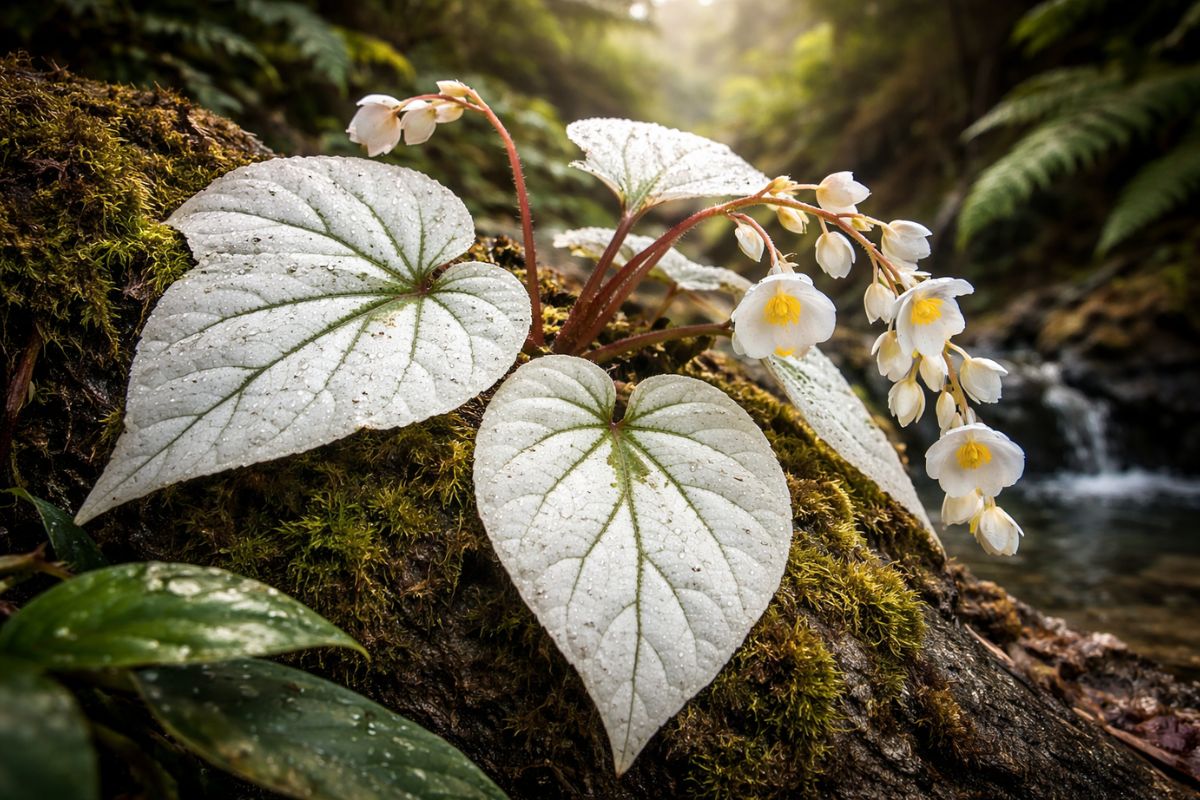
Rediscovery of a Rare Plant in Alcatrazes, Considered Extinct Since the 1920s, Transforms SP Coastal Island into a Living Laboratory and Pressures for New Protection Actions.
It was supposed to be just another field expedition among the dense brush and damp slopes of Alcatrazes Island, off the coast of São Paulo. Instead, researchers from Unicamp and the Rio de Janeiro Botanical Garden encountered the improbable: a plant that science had declared extinct over 100 years ago, alive and hidden in one of the island’s most isolated sections.
The protagonist of this story is Begonia larorum, a plant endemic to Alcatrazes that had not been observed since the 1920s. For decades, botanists believed that fires, bombardments, and invasive species had definitively eliminated the species. The rediscovery changes this scenario and raises a maximum conservation alert for the archipelago and for the begonia itself.
The Plant That Disappeared from Records for a Century
Begonia larorum was originally described by German zoologist Hermann Luederwaldt in the early last century. After the first collection, the plant disappeared from scientific records. No new observations, no new collections, no photographic records from the field.
-
Scientists have found in China dinosaur embryos dating back 190 million years in various stages of development, and the discovery still preserves traces of extremely rare proteins in the bones, something that could change what is known about life before hatching.
-
The CEO of Honor in Spain says that smartphones will change with AI, foldables, and even robot phones; the component crisis is making cheap models more expensive in 2026 and shifting the focus to premium.

-
China’s artificial intelligence surpasses human commanders with 90% accuracy in military assault simulation tests.

-
The invisible system that keeps supermarkets cold in Brazil can account for up to 65% of the store’s energy; new pressure for efficiency targets freezers and refrigerated counters.

In the absence of data, the most accepted hypothesis was harsh: the plant was believed to be locally extinct, a victim of the cumulative impacts on Alcatrazes Island, such as forest fires and the introduction of exotic species that compete with native vegetation.
This impression only began to change in October 2024 with the publication of an article in Oryx – The International Journal of Conservation.
The study, authored by Gabriel Sabino and Professor Fábio Pinheiro from Unicamp, reports the rediscovery of Begonia larorum, details the location and characteristics of the plant, and proposes its inclusion in the IUCN Red List as a critically endangered species.
Alcatrazes: A Scene of Bombs, Fire, and Resistance
Located about 35 kilometers from the mainland, Alcatrazes Island is part of the Tupinambás Ecological Station and the Alcatrazes Archipelago Wildlife Refuge. Despite the current protection, the place carries a heavy past.
For decades, the island was used for shooting training by the Brazilian Navy. Explosions, fires, and the destruction of native vegetation left deep marks on the environment, altering slopes, burning sections of forest, and making way for the entry of invasive species.
Among these invaders is the buffel grass, which spreads easily, increases the fire risk, and suffocates endemic species.
Many plants typical of Alcatrazes disappeared under this intense disturbance. Still, Begonia larorum persisted, retreated to an isolated slope, rarely accessed and far from human traffic.
How the Plant Was Rediscovered on the Hidden Slope
The new story of Begonia larorum begins in February 2024 during an expedition funded by Fapesp. During the fieldwork, researcher Gabriel Sabino from Unicamp found a single individual of the plant, out of flowering phase.
He constantly reviewed old descriptions before each field outing, and when he encountered that specimen, he couldn’t believe that the plant was actually there, alive, after a century of absence from records. The identification was confirmed, and the new phase of research began.
At this initial moment, samples were collected, and Sabino managed to reproduce five clones in the laboratory. The plant began to live in two worlds at the same time: in the isolated slope of Alcatrazes and on the benches of the Unicamp herbarium, where the clones help ensure the genetic survival of the species.
From a Single Individual to a Small Population
Months later, in September, the team returned to the island and had another surprise. Instead of just a lost specimen, the researchers found a small population with 19 individuals, of which 17 were in a reproductive phase.
This finding shows that the plant not only survived but managed to reestablish itself in the natural environment, maintaining an active reproductive cycle even under adverse conditions.
It was, in the words of the researcher himself, cause for celebration: the plant that should no longer exist was discreetly multiplying in its natural refuge.
From these individuals, samples were prepared for the Unicamp herbarium collection and the scientific basis for the article that formalizes the rediscovery and strengthens the request for recognition of the species as critically endangered was consolidated.
Why This Plant Is a Symbol of Maximum Alert
Researchers argue that Begonia larorum should be formally recognized as a critically endangered species.
The reasoning is simple: the plant’s distribution is extremely restricted, limited to a specific area of the island, and the known population is small and vulnerable to any sudden changes in the environment.
According to Professor Fábio Pinheiro, the team intends to continue with genetic studies and biotic interaction studies to understand how this plant managed to survive so long in isolation.
Investigating gene flow, pollination, soil type, and relations with other species may reveal important clues about the resistance mechanisms involved.
At the same time, the case of Begonia larorum reinforces the need to protect not only the plant itself but the set of conditions that allowed its survival, which includes controlling invasive species, avoiding new impacts, and ensuring the integrity of the most sensitive areas of Alcatrazes.
Alcatrazes as a “Preview” of the Planet’s Future
For researchers, Alcatrazes Island serves as a kind of miniature of what may happen on a global scale. In their words, “the island is like a laboratory of what the planet will be like in the future”, following predictions of climate change and environmental transformations.
This means that understanding how a rare plant survived fires, bombings, biological invasions, and isolation over decades may provide clues about which strategies will be most important for conservation in a warmer, fragmented world prone to extreme events.
When looking at Begonia larorum, we are not just seeing a botanical curiosity preserved in a remote corner of the São Paulo coast.
We are seeing a rehearsal for the future, where a few resilient species cling to specific refuges while the surroundings change rapidly.
In light of the story of this plant that re-emerged after a century of being considered extinct, do you think Brazil should invest much more in expeditions and monitoring of islands and isolated areas to discover what else might be surviving silently out there?








Seja o primeiro a reagir!