






 Portuguese
  Spanish


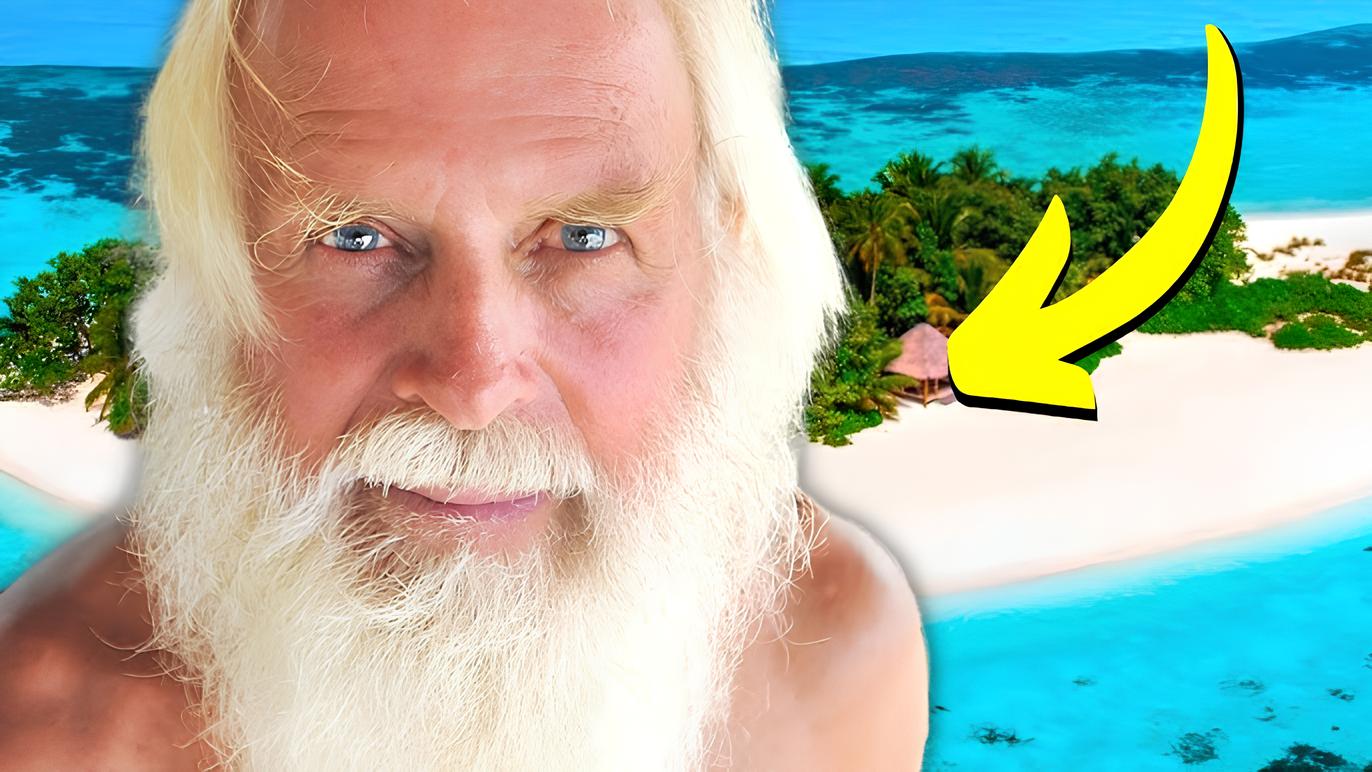


After Losing Fortune In The Stock Market, Australian Businessman Has Lived For More Than 25 Years Isolated On A Desert Island Where He Built A House, Garden, And Solar System With His Own Hands.
For over two decades, David Glasheen has lived completely isolated from the Australian mainland on a small island called Restoration Island, north of the state of Queensland. Before that, he was a successful businessman in the mining and investment sector in Sydney, owning a fortune estimated at over US$ 28 million at the height of the 1980s. Everything changed after the 1987 stock market crash, which led him to bankruptcy and made him abandon urban life forever. Since then, he has lived as a modern hermit, and his story is documented by outlets such as The Guardian, ABC Australia, and Business Insider.
The island where Glasheen lives is about 1,500 km from Brisbane and is accessible only by boat or helicopter. The site is surrounded by coral reefs, white sand, and crystal-clear water that contrasts with the harshness of life in isolation. There, he built a simple wooden house, a solar generator, a rainwater collection system, and a garden that provides part of his food supply. The island is owned by the Australian government, and Glasheen lives there under a temporary permit that is renewed periodically.
From Urban Mogul To Solitary Hermit
In the 1980s, David Glasheen was a respected name in Sydney’s financial market. A bold investor and charismatic figure, he once led mining companies and was among Australia’s promising businessmen.
-
Seven-Year-Old Nicknamed Hulk Wins Gold in Brazilian Jiu-Jitsu After Defeating South American Competitors

-
Once Burdened by $90,000 in Debt and a Divorce, Now Leads a Beauty Group Targeting $150 Million by 2026
-
Ice Cream Shop Grows from 39 Square Meters to $19 Million Revenue with Popsicles Sold at 20 Cents in Brazil
-
Rural Worker Spotted “Flying” on a Drone in Brazil




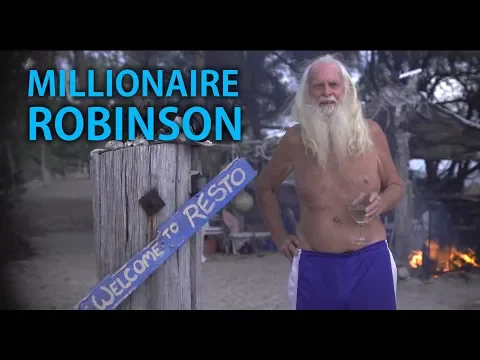

Everything collapsed with the stock market crash in 1987, when he lost nearly all his wealth in a matter of days. The shock led him to depression, and it was at that moment that he decided to “return to the essentials.”
In an interview with ABC News Australia, he stated:
“I had everything money could buy, but I felt empty. When I lost it all, I realized it was the opportunity to start over. I came here to seek peace — and I found it.”
He arrived on the island in 1997, initially with his then-girlfriend, who stayed for a short time. Since then, he has lived alone, with only his dog and a multitude of books and radios for company. He uses solar energy, stores food in airtight containers to protect against moisture, and maintains a rigorous routine: he wakes up at sunrise, tends to the garden, fishes, and dedicates the rest of the day to maintaining the structures.
Without internet for many years, Glasheen started receiving basic communication equipment through volunteers and tourists who occasionally visit him. Today, he maintains limited contact with the outside world, just enough to buy supplies by boat once or twice a year.
Simple Life, But Not Primitive
Even while living in isolation, David maintains modern habits. He uses solar panels to power lights and small devices, and keeps a small solar-powered refrigerator where he stores perishable food.
His house is made of recycled materials that he collects from the beach or receives from visitors. He also maintains a garden with sweet potatoes, tomatoes, and pumpkins, and raises chickens for personal consumption.
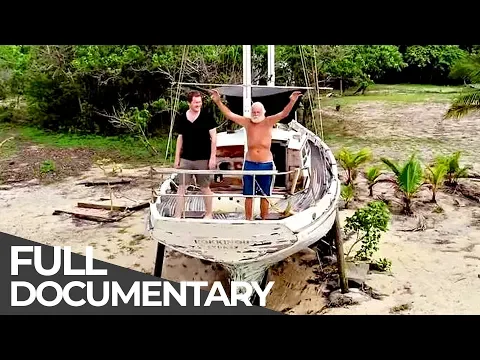
Over time, the former investor developed a deep sense of sustainability. He repurposes everything he finds — from glass bottles to pieces of metal brought in by the tides.
“Here, nothing is waste,” he often says. His diet is based on fresh fish and vegetables grown on the island, and he avoids any waste of water or energy.
Glasheen has become an involuntary example of minimalist and self-sufficient living, inspiring documentaries and books about voluntary isolation. The Australian has received journalists, adventurers, and students curious about the radical lifestyle he has chosen. Still, he maintains the same message: he does not intend to return to civilization.
Isolation That Became a Lifestyle
Despite living in peace, the “voluntary castaway” has faced moments of tension. In 2017, Australian authorities attempted to remove him from the island, claiming that the use contract had expired and that he was occupying public land without permanent authorization.
After mobilization from the media and the local population, the government granted him a new temporary residency permit, provided he kept the area clean and preserved.

Glasheen’s story gained global attention as it symbolizes the contrast between the hyperconnected modern world and the growing search for simplicity and isolation. In interviews with BBC and ABC, he claims that he does not miss luxury or technology:
“The world out there is too noisy. Here I hear the wind, the sea, and the birds. There’s no price for that.”
Even so, he maintains some ties to social life: he receives tourists and curious visitors a few times a year and offers shelter to travelers in exchange for supplies. Over time, he has become a sort of local legend, nicknamed “the castaway of Restoration Island”.
Between Isolation And Wisdom
Today, at 79 years old, Glasheen continues to live alone on the island, although with fragile health. He is considering writing a book about his experience, compiling diaries and notes from over two decades of life in isolation. He has also received proposals from documentarians interested in turning his story into a series or film.
The former businessman admits that initially, living in isolation was an escape, but now it has become his philosophy of life.
“People spend their lives chasing after more things. I just had to lose everything to realize what really matters.”
David Glasheen’s case is one of the rare examples of prolonged voluntary isolation in Australian territory. The island, covered with dense vegetation and surrounded by reefs, now only hosts him — and his tranquil routine, which continues far from the pressures and noises of the modern world.
David Glasheen’s story goes beyond curiosity about a man who lives alone on an island. It is a narrative about renunciation, reconstruction, and freedom, a counterpoint to urban life and the financial losses that pushed him into voluntary exile. After losing millions, he found wealth in what money could never buy: time, silence, and peace.




MAIS UM IN̈TELIGENTE, A DAR EXEMPLO PRO CONTURBADO MUNDO
Você é um ser humano exuberante, seu rito me atraiu, não importa o que o mundo fez com você, o que importa e o que você fez de você, e o que você se tornou, depois de todos os depois da vida. Pra mim você é Campeão – Vencedor, venceu a si, se reinventou e faz história.