Portuguese
  Spanish


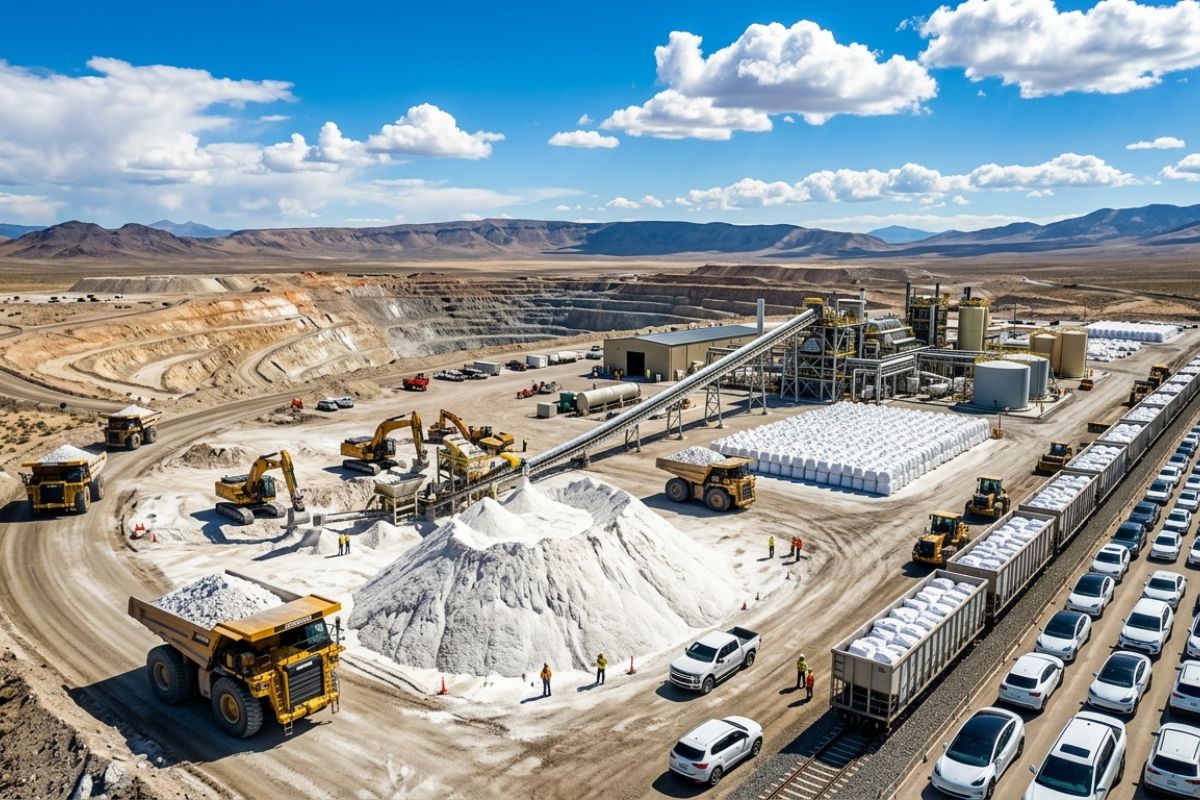

Lithium under the McDermitt Caldera, between Nevada and Oregon, could sustain a production of 40 thousand tons per year and strengthen the battery chain for electric cars in the United States
The lithium from Thacker Pass is at the center of a promise that could shake up Nevada’s economy, the American industry, and the global balance of clean energy. The region sits atop the McDermitt Caldera, a gigantic volcanic area that may hold one of the largest unexplored reserves of the metal, with an estimated value of around US$ 1.5 trillion.
If the plan is confirmed, the lithium extracted there could reach 40 thousand tons per year, a volume described as sufficient to manufacture batteries for up to 800 thousand electric cars. What seems like a factory number is, in practice, a scale change, because it brings the U.S. closer to reducing external dependencies in a market where demand is skyrocketing.
Where is Thacker Pass and why does this area attract so much attention
The “white gold” mentioned in the region is linked to the lithium in the McDermitt Caldera, measuring about 45 km long by 35 km wide, extending through northern Nevada and southern Oregon. The area is described as rural and could experience strong impacts in the coming years if mining progresses.
-
Canada Makes Historic Decision to Purchase New German Submarines in $70 Billion Defense Program, Replacing Aging Victoria-Class Fleet by 2033

-
4,000-Year-Old Stone Circle Discovered Near Belfast, Unveiling Prehistoric Ritual Complex in Irish Countryside

-
Brazilian Innovator Transforms 1962 Mercury Comet with Nissan Leaf Electric Motor, Achieving 125 km Range for Under $6,000
-
China Tests Giant 582-Ton Magnets to Contain Plasma Hotter Than the Sun’s Core, Aiming to Cut Superconductor Costs and Generate First Electricity from “Artificial Sun” by 2030


The importance is not just geographical, it is strategic. With the world accelerating the energy transition, lithium reserves are no longer just a mineral asset but become a piece of industrial policy.
Why lithium became the most coveted metal for batteries
Lithium stands out for two decisive characteristics: it is extremely light and highly reactive. This combination makes it efficient for batteries, the same ones that power smartphones, laptops, and electric vehicles.
Lightness and reactivity together explain why lithium became the heart of modern batteries. And when the demand for batteries grows, the metal becomes a bottleneck.
How a volcanic past created a “deposit” of lithium in clay
The origin of the deposit is explained by the geological history of the region. The McDermitt Caldera was a volcanic hotspot about 16 million years ago, creating a huge lake rich in minerals. Over time, this lake dried up and left thick layers of clay loaded with lithium.
This sequence transforms a silent landscape into a mineral asset of global scale. It is the type of formation that does not easily repeat itself.
What 40 thousand tons per year would change in practice
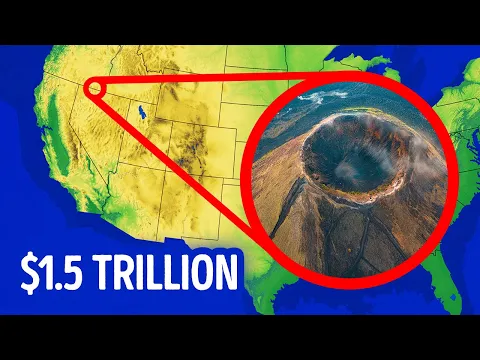

The projection for Thacker Pass is straightforward: to produce 40,000 tons of high-quality lithium per year, enough for batteries for up to 800,000 electric cars.
This connects to a larger point: the U.S. seeks to replace gasoline vehicles with electric ones and reduce pollution, but needs much more lithium than it currently produces. Therefore, domestic projects are gaining strength, especially since a significant portion of the metal used in the United States is imported.
The shock in the market: price, demand, and race for investment
Since 2020, the price of lithium has reportedly increased more than 10 times, making it one of the most expensive materials in the battery chain. The annual consumption cited is around 1.16 million tons, with approximately 85% destined for battery manufacturing, mainly for cars.
Future projections indicate a strong increase in investment: between 2030 and 2040, production investment could double and investment in batteries could rise by more than 200%.
By 2050, the demand for lithium is described as potentially more than 10 times greater than current production. If this pace is confirmed, deposits like Thacker Pass will become a permanent dispute.
It is not enough to have lithium: the refining bottleneck and global pressure
Another central point is refining. Finding lithium is one step; transforming the raw material into a pure and usable form for batteries is another. The described scenario indicates that China dominates a significant part of this process and also the battery chain, which pressures other countries to strengthen their internal structure.
This detail changes the game: even with lithium in the territory, a country can remain dependent on those who refine and transform the metal into a strategic product.
The local impact in Nevada could be a complete turnaround
The project is described as capable of attracting around 2,000 workers, with a need for housing, services, and infrastructure, which could change the profile of a rural area in just a few years. There is also the expectation of a domino effect on the local economy, with indirect job creation.
The operation is estimated to last 35 years, potentially generating more than US$ 2 billion per year. For a quiet county, this is not gradual growth, it is structural transformation.
The technical risk: extracting lithium from clay on an unprecedented scale
One point of attention is the extraction method: taking lithium from clay on an industrial scale is described as a significant and little-tested challenge at this size. There is a degree of uncertainty, but the potential reward is enormous.
This is where the tension lies: the reserve may be gigantic, but success depends on transforming geology into a stable and competitive operation.
And what if lithium becomes scarce one day
Even being the backbone of the energy transition today, lithium is a finite resource. Therefore, there are discussions about alternatives, such as thermal batteries, which are already used in industrial sectors and could gain ground in residential solutions in the future.
This does not slow down the current race for lithium, but shows that technology does not stand still. Still, in the short and medium term, the metal remains central to batteries and electric cars.
And what do you think, can the lithium from Thacker Pass really become the turning point for the U.S. in the global race for batteries, or will the refining bottleneck continue to dominate the game?