





 Portuguese
  English
  Spanish
 4 min of reading



Artificial Intelligence Helps Electricity Sector Companies Reduce Costs with Taxes and Financial Management
According to PwC and the Acende Brasil Institute, taxes in the electricity sector can account for nearly 50% of operations, resulting in millions of dollars for each company, which directly impacts the final price of energy for consumers and even inflation rates in the market.
This is due to the composition of this ecosystem. First, energy comes from generating plants, with most of it originating from hydropower plants (70%), thermal power plants (14%), wind energy (8%), and solar energy (1.6%). In cities – which are not always near the generation source – energy arrives at distribution substations, traveling through overhead or underground wiring, and finally reaching streets, industries, and homes.
Specifically in Brazil, the sector is, on one hand, one of the main levers for the post-Covid-19 pandemic economic recovery (due to its infrastructure, which attracts investments both domestically and internationally, moving over R$ 400 billion per year, according to data from the Ministry of Mines and Energy), but on the other hand, it is very complex, as each concessionaire (and the entire ecosystem they comprise) serves various municipalities, often in different states – each with specific tax systems and rates.
-
Lula responds directly to Trump and says that Pix is from Brazil and will not change under pressure from anyone, after a report from the United States pointed out the Brazilian payment system as an American trade barrier.

-
Amazon has just announced a new fee on all deliveries, and your online purchases will become more expensive starting April 17, including for those buying from the United States here in Brazil.

-
He sold his share for R$ 4 thousand, saw the company become a giant worth R$ 19 trillion, and missed the opportunity of a lifetime.

-
Elon Musk’s Starship megafrocket puts $8 billion at risk, raises alarms in the market, and could affect technology, mining, and space internet startups in the coming years.


Scenarios
For example, Energisa has 7.7 million customers in 862 municipalities across the five regions of Brazil, meaning it supplies electricity to about 20 million people, equivalent to 10% of the Brazilian population. This means that there is a different tax scenario for each state, primarily due to ICMS (Tax on Circulation of Goods and Services).
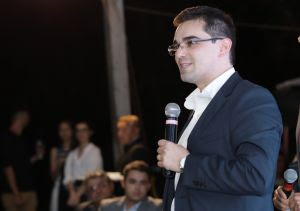
According to Lucas Ribeiro, CEO of ROIT, an accountech specialized in taxation for large companies, using Artificial Intelligence and automation, the complexity of the system does not stop there. There are other taxes and contributions that apply to the values of generation, transmission, and distribution of energy, such as variable input rates (e.g., mineral coal for thermal power plants, where there is a price increase due to the fuels used for thermal plants to operate during water crises). All of this affects costs and energy prices and, consequently, the management of all these assets.
The expert notes that currently, technology is helping companies in the sector to manage all these processes, contributing to greater efficiency and better results. A practical example of this is the replacement of manual activities with up to 98% accuracy. “The AI [Artificial Intelligence] from ROIT has been trained to interpret 32 types of input documents (purchases) and has already classified and extracted over 12 million documents using OCR (Optical Character Recognition) and NLP (Natural Language Processing),” says the CEO about the technology developed for the tax, fiscal, and financial areas of companies.
What Can This Technology Provide to the Brazilian Electricity Sector?
The technology also often allows for a reduction in the tax burden, as Ribeiro explains. “Tax legislation is not 100% prepared to regulate this activity. As a result, various opportunities arise that can minimize the tax burden in the sector, such as incentives for research and development and for handling regulatory expenses. All of this is analyzed by the robots and presented as a suggested application.”
According to Ribeiro, it all starts with a detailed analysis where the technologies not only facilitate this work, but are essential. “There are about 2.1 billion possible tax scenarios in Brazil; it is humanly unfeasible and very time-consuming to study and critique each of them. However, our robots automatically carry out this analysis and, in a matter of seconds, deliver the best path to be followed from a tax perspective, as well as identify any over or underpayments made in the past.”
The use of technologies such as those from ROIT, hyperautomation, also makes actions predictive, as it is possible to have quick responses and anticipate some scenarios in the short, medium, and long term, thus having a compass that points to the best solutions regarding the accounting and tax impact of numerous Brazilian regulations.
Based on the prediction that Artificial Intelligence will contribute over US$ 15.7 trillion to the global economy by 2030, solving complex problems that have only been possible with human intelligence, or have not yet been solved, Lucas emphasizes that there are also, within this range of innovative solutions, tools that allow for the assessment, generation, and automatic payment of tax guides, automatic submission of accessory obligations, real-time reconciliations with AI, and much more. “Ultimately, automating jobs, especially in the energy sector, is synonymous with scalability, agility, cost reduction in processes, and at the same time, a decrease in the possibility of errors and non-compliance,” concludes Ribeiro.
Source: Journalism Team Engineering of Communication – ROIT BANK Advisory









Seja o primeiro a reagir!