





 Portuguese
  English
  Spanish
  5 min of reading
  0 comments


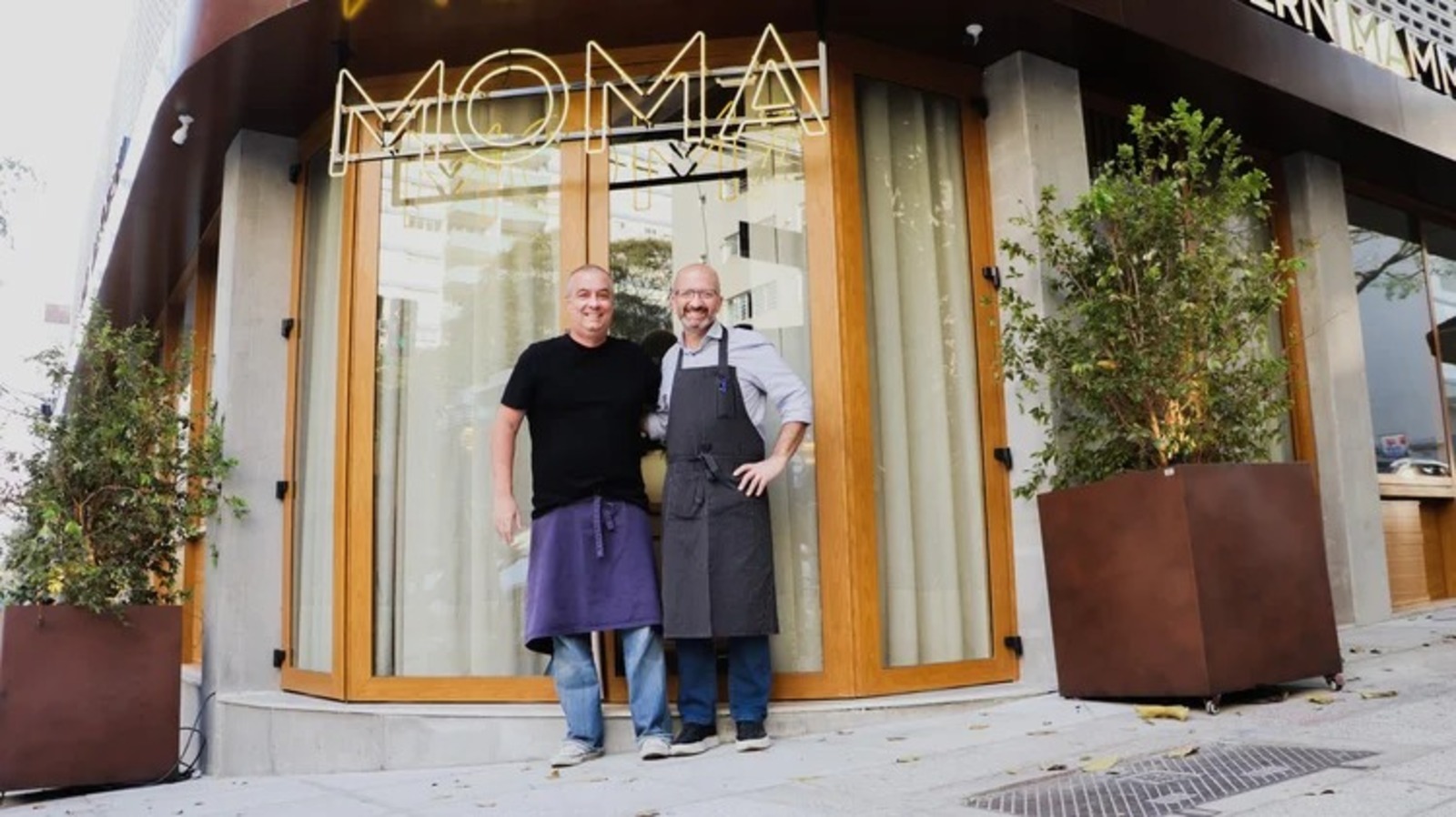
From An Initial Investment of R$ 1.8 Million to a Projected Revenue of R$ 100 Million in 2025, MOMA Redefines Modern Italian Cuisine
Founded in 2016 by chefs Salvatore Loi and Paulo Barros, Modern Mamma Osteria — or simply MOMA — has become one of the biggest success stories of modern Italian cuisine in Brazil.
Combining simplicity, technique, and precise management, the chain has solidified its presence in the competitive São Paulo market and is paving the way for a new leap in expansion.
Constant Growth and Million-Dollar Revenue with Italian Cuisine
MOMA’s trajectory is impressive because it stemmed from an investment of R$ 1.8 million and is on track to exceed R$ 100 million in revenue by 2025.
-
Historic bankruptcy of Centauro shocks the market, and the century-old company puts more than 500,000 products, machines, and complete infrastructure up for online auction.

-
New shoe factory in Ceará is expected to create 400 jobs and strengthen the local economy.
-
No one imagined it, but a mixture of sawdust with a mineral that fights fires surprises scientists with a result that changes the course of fire-resistant construction.
-
From empty land to a high-end house, wooden construction uses a lightweight system, metal structure for the foundation, ventilated ceramic cladding, and special windows to create an efficient and comfortable living space throughout the year.


The progress comes on the heels of solid results: in 2024, the company recorded a net revenue of R$ 70 million, a growth of 23% in just 12 months.
This performance has secured the brand a prominent spot in the EXAME Business in Expansion 2025 ranking, at the 84th position among companies with revenues between R$ 30 million and R$ 150 million.
The recognition reinforces the expansion pace of a business that has grown without resorting to external investors, financing each step with its own resources.
Four Locations and Over 50 Thousand Monthly Customers
MOMA maintains four restaurants in São Paulo — Itaim Bibi, Jardins, Baixo Pinheiros, and Pinheiros — which collectively attract an average of 51 thousand customers per month.
The modern and welcoming environment has become a trademark, combined with the proposal of offering traditional Italian dishes with an authorial touch.
Among the most successful creations is the Veal Lasagna, which has become an icon of the house. The dish, served in small individual portions, has reached the impressive mark of 13 thousand units sold per month, symbolizing the balance between tradition and innovation that sustains the brand’s concept.
Expansion to Rio de Janeiro
After establishing itself in São Paulo, MOMA is preparing for its first foray outside the state. In 2026, it is set to open a unit at Shopping Leblon in Rio de Janeiro.
The choice of location, according to partner Paulo Barros, is strategic because Leblon is considered one of the most prestigious and bustling addresses in the capital of Rio de Janeiro.
However, the Rio operation will bring challenges. Barros admits that the physical distance between the units makes logistics more complex, as management in São Paulo relies on proximity between the restaurants. Additionally, the search for qualified labor in Rio is another obstacle.
Despite this, the decision is based on the high demand from Carioca customers who are requesting the brand’s arrival.
A Business of Pasta — In The Literal Sense
For the founders, the secret to success lies in maintaining control over every step of the operation. All MOMA units have in-house pasta production, where the pasta is crafted by hand, ensuring freshness and a standard of flavor.
Many chains opt for central kitchens to reduce costs, but MOMA takes the opposite approach. Internal production increases labor costs but ensures the quality and artisanal character that have won over the public.
Control is also strict over the cost of goods sold (COGS), considered the “vault” of the operation.
The company uses advanced management and inventory monitoring systems to avoid waste and maintain financial efficiency.
Organic Growth and No Rush
MOMA’s expansion model is characterized by caution. With each new unit opened, the team is dedicated to consolidating operations before planning the next step.
With 250 employees, the brand adopts a rigorous training standard. A team of specialized chefs circulates between the units, observing preparation and standardizing recipes.
Each kitchen has a “head” responsible for supervising results and correcting faults in real-time.
This oversight ensures that the experience is the same at any branch.
Strategy and Management in The Kitchen
The founding duo combines culinary talent with administrative vision. Salvatore Loi, a chef of Italian origin with a solid career in Brazil and Europe, oversees the culinary side. Paulo Barros brings experience in business management and operations.
Together, they have created a model that blends the art of cooking with the precision of a well-managed company. “It’s not just about the food, but about management. We believe that the smooth operation of a restaurant is as important as the quality of the dish,” says Barros.
For this reason, MOMA does not adopt a franchise model. All units are company-owned, which allows total control of the operation and customer experience.
This strategy of organic growth maintains standards and reinforces the brand’s identity.
Adaptation and Resilience
Even in the face of challenging moments, the company has shown flexibility. During the pandemic, when in-person consumption was drastically reduced, MOMA created an unprecedented format for delivering ready-to-eat dishes at home — something that was previously unthinkable within the original model.
The experience showed that the public values convenience without sacrificing quality. This lesson helped the brand strengthen its relationship with customers and diversify its service methods.
Highlighting in The EXAME Business in Expansion Ranking
The recognition achieved by MOMA in the EXAME Business in Expansion ranking, an initiative by EXAME in partnership with BTG Pactual, reinforces the impact of the model adopted by the chain.
The selection analyzes the companies with the highest growth in net operational revenue over 12 months, considering businesses with annual revenues between R$ 2 million and R$ 600 million.
The 2025 edition included 470 companies from different sectors that stood out for their innovation and capacity to generate jobs and stimulate the Brazilian economy.
A Successful Recipe
More than a modern osteria, MOMA is an example of how it is possible to unite tradition, quality, and efficient management in a single concept.
The attention to detail, the appreciation of artisanal production, and the focus on sustainable growth explain why the brand has become one of the most admired in São Paulo’s gastronomy — and is now aiming for new horizons in Rio de Janeiro.
With information from Exame.








-

Uma pessoa reagiu a isso.